




Event Technology Trends 2026: The New Standard
Event technology trends 2026 are reshaping live experiences with drone shows, AI, data, and sustainable production built for audience impact at scale.
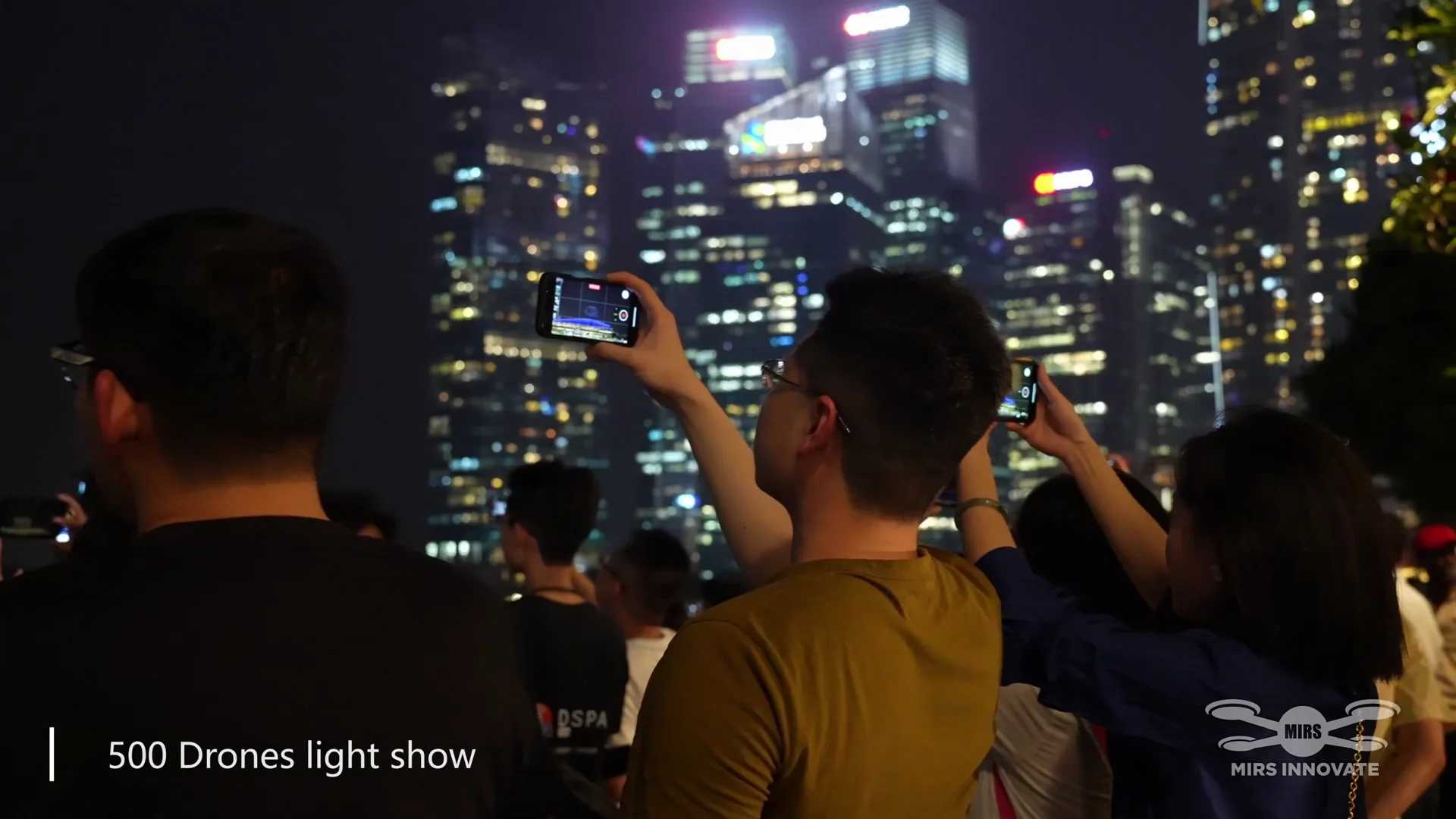
In 2026, a packed venue alone will not define a successful event. The lasting measures are what audiences share, what organisers learn, and whether the experience gives a brand, city, or celebration a clear memory to build on.
For high-visibility events, technology should support the experience rather than sit behind it. Guests notice when an idea feels designed for the occasion, whether that is an aerial finale, a useful arrival system, or an immersive moment that has a clear purpose. The strongest productions pair that creative payoff with reliable operations and useful measurement.
Event Technology Trends 2026 That Matter Most
Drone light shows become a strategic event asset
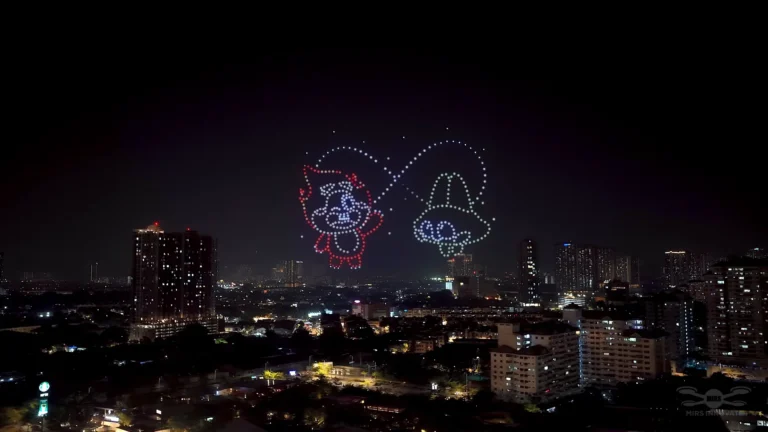
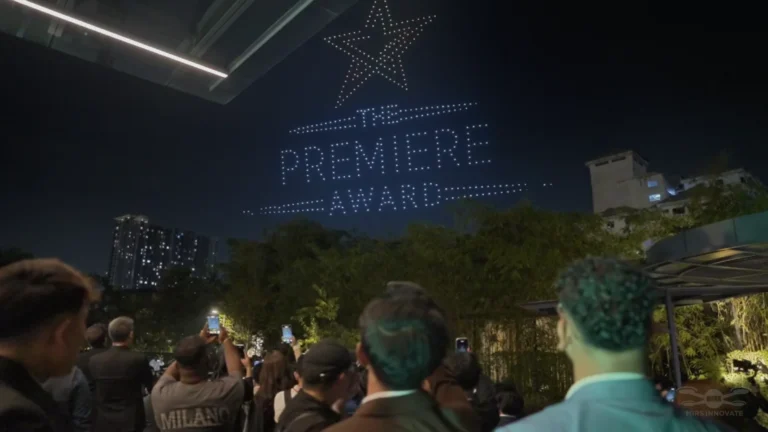
Drone light shows are no longer treated as a novelty finale. In 2026, they will be designed as a central communications channel for launches, destination campaigns, national celebrations, sports events, and luxury private occasions. Hundreds or thousands of synchronized aircraft can form a product silhouette, logo, message, character, landmark, or animated sequence above an audience. That visual language is made for the camera, but it is also powerful in person because scale changes perception.
The shift is strategic. A fireworks display can create a moment of excitement, but it cannot spell a campaign line, reveal a new brand identity, or transition from a national symbol into a sponsor message with precision. A drone show can. For marketing leaders and public-event organizers, that makes the sky a programmable canvas with a direct connection to press coverage and social content.
The trade-off is that drone performances demand professional planning. Airspace permissions, site conditions, weather thresholds, launch-zone design, local regulations, and fleet redundancy all shape what is possible. The right production partner handles those details without reducing the creative ambition. MIRS Drone Show approaches this work as end-to-end landmark experience design, where technical discipline protects the impact of the final reveal.
AI moves from experiment to production intelligence
Artificial intelligence will have a real role in event planning, but not as a substitute for creative judgment. Its highest-value applications are operational: forecasting attendance, modeling crowd flow, accelerating content versions, analyzing registration behavior, and helping teams identify where guest journeys break down.
For a large public event, AI-supported forecasting can inform staffing levels, entry routes, transportation plans, concession placement, and security coordination. For a brand activation, it can help teams segment audiences and tailor follow-up communications based on what participants chose to experience. These uses are less glamorous than a generative visual on a giant screen, yet they often determine whether an ambitious production feels effortless or frustrating.
Creative teams will also use AI to test directions faster. A drone-show concept, for example, may move through multiple visual narratives before animation and flight engineering begin. AI can speed early ideation, but final concepts still need human designers who understand timing, brand hierarchy, cultural context, and the physical reality of viewing a performance from the ground.
Live data becomes part of the guest experience
Event data is evolving from post-event reporting into a real-time production tool. Organizers will increasingly monitor arrival patterns, dwell time, session capacity, audience sentiment, and traffic across physical and digital touchpoints while the event is live. The goal is not to overwhelm teams with dashboards. It is to give producers enough clarity to make fast, informed decisions.
A festival may redirect guests before congestion builds. A conference may open overflow seating before a keynote begins. A city celebration may adjust messaging, transport guidance, or on-site entertainment based on crowd density. When used well, data makes an event feel more considered because guests encounter fewer points of friction.
There is a line that should not be crossed. Collect only data that has a clear purpose, communicate privacy practices plainly, and avoid turning attendees into a surveillance exercise. Trust is part of the experience. Premium events should feel personal, not intrusive.
Immersion Must Earn Its Place
Projection, spatial audio, and extended reality become more selective
Immersive technology will remain highly visible in 2026, but audiences are becoming harder to impress. Projection mapping, LED environments, spatial audio, augmented reality, and mixed-reality layers can transform a venue when they support a coherent story. They fall flat when they exist merely because the budget included a technology line item.
The best question for a creative director is not, “What can we add?” It is, “What should the audience feel at this exact moment?” A projected forest may be right for a tourism launch. Spatial sound may give an awards entrance cinematic tension. An augmented layer may add value at an exhibition where visitors need product information at their own pace. At a public celebration, a massive aerial visual may carry farther and create a more universal shared moment than an app-based experience ever could.
Technology should match the scale of attention. If guests must download, scan, calibrate, and troubleshoot before the payoff arrives, the execution needs a compelling reason. Friction is acceptable only when the reward is exceptional.
The return of the shared climax
Personalized event journeys have their place, especially in conferences and brand activations. Yet 2026 will also reward producers who create one unmistakable collective moment. A crowd that sees the same image, hears the same cue, and reacts together becomes a story in its own right.
This is why large-format technology continues to matter. Stadium screens, synchronized lighting, kinetic installations, and drone performances can bring diverse audiences into one emotional frame. That collective reaction is what turns attendance into advocacy. People do not share a schedule. They share the instant when the entire venue looked up.
For destination marketers and government stakeholders, this is especially valuable. A well-executed public spectacle can give a city or national celebration an image that travels far beyond the event perimeter. For brands, it can turn a campaign launch into a cultural signal rather than another media buy.
Sustainability Shifts From Claim to Production Standard
Sustainability messaging without measurable production decisions will lose credibility in 2026. Buyers, municipalities, sponsors, and audiences are asking harder questions about waste, transportation, energy use, temporary materials, noise, and the long-term usefulness of what an event leaves behind.
That does not mean every event must look restrained. It means spectacle has to be designed intelligently. Reusable scenic systems, local sourcing, modular LED infrastructure, thoughtful power planning, digital ticketing, and lower-waste hospitality can reduce impact without making an event feel less premium. In many cases, the operational efficiencies improve the budget as well.
Drone light shows are also part of this conversation where local conditions and permissions support them. They offer a controllable alternative to traditional pyrotechnics, with no smoke plume and significantly reduced noise. They are not a universal replacement for every fireworks program, and weather remains a live consideration. But for venues near residential areas, wildlife-sensitive locations, brand events, and civic celebrations seeking greater design control, the advantages are increasingly difficult to ignore.
The Technology Stack Must Be Designed for Resilience
As productions become more connected, contingency planning becomes more valuable. The risk is not only a device failure. It is a weak Wi-Fi network, a delayed credentialing system, a power interruption, a weather shift, or a content approval that arrives too late for proper testing.
In 2026, premium event technology will be defined by what happens when conditions change. Reliable teams build redundancy into critical systems, establish manual fallbacks, separate essential show controls from guest-facing networks, and rehearse response plans before the audience arrives. The audience should see confidence, not complexity.
This is particularly important for outdoor and high-attendance experiences. A spectacular concept is only as strong as its operational foundation. Producers should ask technology vendors direct questions about backup systems, approval timelines, safety procedures, weather protocols, and on-site authority. The answers reveal whether a vendor is selling equipment or delivering a production.
How Event Leaders Should Plan for 2026
The smartest investment is not necessarily the newest technology. It is the element that gives the event a recognizable signature while supporting a defined business outcome. Start with the desired reaction: Should people celebrate, film, register, linger, return, or associate a destination or brand with a particular feeling? Then choose the technology that makes that reaction most likely.
Build the creative concept and operational plan together. A show-stopping aerial finale, an immersive arrival, and an AI-informed guest journey can all belong in the same event, but only if they serve one narrative rather than competing for attention. Leave room for permissions, testing, safety reviews, content approvals, and weather alternatives early in the schedule.
Choose the technology that helps the event achieve a specific outcome, then plan it early enough for testing, approvals, safety reviews, and weather alternatives. To discuss a drone show or integrated event technology plan, contact MIRS for a proposal or explore MIRS drone show services.
Frequently Asked Questions
Which event technology trends matter most in 2026?
The most useful trends are the ones that improve the audience experience or make delivery more reliable. Drone shows, AI-supported planning, live operational data, selective immersive design, and resilient show systems each have a role when they support a specific event objective.
How can drone light shows support an event technology strategy?
A drone show can create a shared visual moment for a launch, public celebration, destination campaign, or private event. The sequence can carry a logo, product shape, message, or cultural motif while supporting live audiences and planned content capture.
Should AI replace event producers or creative teams?
No. AI can help teams forecast attendance, review options, prepare content versions, and spot operational issues. Creative judgment, cultural context, safety decisions, and live production leadership still need experienced people.
What should event teams plan before adding new technology?
Start with the desired audience outcome, then check the venue, technical infrastructure, approvals, safety requirements, timing, privacy implications, and fallback plan. A clear plan prevents technology from becoming an extra layer of friction.

Planning a drone show?
MIRS Drone Show creates bespoke drone light shows for corporate events, launches, celebrations and festivals, with creative and operational planning tailored to each venue and project.