

Drone Shows for Resort Events in Malaysia: Planning a Guest Experience
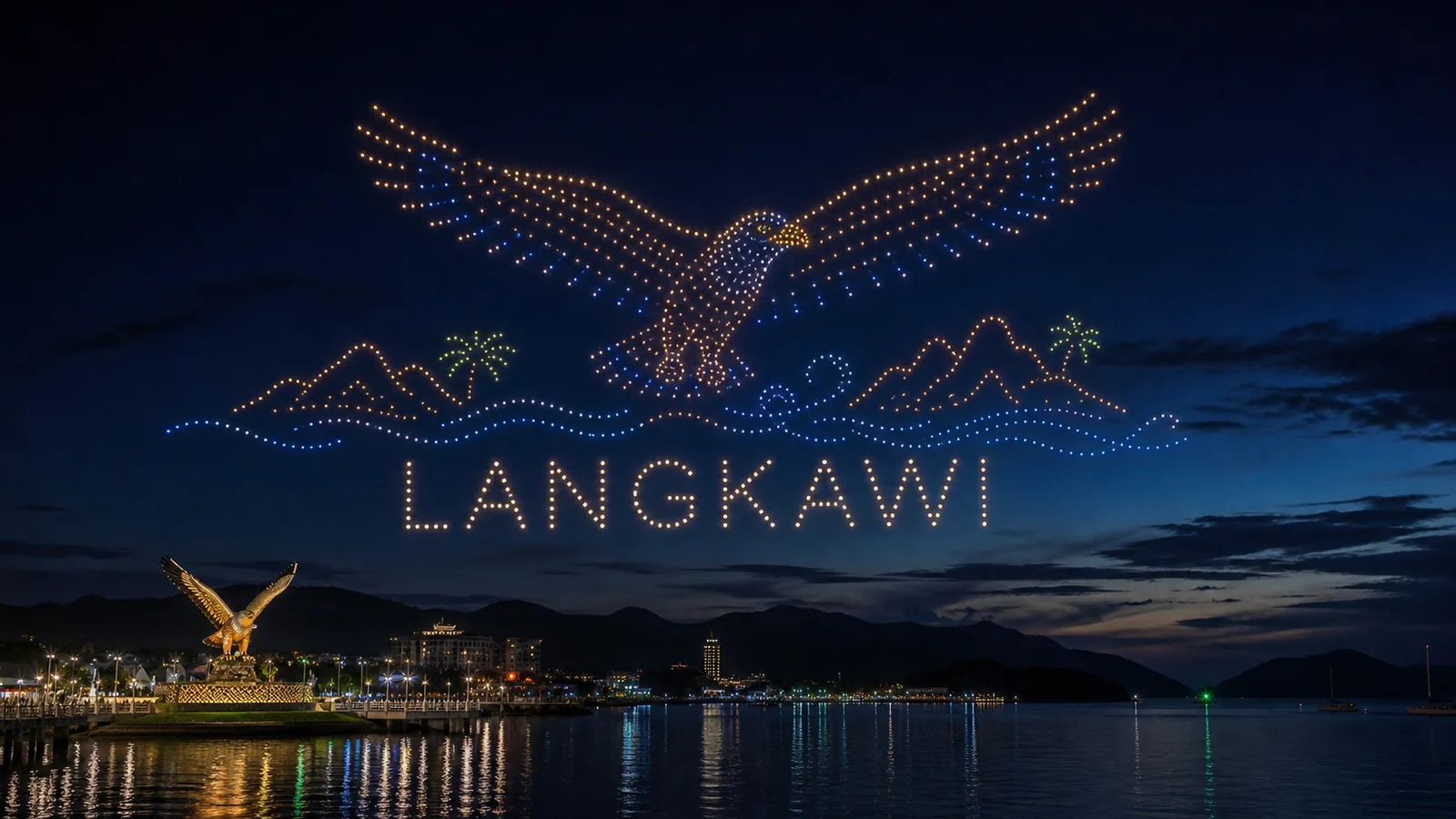
A resort event has a different pace from a city launch. Guests are often there for the setting as much as the programme, so the drone show needs to fit the property, the view, and the mood of the evening.
Start with the event decision
Begin with the guest experience you want to create. A destination dinner may need a refined closing sequence; a resort anniversary may need a celebratory visual; a tourism-led weekend may call for imagery linked to the place. The brief should state what the audience should feel and do after the show, not just what should appear in the sky.
Plan the venue and run of show
Waterfronts, beaches, golf grounds, and open lawns can all create strong viewing conditions, but they need proper assessment. Guest-room sightlines, boat traffic, access routes, nearby structures, and the show launch position can all affect the final design. The venue team should be part of the first site conversation.
What the resort should prepare for feasibility review
A resort team can shorten the first review by preparing one coordinated set of venue information:
- Event date, programme timing and expected guest count
- Site plan with the proposed audience and operational areas
- Main guest viewing zones, including beachfront, lawn, dining or balcony positions
- Access routes for equipment and the operations team
- Nearby buildings, trees, waterfront activity, vessels or temporary structures
- Guest-room or public areas that may have a different viewing direction
- Filming, livestream or hospitality requirements
- Venue, security, event-production and decision-maker contacts
The primary audience position should be chosen before detailed creative development. A formation designed for a beach crowd may not read correctly from guest-room balconies or a dining area facing another direction.
Build the creative around the audience
Resort visuals should give the location a role without making unsupported location claims. A clean island shape, a wave, a local-inspired pattern, or an elegant brand sequence can work well when it is designed for the actual horizon and crowd position. The best ideas leave room for the setting rather than trying to fill every second with motion.
Match the show to the guest journey
| Resort event | Audience moment | Information needed first |
|---|---|---|
| Destination dinner | A refined closing scene after dining | Table orientation, movement route and final viewing area |
| Resort anniversary | A celebratory brand and milestone sequence | Approved anniversary identity, guest mix and programme cue |
| Tourism activation | A place-led visual story | Approved destination assets, public viewing plan and media needs |
| Corporate retreat | A shared finale for invited guests | Group size, programme timing, privacy and transport plan |
The show does not need to compete with the setting. Use the horizon, venue rhythm and audience position to decide how much movement, text and detail the sequence can support.
Set the operational plan early
Outdoor hospitality events need a realistic weather decision process, especially where guest dining, travel, and programme timing are involved. This should sit alongside site access, safety, and the relevant approval planning.
Use a realistic 6-8 week working plan
MIRS recommends a general lead time of 6-8 weeks. The working sequence normally includes the brief and venue inputs, feasibility review, creative direction, project-specific application management, operational planning and final readiness decisions. Complex sites, controlled airspace, peak dates or unusual requirements can require more time.
The resort should identify who approves the creative, who controls the event programme and who can provide venue information. Delayed site details or divided approvals can affect the planning sequence even when the event date does not change.
Use this stage to confirm the stakeholders, content-capture positions, and decision points. A planned aerial show has more value when the venue team, event producer, and brand or organiser are working from the same sequence.
Frequently Asked Questions
Can a resort use a drone show for a guest event?
A drone show can be planned for resort celebrations, destination dinners, brand events, and tourism programmes when the site and operating conditions are suitable.
What should a resort venue share first?
Share the event date, guest count, site plan, intended viewing area, programme timing, access details, and any known constraints around the property or waterfront.
Can the drone creative reflect the destination?
It can use approved place-led visual ideas, provided the final sequence is appropriate for the site and avoids unsupported claims about the venue or destination.
How far in advance should a resort event be planned?
MIRS recommends a general lead time of 6-8 weeks. Complex sites, peak dates, or unusual operational requirements may need more time.
Plan a resort-event drone show in Malaysia
Share the venue, event date, guest count, programme timing and intended viewing areas for an initial feasibility discussion. Explore Malaysia drone show planning or contact MIRS about a resort-event brief.
Planning a drone show?
MIRS Drone Show creates bespoke drone light shows for corporate events, launches, celebrations and festivals, with creative and operational planning tailored to each venue and project.