




Where Can Drone Shows Operate for Major Events?
Where can drone shows operate? See how airspace, venues, weather, crowd plans, and permits shape safe, high-impact aerial events across America today.
A drone show can work over a waterfront, stadium, skyline, or festival field, but open space alone is not enough. The location needs a workable flight operation, a clear audience view, and a plan that meets aviation, venue, and public-safety requirements.
For event leaders, operational approval depends on the airspace, ground footprint, timing, and local conditions. A site can look impressive and still need changes before it is suitable for a safe performance.
Where Can Drone Shows Operate?
Drone light shows can operate across a wide range of event environments, including city waterfronts, beaches, resorts, sports venues, fairgrounds, parks, private estates, race tracks, golf courses, festival sites, and large corporate campuses. They are especially powerful where a broad viewing area lets guests see the full formation without obstruction.
In the United States, the practical answer always begins with airspace. Every site sits within a specific aviation environment, and that environment determines what authorizations, operating limitations, or coordination may be required. A location near a major airport, heliport, military installation, hospital flight route, or controlled airspace zone may still be viable, but it demands earlier planning and a more detailed approval process.
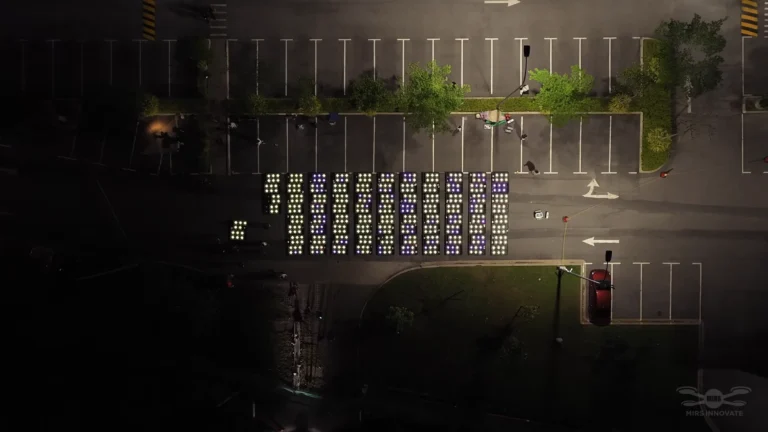
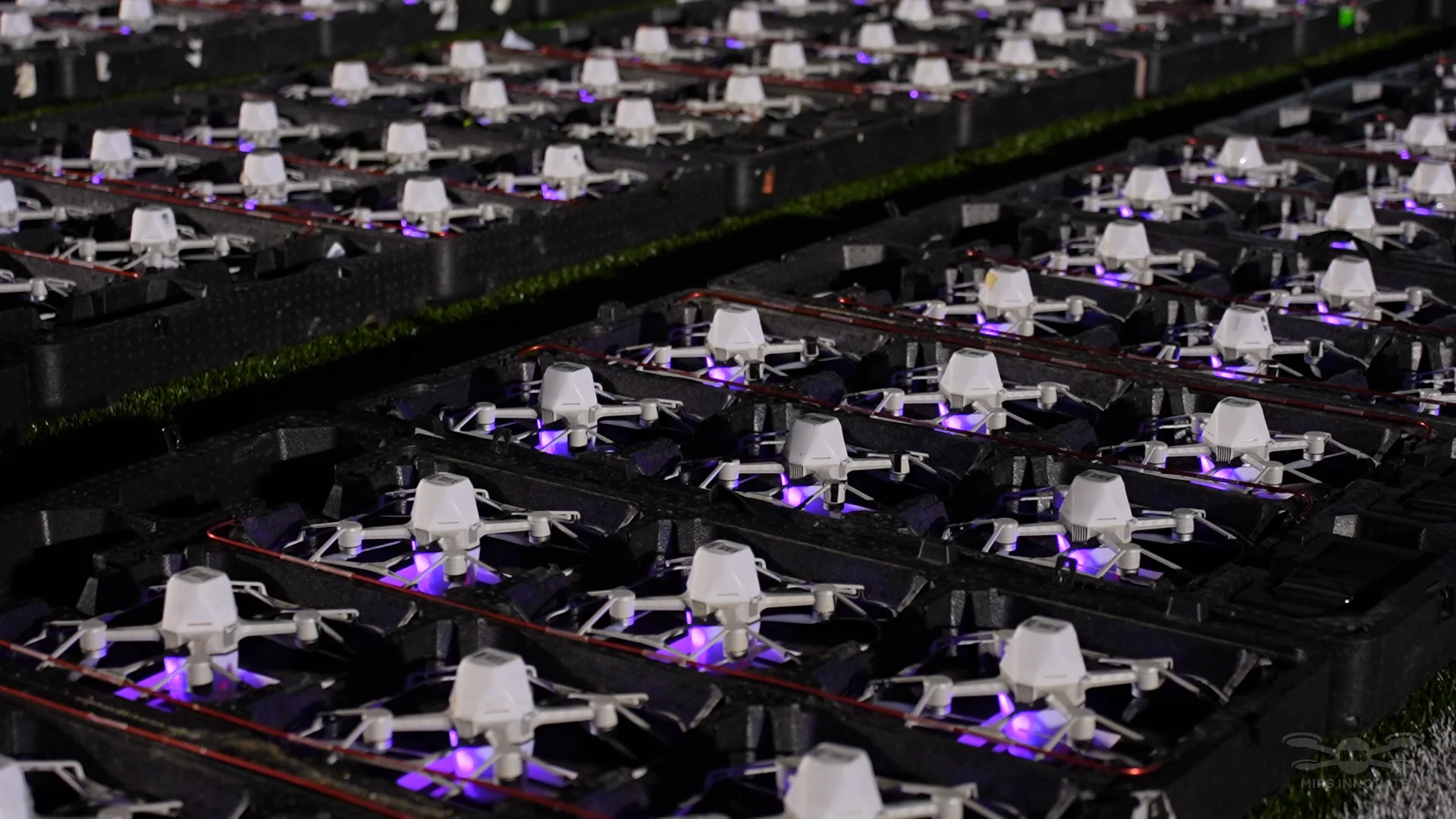
The site also needs a secure launch and recovery area. This is a controlled ground zone where the fleet is prepared, positioned, launched, and returned after the performance. It must be separated from the public, accessible to the production crew, and large enough to support the operational design. The launch zone does not need to be in the audience’s line of sight, which gives producers flexibility to protect the illusion while keeping the operation organized.
The Best Locations Pair Visibility With Control
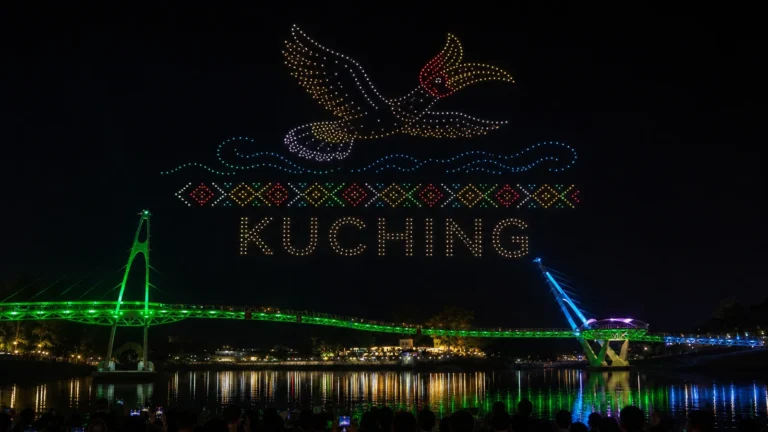
The most successful drone show venues create a clean sightline between the audience and the performance airspace. A waterfront promenade, for example, can provide an expansive natural viewing bowl, with drones flying over water or a distant shoreline. A stadium or race track offers defined crowd management, established security infrastructure, and clear production boundaries. A resort can create an intimate premium experience when surrounding structures and landscaping are considered during the design phase.
Urban rooftops and downtown plazas can also host striking shows, particularly for brand launches, civic celebrations, and major cultural moments. Their trade-off is complexity. Dense buildings can constrain sightlines, create radio-interference considerations, limit launch access, and place the operation closer to airports or helicopter routes. These locations require more technical planning, not less imagination.
Private properties are often attractive because they offer greater control over guest access and event timing. A luxury wedding venue, estate, or destination property may be an excellent fit when there is enough protected space for the launch area and a safe audience viewing position. Private ownership does not remove aviation rules, however. Airspace requirements and local restrictions still apply above the property.
Venues That Need More Planning
Some of the most dramatic settings are possible only with careful coordination. Shows near airports, in dense urban cores, adjacent to major roadways, or close to sensitive infrastructure can involve additional approvals, timing restrictions, or alternate flight geometry. Public beaches and parks may require municipal permits, environmental review, or limitations designed to protect wildlife and nearby residents.
That does not automatically make these venues unsuitable. It means the production timeline must reflect reality. A national celebration over a city harbor is a different assignment from a wedding at a private resort, and the planning process should match the visibility, scale, and scrutiny of the event.
Airspace Approval Is the First Operational Gate
For commercial drone performances in the U.S., the production must comply with applicable Federal Aviation Administration requirements. Depending on the mission, this can include authorizations for controlled airspace, nighttime operations, operations near people, or other conditions that fall outside standard small-drone rules. Large synchronized fleets add another layer of operational planning because the show is a coordinated aerial production, not a single-camera drone flight.
A professional drone show partner evaluates the location before promising a flight. That assessment considers the airspace classification, nearby aviation activity, planned altitude, distance from spectators, launch placement, emergency procedures, and show duration. It also identifies whether local police, fire, parks departments, harbor authorities, venue management, or other agencies need to be involved.
For public events, this coordination is part of protecting the guest experience. It keeps the show from becoming a last-minute permitting problem and gives stakeholders confidence that the centerpiece has been engineered as carefully as it has been designed.
Weather, Time of Year, and the Night Sky
Drone shows are built for darkness, when LED formations deliver their strongest visual impact. Twilight can be beautiful for a reveal, but the main performance is usually scheduled after sunset, once the sky gives the artwork enough contrast to read clearly from the audience area.
Weather is a decisive factor. Wind, rain, lightning, low visibility, and extreme temperatures can affect whether a show can safely proceed. A production team should review historical conditions for the location, monitor forecasts closely, and establish a decision process well before guests arrive. The purpose is not to diminish the spectacle. It is to ensure that a high-value event has a disciplined contingency plan.
Seasonality also changes what a venue can support. A summer coastal show may contend with wind and marine layers. A winter mountain event may require specialized logistics and careful temperature management. In desert locations, heat, dust, and remote access become central planning considerations. The right answer is location-specific, which is why site evaluation belongs at the beginning of creative development.
Audience Safety Shapes the Flight Design
A drone show should feel effortless to the crowd, but the operation behind it is exacting. The audience needs a designated viewing zone with a comfortable angle to the sky, clear arrival routes, and appropriate barriers separating guests from the operational area. The flight design should account for the venue footprint, nearby structures, emergency access, and the direction guests will naturally face.
This is one reason drones are a compelling alternative to fireworks. They offer a programmable, repeatable visual language without the same debris, smoke, or fire risk profile. Still, they are aviation assets, not decorations. Safe execution depends on trained crews, tested equipment, redundant planning, and a clear decision authority on site.
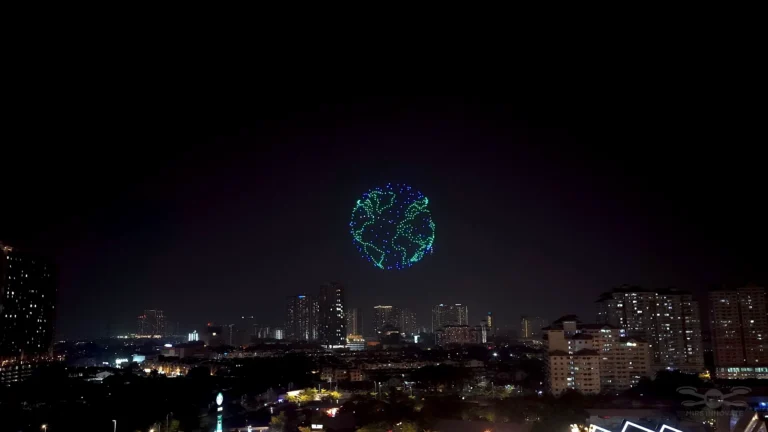
For a brand event, the payoff is significant. Logos can appear with remarkable clarity. Product silhouettes can transform into animated stories. A city anniversary can move from historic imagery to a national symbol in seconds. When the venue and flight plan work together, the sky becomes a controlled canvas rather than a generic backdrop.
Plan Earlier for High-Visibility Events
The more public the event, the more lead time it deserves. Major festivals, government celebrations, tourism campaigns, and televised launches often involve layered stakeholder approvals, road or waterfront management, public safety meetings, and public communications. Starting early gives the creative team room to create something ambitious while the operations team secures the path to deliver it.
A useful starting brief includes the event date, city, venue or proposed site, expected attendance, desired show time, and the story the event needs to tell. From there, a qualified production partner can assess feasibility and propose an approach that aligns fleet scale, visual ambition, site logistics, and approval requirements.
MIRS Drone Show plans location feasibility alongside the creative concept, covering airspace coordination, launch design, site access, and on-site delivery. Contact MIRS to discuss a drone-show venue with the team.
Read how to coordinate event airspace safely and explore MIRS drone show services when building the event brief.
Frequently Asked Questions
Can drone shows operate near airports or in controlled airspace?
It may be possible, but the site needs early aviation review and the approvals or operating conditions required for that location. A production team should assess the airspace before confirming the show.
What does a drone-show venue need on the ground?
The site needs a secure launch and recovery area, safe access for the crew, separation from the audience, and a viewing zone that gives guests a clear sightline to the performance area.
Can private venues host a drone show?
Private ownership can help with site access and event timing, but it does not remove aviation requirements or local restrictions. The airspace and operating plan still need to be assessed.
When should organisers check whether a venue is suitable?
Check feasibility while the date, venue, and program are still flexible. That gives the team time to review airspace, launch access, audience layout, local conditions, and weather alternatives.
The best venue is the one where imagination has room to rise and every operational detail has somewhere to land. Choose that foundation early, and the sky is ready to carry a story people will remember long after the lights fade.
Planning a drone show?
MIRS Drone Show creates bespoke drone light shows for corporate events, launches, celebrations and festivals, with creative and operational planning tailored to each venue and project.