

12 Best Event Drone Storytelling Ideas That Land
See how the best event drone storytelling ideas turn launches, celebrations, and public events into branded moments audiences film and remember long after.
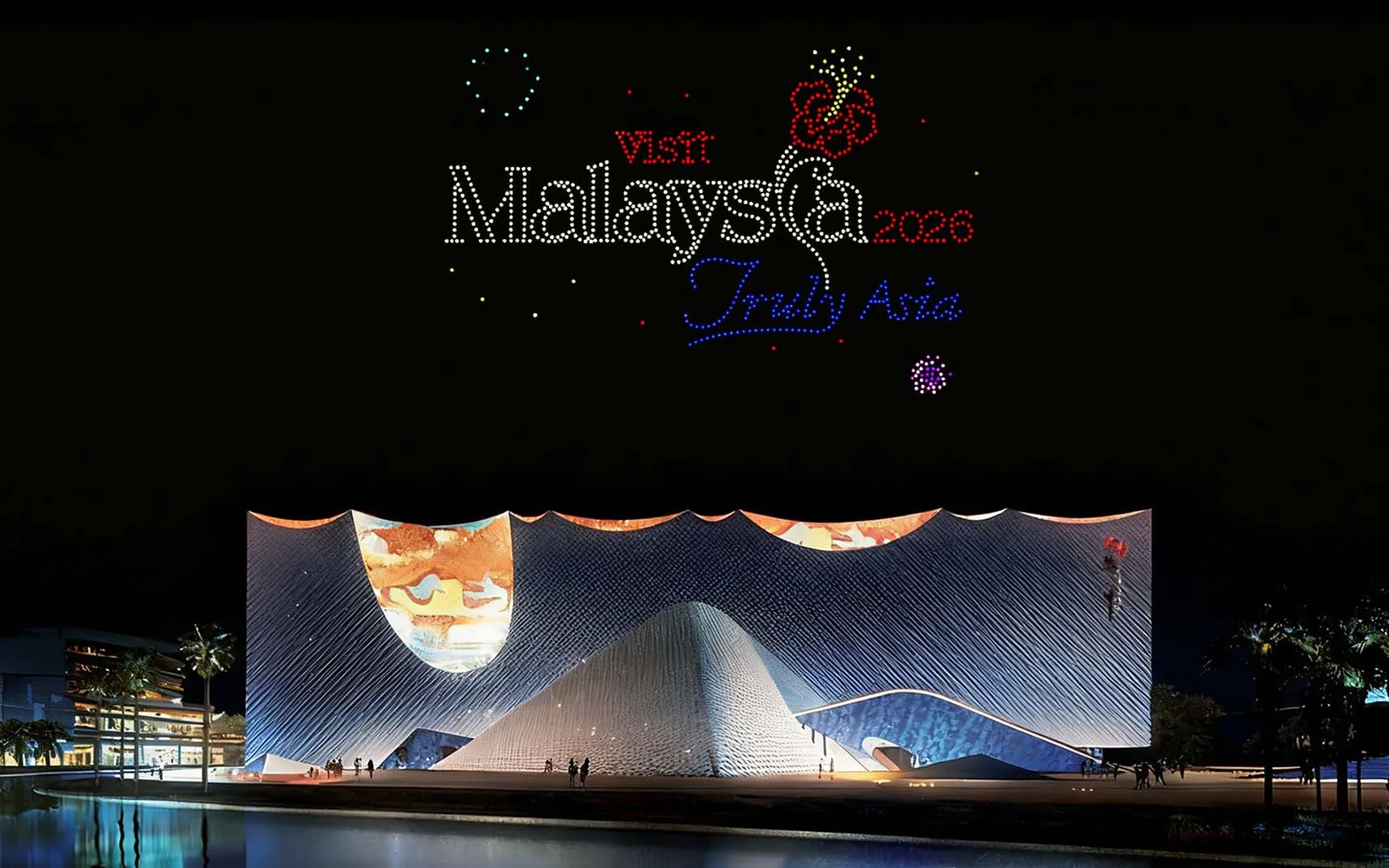
A drone show works best when it gives the audience a clear moment to follow and remember. Aerial formations can build anticipation, reveal something familiar, and close on an image people want to film and share. For brands, cities, and event producers, that makes the show part of the programme rather than a separate finale.
Start with a simple story. It might move from a question to a reveal, from a local symbol to a shared message, or from a product detail to the brand. These 12 approaches show how a drone light show can become a memorable part of an event.
1. Reveal the Brand as the Final Reward
A logo should not be the first thing the audience sees. Build toward it. Start with abstract motion, product-inspired shapes, or a visual challenge that creates curiosity, then transform those elements into the brand mark at the peak of the sequence.
This approach makes branding feel earned rather than inserted. It is particularly effective for product launches, sponsorship moments, and corporate anniversaries where executives need clear brand visibility without sacrificing spectacle.
2. Turn a Product Feature Into a Sky-Scale Animation
A product can become the central character of the show. A vehicle can race across the horizon, a bottle can pour a stream of light, a watch can assemble from precision components, or a new device can emerge from a constellation of pixels.
The idea works best when the feature is visually simple and instantly recognizable at distance. Complex technical details may matter in a presentation, but the night sky rewards bold silhouettes, clean movement, and one memorable transformation.
3. Tell the Origin Story in Three Acts
For a brand with heritage, a city with a defining history, or an organization celebrating a milestone, use the show to move through past, present, and future. The first act establishes the roots. The second captures the achievement. The final act projects ambition.
This structure gives a large-scale celebration emotional weight. It is ideal for centennials, destination campaigns, national days, and major institutional anniversaries. The final future-facing image can be a logo, a symbol, or a statement of purpose.
4. Make the Audience Part of the Narrative
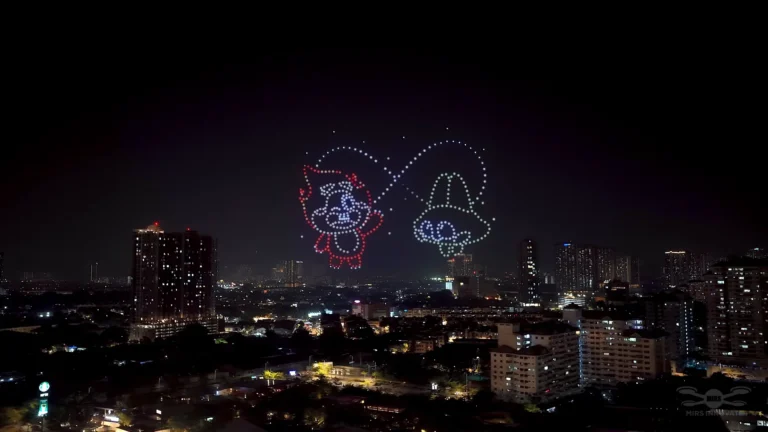
The most powerful public events reflect the people standing below them. A show can begin with individual points of light gathering into a crowd, then becoming a shared symbol such as a heart, flag, mascot, or city skyline.
For an event with a broad community audience, this creates genuine ownership. The story is no longer only about the organizer or sponsor. It becomes a visual statement that says, “This moment belongs to all of us.”
5. Build a Countdown That Escalates the Pressure
A countdown is familiar. A cinematic countdown can become the moment everyone came to see. Instead of simply displaying numbers, let each number trigger a new layer of visual intensity: pulses, orbiting forms, expanding rings, or fragments assembling around the sky.
This is one of the most effective event drone storytelling ideas for grand openings, New Year’s Eve celebrations, stadium events, and launch ceremonies. Timing is critical. The final zero must land exactly with the reveal, live music cue, or on-stage announcement.
6. Give a Destination Its Own Nighttime Signature
Tourism boards and municipalities can use drone storytelling to turn local identity into a visual asset. Landmark architecture, native wildlife, historic symbols, cultural patterns, and regional landscapes can be reimagined as an aerial sequence designed for global sharing.
The goal is not to fit every local reference into one show. Choose two or three symbols with immediate recognition, then connect them with a clear story. A coastline may become a wave, a wave may become a regional emblem, and that emblem may become the city name in light.
7. Create a Hero’s Journey for a Major Launch
A high-stakes launch needs drama before the reveal. Show a single point of light navigating obstacles, gathering energy, and reaching a breakthrough moment. That hero can represent a founder’s vision, a new product, an athlete, or the audience itself.
This narrative is especially useful when the event theme centers on innovation, resilience, or transformation. It gives the final reveal a sense of momentum. The audience sees not only what is launching, but why it matters.
8. Design a Marriage Proposal to Become a Family Film
For luxury private events, the story should feel personal without becoming overly complicated. Initials can transform into a shared monogram. A meaningful date can lead into a custom message. A favorite place, song, or memory can inspire the visual language.
The proposal itself is the emotional center, so the sequence must support the moment rather than overwhelm it. Keep the message legible, plan the viewing angle carefully, and coordinate the timing around the couple’s exact location. A premium show is as much about control as it is about scale.
9. Animate the Festival Theme, Not Just the Festival Name
Festival producers often need a visual centerpiece that can compete with a crowded program of music, food, performers, and sponsors. Rather than placing the event name in the sky and stopping there, translate the theme into a living visual world.
A music festival might move from sound waves to instruments to a dancing skyline. A winter celebration could transform snowflakes into lanterns and then into a glowing seasonal message. The event name becomes more powerful when it arrives after the audience has experienced its world.
10. Use a National Symbol With Respect and Scale
Government celebrations and civic ceremonies call for visual storytelling that is both grand and considered. A flag, national flower, eagle, monument, or historic icon can anchor the performance, but the presentation should be designed around the occasion and audience.
A sequence for an independence celebration may call for pride and ceremony. A memorial occasion may need restraint, slower motion, and a more reflective color palette. The technology can deliver extraordinary scale, but the story must match the meaning of the day.
11. Turn a Live Performance Into an Aerial Finale
Drone shows gain additional force when they respond to what is happening on stage. A singer’s final note, an orchestra’s crescendo, a keynote’s closing line, or a stadium-wide chant can trigger a synchronized aerial sequence.
This requires detailed show calling and disciplined technical planning. The reward is a finale that feels singular rather than pre-programmed. When music, lighting, screens, pyrotechnics where appropriate, and drones share one timeline, the event can reach true cinematic scale.
12. End With an Image Built for the Camera Roll
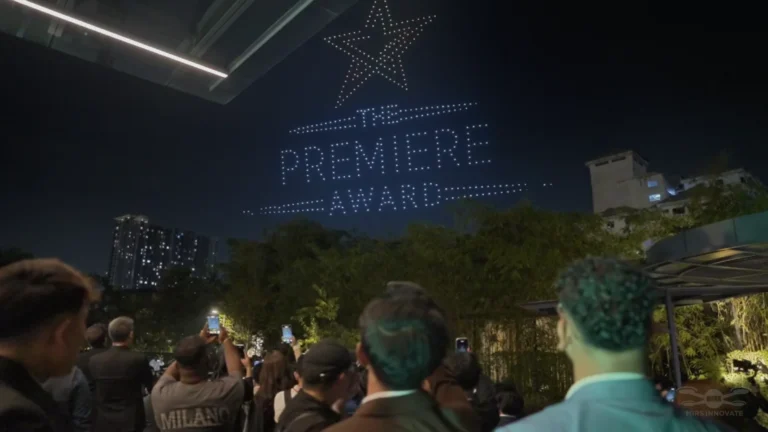
The closing formation should be unmistakable. It may be a giant logo, a message, a symbolic character, or a three-dimensional visual that holds long enough for the crowd to capture it. This is where social reach is won or lost.
Legibility matters more than cleverness at this point. Avoid ending with a visual that needs explanation. Give guests a clean, high-contrast image they can understand in one second and recognize later in a crowded feed.
How to Choose the Right Story for Your Event
The right concept depends on the event objective. If the priority is brand recall, make the product or logo the destination of the story. If the priority is civic pride, begin with a recognizable local truth. If the priority is a private celebration, use personal details sparingly and make the final message emotionally direct.
Scale also changes the creative approach. A fleet of several hundred drones can support elaborate animations, extended text, and dimensional sequences. A more intimate production can still create a powerful moment by focusing on one clear narrative and a precise final reveal. Bigger is not automatically better. A story with one commanding idea will outperform a sky full of disconnected visuals.
Operational reality should shape the concept early, not after the creative is approved. Airspace requirements, site geometry, weather planning, audience sightlines, show duration, and local regulations all influence what will perform best. This is why a turnkey production partner matters: creative ambition must be supported by engineering, permitting, flight planning, and on-site precision.
Start with the one image the audience should remember, then build the creative and production plan around it. To discuss a show for a launch, public event, or private occasion, contact MIRS for a drone show proposal or explore MIRS drone show services.
Frequently Asked Questions
What makes a drone show story work at an event?
A strong event story starts with one clear idea the audience can understand from the viewing area. The sequence should build toward a final formation that fits the event objective, whether that is a product reveal, a civic message, a personal moment, or a festival finale.
Can a brand logo be part of a drone show story?
Yes. A logo usually works best as the result of the story rather than the opening frame. Earlier formations can introduce a product shape, visual motif, or message before resolving into the brand mark.
How early should drone storytelling be planned?
Plan the story alongside the event concept, venue review, airspace checks, and production schedule. Early planning gives the creative team time to match the sequence to sightlines, show timing, music, screens, and the final live cue.
Does the event story affect drone-show operations?
It can. The venue, viewing geometry, airspace, weather conditions, local permissions, and timing of other event elements all influence what can be staged safely and how the story should be designed.
Planning a drone show?
MIRS Drone Show creates bespoke drone light shows for corporate events, launches, celebrations and festivals, with creative and operational planning tailored to each venue and project.