

Why Brands Use Drone Spectacles for Big Moments
Why brands use drone spectacles: create safer, shareable, fully branded sky stories that command attention at launches, celebrations, and public events.
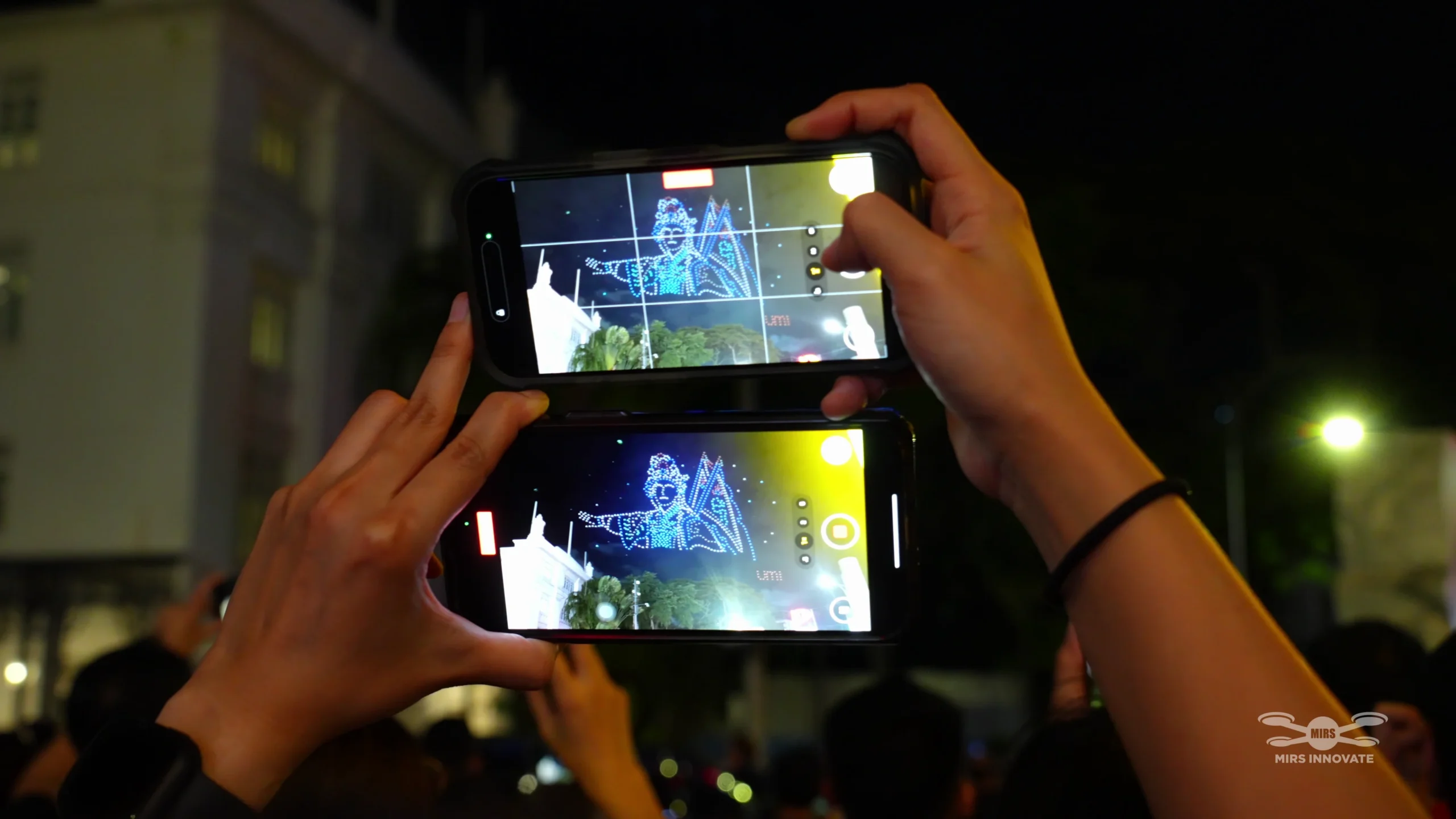
A logo on a screen is easy to miss. A well-timed drone formation gives people a reason to stop, look up, and record the moment. That is why brands use drone spectacles when an event needs a clear visual centrepiece.
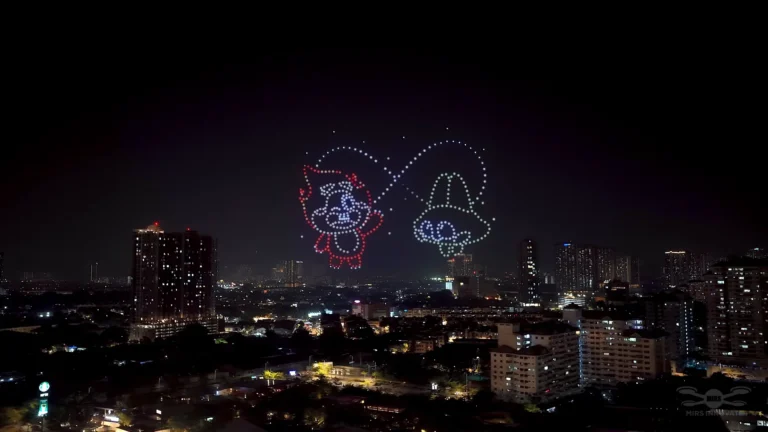
For marketing leaders, tourism authorities, agencies, and public-event producers, a drone light show is not simply an entertainment add-on. It is a programmable visual stage in the sky. Hundreds or thousands of LED-equipped drones can form a brand mark, reveal a product silhouette, animate a story, or transform into a national symbol with a level of control conventional fireworks and static displays cannot offer.
Why Brands Use Drone Spectacles Instead of Standard Event Visuals
The event landscape is crowded with LED walls, projection mapping, celebrity appearances, and firework finales. Each can be effective. But few create the same combination of scale, brand ownership, and audience participation as an aerial performance designed around a single story.
A drone spectacle makes the sky part of the event architecture. It can introduce a new vehicle above a city skyline, count down to a store opening, trace the journey of a destination, or turn a company anniversary into a moving visual narrative. The result is highly visible without feeling like a conventional advertisement. Guests experience it first as a shared spectacle, then as a message they want to capture and share.
That distinction matters. Audiences are increasingly skilled at ignoring branded interruption. They respond differently when a brand creates something worth witnessing.
Brand storytelling at a scale no screen can match
Drone fleets are built for visual transformation. A sequence can begin with abstract color and motion, resolve into an icon, then shift into text, a character, a product, or a full 3D-style visual composition. This gives brands an unusual amount of narrative range within a short performance.
The strongest shows do not place a logo in the sky and stop there. They create anticipation, reveal a story, and land on an image that feels earned. For a global product launch, that may mean showing the problem a new product solves before revealing its form. For a tourism board, it may mean moving through cultural symbols, local landmarks, and seasonal experiences before presenting the destination name.
Because every formation is programmed for the specific event, there is no generic template audience members have seen before. The show becomes proprietary to the brand and the moment.
A Spectacle Designed for Sharing
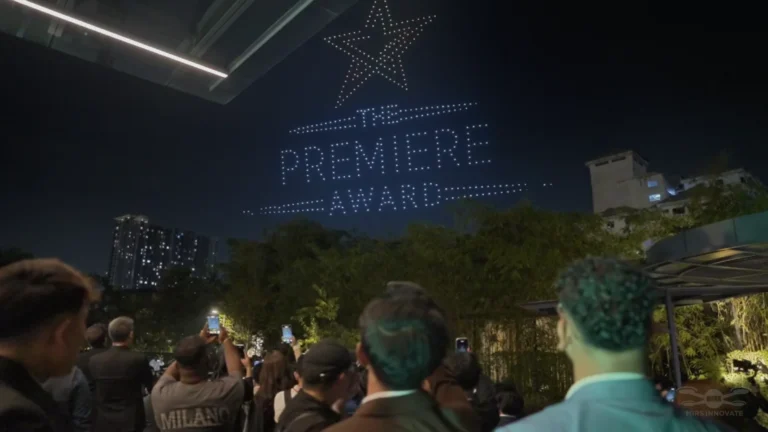
The commercial value of a major event does not end at the venue perimeter. A well-produced drone show creates a natural recording moment: phones rise, guests post in real time, local media cover the display, and the visual can continue to circulate long after the last drone lands.
This is one reason drone spectacles work especially well for openings, anniversaries, destination campaigns, championship celebrations, fashion activations, and holiday programming. The audience does not need instructions to participate. The visual itself creates a reason to document the experience.
Shareability, however, should not be confused with luck. A formation needs to read clearly from the audience viewing area and through a phone camera. Color contrast, pacing, flight paths, legibility of text, and the timing of the final reveal all influence whether footage looks extraordinary or merely technical. The show should be designed for the live crowd first, while considering the camera angles that will shape its social afterlife.
Precision protects the premium experience
High-visibility events leave little room for improvised production. A drone performance depends on detailed creative development, flight planning, airspace coordination, safety assessments, site surveys, weather monitoring, and disciplined on-site execution.
This operational depth is a major reason brands work with specialist production partners rather than treating drones as a novelty rental. The most ambitious visual concept is only valuable if it can be flown safely, legally, and reliably at the chosen location.
MIRS Drone Show plans creative direction and drone animation alongside permits, aviation coordination, launch-site requirements, synchronization, and live production. Contact MIRS to discuss a brand drone spectacle with the team.
Safety and Control Change the Conversation
For many organizers, the appeal begins with creative impact but becomes decisive when safety and control enter the discussion. Fireworks remain powerful, yet they can bring concerns around fire risk, debris, noise, smoke, animal welfare, and regulatory restrictions. A drone light show presents a different model for the finale or centerpiece.
Drones do not create the explosive sound associated with pyrotechnics, and they do not leave firework debris across a site. Their formations are pre-programmed, their movement is monitored, and the performance can be adjusted to the operational requirements of the event location. This can make them particularly compelling for urban settings, waterfronts, resorts, stadium-adjacent spaces, and destinations seeking a lower-impact public spectacle.
There are still limits. Wind, precipitation, airspace restrictions, nearby airports, launch-zone access, and local regulations all matter. A credible producer will evaluate these conditions early, not promise a concept before determining whether it is viable. For clients, that honesty is part of premium execution. The right question is not whether drones can replace every firework display. It is whether they can deliver the specific emotional and operational outcome the event requires.
The Sky Can Carry a Brand Message
Most event assets are constrained by a physical footprint. Signage reaches the people near it. A stage screen reaches the people facing it. A drone show can become a visual landmark visible across an event district, beach, park, marina, or city gathering space.
That visibility is particularly valuable when a brand needs to command attention around a landmark date. Consider a new-market entry, a corporate milestone, a major sponsorship, a cultural festival, or a national celebration. In these settings, the show does more than entertain. It signals confidence, investment, and occasion.
The medium also gives sponsors a more elegant role than traditional logo placement. A sponsor can be woven into the narrative through color, shape, motion, and a final signature formation. The message feels integrated into the performance rather than placed on top of it.
Customization creates relevance
No two audiences respond to the same symbols in the same way. A luxury brand may need restraint, refined motion, and a carefully paced reveal. A sports event may call for high-energy animation, team colors, and a dramatic crowd-facing finale. A government celebration may require cultural sensitivity, national motifs, and a production plan built for a large public audience.
This is why customization goes far beyond selecting a logo file. The fleet size, show duration, creative complexity, viewing distance, music synchronization, venue environment, and audience density should all shape the concept. A smaller private celebration may need intimacy and personal meaning. A citywide festival may need formations that read from long distances and hold attention across a broad viewing field.
The best creative decisions are tied to the event objective. If the goal is press coverage, the final image must be instantly recognizable. If the goal is emotional connection, the sequence needs room to build. If the goal is product recall, the product form and brand identifiers must remain clear without turning the performance into a billboard.
When a Drone Spectacle Is Worth the Investment
Drone shows are not the right answer for every event. A daytime activation, an indoor venue, a very short planning window, or a location with severe airspace constraints may call for a different solution. They also require meaningful planning, particularly for large public events where permits, safety zones, and contingency protocols must be established well ahead of show day.
But when the brief calls for a signature moment with global visual potential, the investment can serve multiple objectives at once: live audience impact, earned media, social content, sponsorship value, destination visibility, and long-term memory. Few production elements carry that much strategic weight in a single performance.
Explore brand launch drone show examples and MIRS drone show services when shaping the event brief.
Frequently Asked Questions
Why do brands use drone spectacles at major events?
They give the event a clear visual moment that can combine a story, product or brand reference, and a shared audience experience. The concept works best when it supports a defined event objective rather than only placing a logo in the sky.
Can a drone show display a brand logo or product shape?
Yes. The design team can assess whether the logo, product outline, text, or other visual reference will read clearly at the planned viewing distance and with the available fleet size.
How should a brand plan a drone spectacle for social sharing?
Plan the live viewing area first, then consider camera sightlines, readable formations, contrast, pacing, and the timing of the final reveal. A clear sequence is easier for both guests and cameras to follow.
What needs to be checked before confirming the venue?
The team should assess airspace, launch access, audience layout, local approvals, site safety, and weather alternatives before committing to the creative concept.
The most successful clients begin with a clear question: what should people feel when they look up? Start there, then build a sky story worthy of the answer.
Planning a drone show?
MIRS Drone Show creates bespoke drone light shows for corporate events, launches, celebrations and festivals, with creative and operational planning tailored to each venue and project.