


Drone Show Weather Requirements That Shape Success
Drone show weather requirements determine safety, timing, and impact. See how wind, rain, visibility, and temperature shape a flawless aerial event plan.
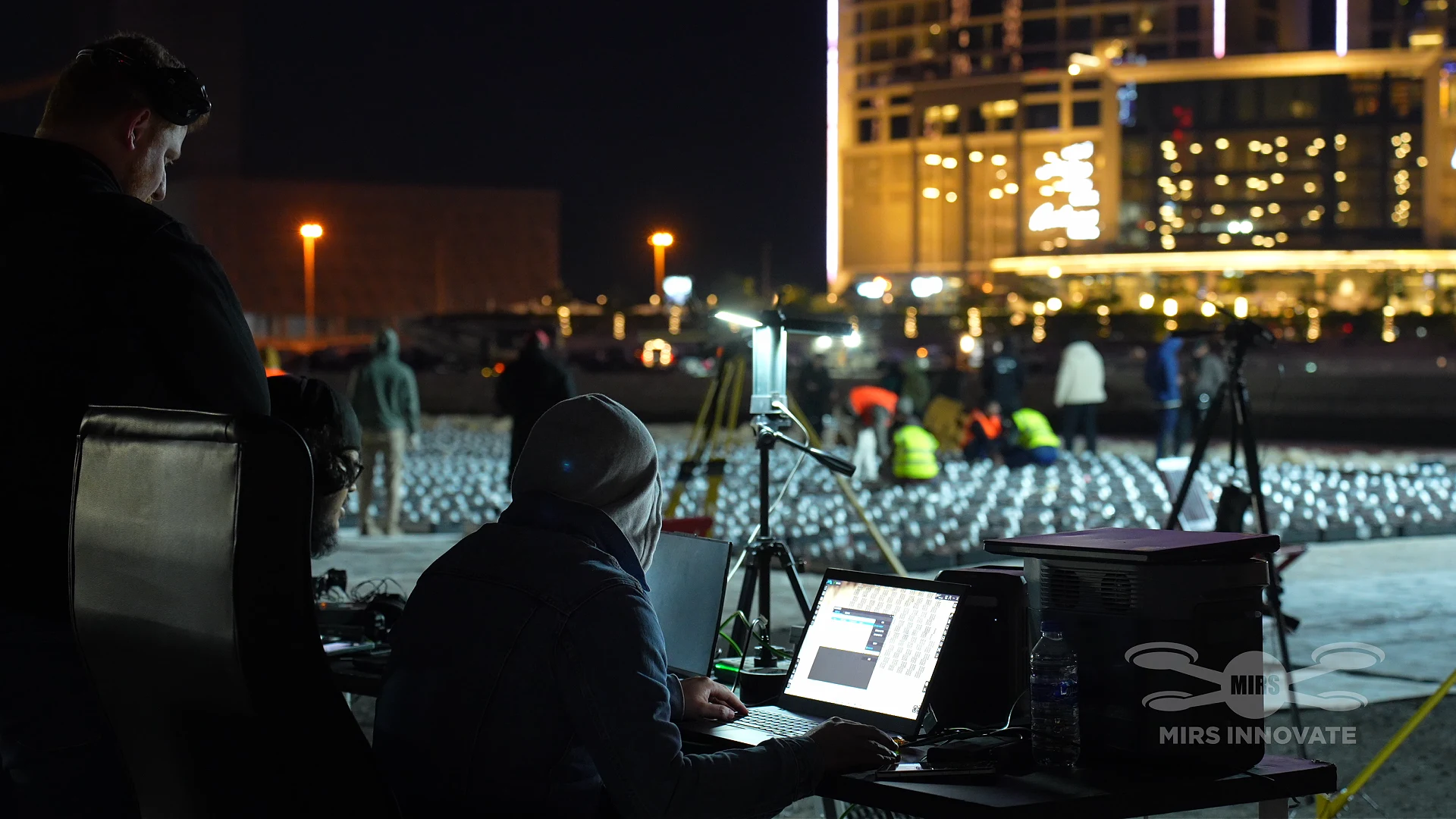
A drone show depends on the conditions above and around the venue. Weather affects flight safety, visual clarity, operational timing, and the decision to launch. It needs to be considered alongside the creative plan from the start.
For event leaders, the task is to prepare for changing conditions with a clear decision process, a workable schedule, and realistic safety thresholds. This is part of planning a professional drone show, not a last-minute adjustment.
Drone Show Weather Requirements: The Core Factors
Every drone light show begins with an assessment of the local forecast, venue conditions, airspace environment, and fleet capabilities. There is no single universal weather limit for every production. Fleet model, show location, launch area, altitude, local aviation rules, and the operating team’s procedures all matter.
Still, four weather factors define most go or no-go decisions: wind, precipitation, visibility, and temperature. Lightning and thunderstorms require their own level of caution because they can transform quickly from a distant concern into an immediate operational stop.
Wind: The Most Common Operational Variable
Wind is often the weather condition that receives the closest attention. A drone fleet can hold precise formations only when each aircraft has sufficient control authority to maintain its programmed position. Strong or gusting winds force drones to work harder, consume more battery power, and may compromise the crisp geometry that makes logos, animations, and aerial storytelling feel monumental.
Wind at ground level does not tell the full story. Conditions can differ significantly at flight altitude, particularly near coastlines, open fields, high-rise buildings, stadium structures, and mountain terrain. Buildings may create turbulence, while waterfront venues can produce shifting gust patterns after sunset.
Professional operators establish wind thresholds based on the specific fleet and mission profile. The decision is not only about whether a drone can fly. It is about whether the entire fleet can perform safely and accurately enough to meet the production standard promised to the client. A partial compromise in formation quality is not the standard for a major brand launch or national celebration.
Rain, Snow, and Moisture Exposure
Most show drones are not designed to operate in rain, snow, or conditions where moisture can enter critical components. Even light precipitation can affect electronics, propellers, sensors, battery systems, and LED visibility. Wet launch surfaces also add safety concerns for crews handling batteries and aircraft during setup.
Mist, fog, dew, and high humidity deserve attention too. They may not always prevent flight, but they can affect visibility, create condensation risks, or reduce the brilliance of the visual experience. A beautifully programmed 3D sequence loses force if the audience sees only a diffuse glow through heavy moisture.
For this reason, weather monitoring continues throughout the event window. A forecast showing a small chance of rain is not automatically a cancellation scenario. What matters is the expected timing, intensity, duration, and confidence level of the forecast, combined with conditions observed on site.
Visibility: Protecting the Audience Experience
A drone show is designed to be seen. Low clouds, dense fog, smoke, haze, or blowing dust can obscure formations and dilute the visual payoff. This is especially relevant for major public events where thousands of guests, broadcast cameras, and social audiences expect a clean, cinematic view.
Visibility is both an operational and creative consideration. Operators need reliable visual awareness of the flight area, while audiences need enough sky clarity to recognize text, branded symbols, and animated scenes. In some locations, atmospheric haze may be acceptable for a bold, high-contrast display. In others, such as a show featuring finer typography or intricate character animation, the creative team may adjust the design to favor larger, brighter elements.
Smoke from nearby fireworks, wildfires, industrial activity, or event effects can create a similar challenge. If a drone show shares a program with pyrotechnics, stage effects, or other aerial elements, the running order should account for how those effects may affect the sky.
Temperature and Battery Performance
Temperature affects drone batteries, which are the power source behind every formation, transition, and final reveal. Extremely cold conditions can reduce battery efficiency and require additional preparation, monitoring, and operational margin. High heat can also affect batteries, electronics, and crew working conditions.
Temperature alone rarely tells the entire story. Wind chill, humidity, direct sun during pre-show setup, and the length of time equipment remains outdoors all matter. An experienced production team plans battery handling, storage, charging, and launch timing around the actual venue environment rather than relying on a generic weather app reading.
Why Thunderstorms Change the Entire Decision
Lightning is an immediate red flag for outdoor aviation operations. A storm does not need to be directly over the venue to introduce risk. Lightning activity, fast-moving cells, sudden wind shifts, and rapidly changing rain bands can make conditions unsuitable long before precipitation reaches the launch site.
This is where operational discipline matters most. A show team must have the authority to pause, delay, or cancel a flight when safety thresholds are not met. That decision protects guests, crew, property, and the integrity of the event itself. A responsible production partner will never trade safe operations for a few more minutes of spectacle.
For high-profile events, planners should establish a weather decision timeline in advance. This includes when forecasts are reviewed, who receives updates, when a hold is called, and how guests and stakeholders will be informed. Clear authority prevents last-minute confusion when pressure is highest.
Planning a Weather-Resilient Drone Show
The strongest event plans treat weather as a production variable from the first site conversation, not as a problem to solve on show day. That starts with selecting an appropriate flight area and launch zone. Open space, predictable access, clear sightlines, and distance from obstacles create more options when conditions are less than perfect.
The event schedule should also include flexibility where possible. A drone show may be positioned within a broader evening program so a short weather hold does not leave guests without an experience. Live entertainment, a keynote, a musical performance, or a hospitality segment can provide valuable timing flexibility while the operations team evaluates the sky.
For milestone events with fixed dates, contingency planning is particularly valuable. The right approach depends on the event format. A multi-night festival may have a built-in opportunity to reschedule. A one-night brand launch may require a carefully designed backup moment, such as a projected visual reveal or indoor creative activation. The objective is not to replace the drone show casually. It is to protect the overall audience journey if conditions prevent flight.
The On-Site Weather Process Behind a Confident Launch
A polished drone show can appear effortless from the ground. Behind that moment is a methodical process of checks, communications, and decisions. Before launch, the production team reviews current conditions and short-term forecast changes, assesses the flight area, confirms equipment readiness, and coordinates with site stakeholders.
During the event, the team continues to monitor the environment. Conditions that were safe an hour earlier may no longer meet flight requirements. This is particularly true around sunset, when temperatures can fall quickly, winds can shift, and local weather patterns become more pronounced.
At MIRS Drone Show, the operations team treats flight discipline as part of the creative delivery. A clear weather decision process helps protect the people on site and the quality of the final performance.
What Event Planners Should Ask Before Booking
The most useful weather conversation is specific to the venue and event date. Ask how wind, precipitation, visibility, and temperature are assessed for the proposed fleet. Confirm who monitors conditions on site, what the weather decision process looks like, and whether the schedule can accommodate a short delay.
It is also wise to discuss audience viewing areas, launch-site access after rain, nearby smoke sources, and any venue features that may influence wind. A rooftop, beach, marina, urban plaza, and desert resort can all host extraordinary drone shows, but each calls for a different operational plan.
Weather should shape the production plan early, so the event team understands the choices available if conditions change.
Plan for weather with MIRS
Share the event date, venue, audience setup, and schedule with the production team early. Contact MIRS Drone Show to discuss a weather-aware drone show plan.
Frequently asked questions
Can a drone show fly in rain?
Rain and moisture can affect aircraft, batteries, sensors, and launch operations. The operating team assesses actual conditions and the fleet limits before making a flight decision.
How do wind changes affect a drone show?
Strong or gusting wind can affect position holding, battery use, and formation quality. Wind is assessed at the venue and at the planned flight altitude, not only from a ground-level forecast.
Does fog always cancel a drone show?
Not always, but fog, haze, smoke, and low cloud can reduce operational visibility and prevent the audience from seeing the formation clearly. The decision depends on the conditions at the site and the approved operating procedures.
When is weather monitored for a drone show?
Weather is considered during venue planning and checked again before and during the event. The team monitors current conditions and short-term changes so it can make a timely safety decision.
For a related guide, read what weather stops drone shows.
Planning a drone show?
MIRS Drone Show creates bespoke drone light shows for corporate events, launches, celebrations and festivals, with creative and operational planning tailored to each venue and project.