



Are Drone Shows Environmentally Friendly Today?
Are drone shows environmentally friendly? Assess energy use, noise, waste, and wildlife risks versus fireworks before planning a landmark event at scale.
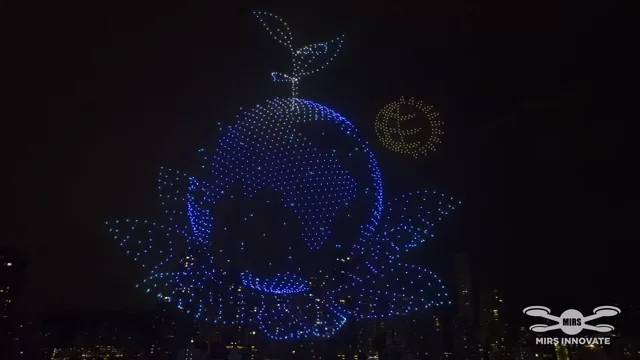
After a major celebration, organisers often consider not only the audience response but what remains at the venue. Fireworks can create smoke and debris that require cleanup. A drone show uses a reusable fleet and a cleared launch area. That contrast leads to an important question: are drone shows environmentally friendly?
The honest answer is: often, especially when compared with conventional fireworks, but not impact-free. A professionally planned drone light show replaces combustion, fallout, and single-use pyrotechnics with rechargeable aircraft, LED lighting, software, and trained crews. Its environmental profile still depends on how the production is planned, powered, transported, and maintained.
For brands, governments, and event producers, the goal is not to claim a zero-impact spectacle. It is to select an experience that delivers extraordinary public impact with a more thoughtful environmental profile.
Why Drone Shows Are Often the Greener Choice
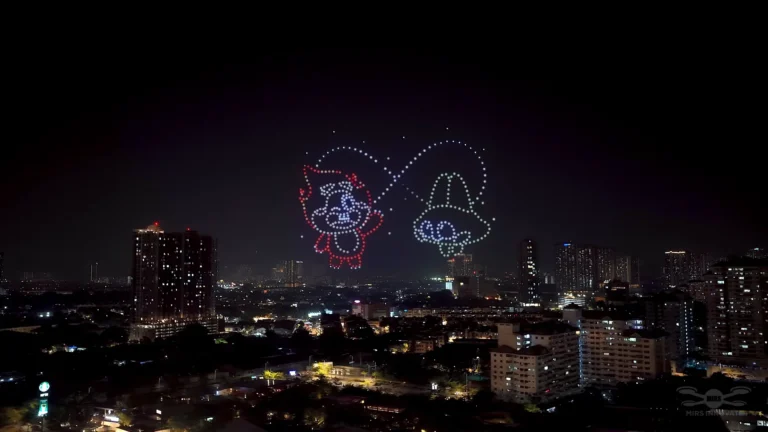
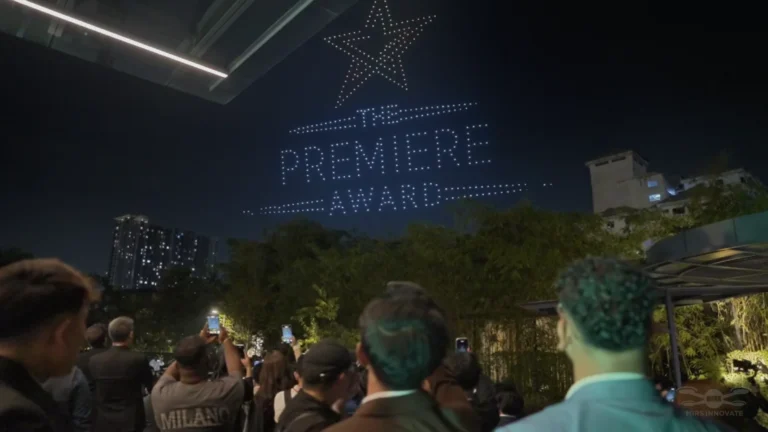
The largest environmental distinction is simple: drone shows do not rely on explosions to create their visual effect. Hundreds or thousands of LED-equipped drones fly precise, pre-programmed paths to build logos, characters, messages, and cinematic animations above an audience. There is no gunpowder propellant, no colored combustion chemistry, and no shower of firework casing fragments returning to the ground or water.
Fireworks can release particulate matter, gases, and metal compounds used to create colors. The exact impact depends on the products used, local weather, display size, and whether the show takes place near sensitive waterways, parks, or dense urban areas. A single display may be short, but its smoke can linger over a venue and its debris can spread well beyond the launch zone.
Drone light shows avoid that combustion footprint. Their images are generated by efficient LEDs, not burning materials. For public celebrations near waterfronts, historic districts, resorts, stadiums, or protected landscapes, that difference can materially reduce visible residue and cleanup demands.
There is also the question of waste. Fireworks are, by design, single-use. Once fired, their shells, tubes, packaging, wiring, and launch materials require collection and disposal. A drone fleet is reusable across many performances. The same aircraft can support a holiday spectacle one week, a product launch the next, and a destination campaign later in the season.
That reusability matters most at scale. A well-maintained fleet turns one set of production assets into many high-visibility moments, rather than repeatedly purchasing and disposing of consumable effects.
Energy Use: Lower Impact Does Not Mean No Impact
A drone show runs on electricity, primarily through rechargeable lithium-based batteries, charging systems, computers, communications equipment, and ground operations. That energy has a carbon footprint tied to the local power source. If charging relies on a grid supplied heavily by fossil fuels, the show carries a larger indirect emissions profile than one supported by renewable electricity.
Still, energy use should be viewed in context. Drone shows use power to illuminate and position lightweight aircraft for a limited performance window. Fireworks require energy and materials throughout manufacturing, shipping, handling, setup, ignition, cleanup, and disposal – along with the emissions created during the display itself.
For planners pursuing stronger sustainability outcomes, the practical questions are straightforward. Can batteries be charged from renewable-backed power? Can the production schedule reduce generator dependence? Can the event consolidate transport and equipment movements? Can the same show be deployed across a tour or multi-city campaign rather than rebuilt from scratch?
These decisions affect the full footprint more than a simple comparison of show duration ever could.
The Environmental Trade-Offs Behind Every Flight
The case for drone shows is compelling, but responsible producers should be direct about the trade-offs. Drones require batteries, electronics, and composite materials. Mining, manufacturing, and eventual disposal all have environmental consequences. A fleet that is poorly maintained, frequently replaced, or discarded without responsible battery handling loses part of its sustainability advantage.
Battery stewardship is therefore central to credible production. Professional operators monitor battery health, rotate packs carefully, follow charging protocols, and retire damaged units safely. Extending the usable life of aircraft and batteries reduces unnecessary replacement while protecting performance reliability.
Transport is another variable. A show delivered across continents has an emissions footprint from air freight, ground vehicles, crews, and logistics. That does not erase the benefits of replacing fireworks, but it should shape planning. Regional fleet deployment, efficient freight consolidation, sensible production timelines, and routing that supports multiple events can all lower avoidable travel emissions.
The environmental question is not only, “What happens in the sky?” It is also, “How was this experience produced, moved, powered, and recovered?” The best answers come from an end-to-end production partner, not a single claim about the technology.
Noise, Wildlife, and the Importance of Site Selection
Drone shows are dramatically quieter than fireworks. Instead of explosive booms, audiences hear a controlled hum from rotors, often softened further by music, narration, or ambient event sound. For hotels, weddings, urban gatherings, and premium brand events, this creates a more comfortable guest experience and makes it possible to build spectacle without overwhelming nearby communities.
Reduced noise can also be a meaningful benefit for pets, livestock, veterans, young children, and people with sensory sensitivities. It is one reason cities and organizers are looking beyond traditional pyrotechnics for public celebrations.
However, quieter does not automatically mean wildlife-neutral. Any nighttime aerial activity involving light, motion, and sound can disturb birds and other animals, particularly near nesting grounds, migratory routes, coastlines, wetlands, or protected habitats. The intensity, altitude, timing, season, flight path, and proximity to wildlife all matter.
This is where operational discipline becomes environmental responsibility. A professional show should begin with site assessment and airspace coordination, then account for local restrictions, weather conditions, natural habitats, and event timing. A drone formation should never be treated as a visual asset that can be placed anywhere without consequence.
For environmentally sensitive locations, organizers may need to adjust the launch area, flight boundary, start time, fleet size, brightness, or even select an alternative venue. “It depends” is not a weak answer. It is the correct one when a landmark event shares space with a living ecosystem.
Are Drone Shows Environmentally Friendly for Major Events?
For most major events, drone shows are one of the strongest available alternatives to fireworks when environmental performance is a priority. They eliminate direct explosive emissions and widespread pyrotechnic debris, reduce disruptive noise, and create a reusable visual platform capable of telling a far more customized story.
That customization has an overlooked sustainability benefit. One drone show can carry a sponsor message, destination identity, national symbol, countdown, product reveal, and finale within the same performance. Rather than adding multiple static signs, physical installations, or separate effects to make an event feel branded, organizers can concentrate visual storytelling in the sky.
The result is not merely a cleaner substitute for fireworks. It is a controllable media canvas. A tourism authority can create a signature image designed for social sharing. A global brand can animate its logo in three dimensions. A city can stage a celebration that feels distinct without creating a morning-after cleanup story that competes with the event itself.
MIRS Drone Show approaches this equation as both a creative and operational challenge: produce a carefully planned aerial experience while managing permits, airspace, fleet logistics, safety procedures, and on-site execution with precision. That level of planning is what turns sustainability intent into a credible event decision.
How to Make a Drone Show More Sustainable
A lower-impact show starts long before the first drone launches. Event organizers should choose a provider that can explain how it manages fleet maintenance, battery safety, transport planning, and site-specific environmental considerations. The right questions reveal whether sustainability is built into operations or added as a marketing line.
First, match fleet size to the creative objective. More drones can create greater detail and scale, but a smaller fleet may be the smarter choice for an intimate luxury event or a venue with limited viewing distance. Precision is often more valuable than excess.
Next, design for repeatable assets where appropriate. A custom opening, logo sequence, or signature finale can be adapted for future dates without sacrificing originality. For recurring festivals, seasonal activations, and multi-market campaigns, this can reduce design rework and production duplication.
Finally, protect the location. Confirm that the flight plan respects local rules and natural conditions, build realistic setup and recovery time into the schedule, and avoid treating sensitive environments as interchangeable backdrops. A spectacular show should leave the audience with a lasting image, not leave the venue carrying the consequences.
The most responsible event choice is not the one that promises perfection. It is the one that replaces unnecessary impact with precision, reuse, and smarter production – while still giving people a reason to look up.
Plan a lower-impact drone show with MIRS
Environmental planning should sit alongside creative planning from the first venue conversation. Explore MIRS drone show services, review practical weather requirements for drone shows, and contact MIRS Drone Show to discuss a site, timeline, and event brief.
Frequently asked questions
Are drone shows more environmentally friendly than fireworks?
Drone shows can avoid the direct combustion, smoke, and falling pyrotechnic debris associated with fireworks. They still require electricity, batteries, transport, and responsible end-of-life handling, so the comparison depends on the full production plan.
Do drone shows have an environmental impact?
Yes. Batteries, electronics, charging, freight, and on-site operations all have an impact. Good fleet maintenance, efficient transport, and sensible site planning can reduce avoidable impact.
Can a drone show be used near sensitive wildlife areas?
It depends on the site, season, local restrictions, and the species present. A responsible plan considers wildlife, lighting, sound, flight boundaries, and timing before confirming a show.
How can an organiser reduce the impact of a drone show?
Match the fleet to the brief, avoid unnecessary travel, use efficient charging where possible, allow proper site assessment, and work with an operator that maintains equipment and batteries responsibly.

Planning a drone show?
MIRS Drone Show creates bespoke drone light shows for corporate events, launches, celebrations and festivals, with creative and operational planning tailored to each venue and project.