




Guide to Drone Show Logistics for Big Events
Use this guide to drone show logistics to plan airspace, permits, crews, safety, and a high-impact aerial moment your audience will remember for years.
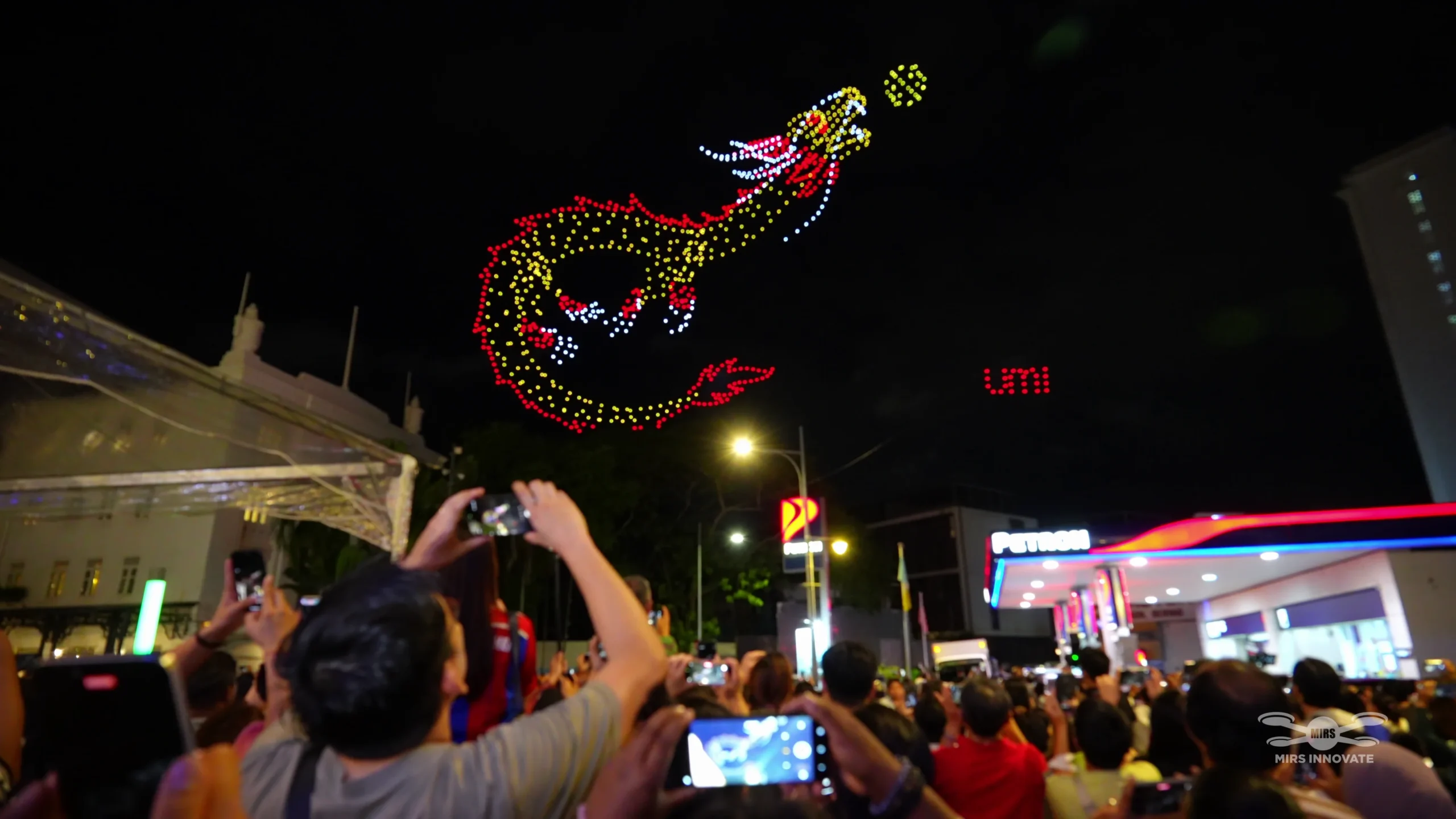
A drone show can become the image everyone carries away from your event: a logo rising over a waterfront, a national symbol unfolding above a landmark, or a countdown that turns a product launch into a shared moment. But that impact is built long before the first aircraft lifts off. This guide to drone show logistics explains how to turn a bold creative idea into a controlled, safe, camera-ready aerial performance.
Begin With the Event Outcome
The strongest drone shows do not begin with a fleet size. They begin with the audience reaction you need to create. Is the show meant to announce a new brand era, anchor a destination celebration, replace fireworks, reward guests at a luxury private event, or generate a defining press image? That answer shapes every major production decision.
Start by establishing the show date, performance window, venue, expected attendance, audience viewing direction, and the role the show plays in the larger program. A drone performance can be a five-minute finale or a centerpiece that drives the entire event schedule. It can also be designed to support music, a live host, a concert cue, or a countdown. Those choices affect timing, sightlines, sound synchronization, staffing, and approvals.
Creative ambition and operational reality should develop together. Fine detail, long-form storytelling, 3D formations, branded animation, and larger drone counts can create a more cinematic experience, but they also require more airspace, production lead time, and technical planning. The goal is not simply to place more drones in the sky. It is to create the clearest, most memorable story for the audience on the ground and the cameras capturing it.
Guide to Drone Show Logistics: Choose the Right Site
A beautiful venue is not automatically a viable flight site. The operational question is whether the property provides a safe launch and landing area, a protected performance zone, and a clear audience viewing experience.
The launch area needs controlled access, a stable surface, sufficient working space for the flight crew and equipment, and separation from guests. It should also be close enough to the performance area to support the planned show while remaining out of public traffic. At major public events, the launch zone is often secured behind barricades or within a restricted operational compound.
Then consider what sits above and around the venue. Nearby airports, heliports, tall buildings, cranes, power lines, waterfront features, stadium lighting, roads, and active construction can all affect a flight plan. Dense urban settings can produce remarkable visual backdrops, but they often demand more extensive airspace coordination and a more carefully defined safety perimeter.
Audience placement matters just as much. Viewers should face the show with minimal obstruction and enough open sky to see the full composition. A formation designed for a broad waterfront crowd may need a different orientation than one designed for guests on a resort lawn. The ideal viewing corridor also supports photography and broadcast coverage without placing cameras, VIPs, or production teams inside operational areas.
Secure Airspace and Permits Early
Drone show permissions are location-specific. Requirements can vary by country, state, municipality, aviation authority, property owner, and event type. A national celebration in a public square will involve a different approval path than a private wedding on a remote estate.
The process typically begins with a site and airspace review, followed by the documentation required for the proposed operation. Depending on the venue, this can involve aviation permissions, local event permits, property authorization, coordination with public safety agencies, and notification procedures for nearby aviation activity. If the performance includes a landmark, waterfront, public park, or high-traffic district, stakeholders may need additional time to assess crowd management and local restrictions.
Do not treat permitting as a late-stage administrative task. It is a design input. A planned show time, operating altitude, flight area, or launch position may need adjustment based on the approved operating conditions. Early coordination protects the creative concept and prevents expensive changes after animation, marketing, and event schedules are already in motion.
For international events, logistics extend beyond the airspace plan. Equipment transport, customs documentation, local crew access, batteries, ground power, insurance requirements, and local operating rules should be handled as one integrated production plan. This is where an experienced global drone show partner earns its place: creative spectacle has to arrive on site ready to perform.
Build the Show Around Safety, Not Around Assumptions
Premium aerial spectacle depends on disciplined safety systems. The audience may see a constellation of moving lights, but the production team sees aircraft status, separation distances, weather conditions, communications, restricted areas, and contingency decisions.
A professional drone show plan defines who controls the flight operation, who manages the launch area, who communicates with event command, and who has authority to pause or cancel the performance. It also establishes audience boundaries, emergency access routes, security procedures, and a clear way to communicate any change in status to producers and venue teams.
The operational team should conduct a site assessment and pre-show checks before guests arrive. That includes confirming the physical condition of the launch site, checking for new obstacles, validating communications, reviewing the approved flight area, and ensuring the audience footprint matches the plan. A last-minute stage relocation, temporary crane, or expanded VIP terrace can change the safety picture. Every change needs review.
Plan for Weather With a Real Decision Framework
Weather is one of the few forces no event producer can negotiate with. Wind, precipitation, lightning, visibility, and temperature can affect whether a show can proceed safely. The right approach is not to promise certainty. It is to establish objective operating thresholds, monitor conditions closely, and prepare the client team for possible decisions.
Build weather planning into the event schedule from the beginning. For some events, that means identifying an earlier or later performance slot. For others, it means planning a rain-date option, adjusting guest communications, or creating an alternative ground-based moment if the aerial show cannot fly. The appropriate solution depends on the event’s scale, schedule flexibility, and commercial stakes.
A cancellation decision is never desirable, but improvisation is worse. Clear protocols protect guests, the event, and the integrity of the production. They also allow the event team to communicate with confidence rather than uncertainty.
Integrate the Drone Show Into the Run of Show
A breathtaking flight can lose force if it begins while guests are walking to dinner, leaving the venue, or focused on another stage. The drone show must be choreographed into the event experience, not simply inserted into an empty time slot.
Work backward from the performance. Decide when the audience should be in place, when the viewing area is secured, when event lighting is reduced if needed, when music or narration begins, and who gives the final cue. If the show follows fireworks, a concert, or a major speech, allow enough time for crowd movement and technical reset. If it is the finale, plan the exit flow so guests can enjoy the moment rather than immediately being pushed toward transportation.
The visual sequence should also reflect how people will experience it. A live audience needs bold, readable formations and a strong emotional arc. Social content needs a recognizable opening image, a distinctive climax, and clean camera positions. When the show features a brand, destination, or sponsor, build the reveal around a message that can be understood in seconds.
Coordinate Every Stakeholder Before Show Day
Drone show logistics sit at the intersection of creative, technical, and public-facing teams. The event producer, venue manager, security lead, stage manager, local authorities, transportation team, and marketing crew all need the same operational picture. Misalignment often appears in small details: a gate locked at the wrong time, an unbriefed security guard, a camera platform placed in the viewing corridor, or a vendor vehicle blocking launch access.
A final production briefing should confirm arrival times, credentials, loading access, launch-area security, emergency contacts, performance cues, audience controls, and weather communications. It should also establish a single point of contact for changes. On a high-profile event day, clarity is a production advantage.
Make the Sky Work Beyond the Night
The final formation may last only seconds, but its value can extend far beyond the event. Plan capture deliberately. Identify the hero angle for official video, the best position for still photography, and the content moments that deserve priority. Aerial storytelling can create a centerpiece for press coverage, social sharing, event recaps, and future campaign assets – provided the production and content teams are aligned before the show begins.
The most successful drone shows feel effortless to the audience because the logistics are exacting behind the scenes. Give the creative vision the operational foundation it deserves, and the sky becomes more than a backdrop. It becomes the moment your event is remembered for.
Planning a drone show?
MIRS Drone Show creates bespoke drone light shows for corporate events, launches, celebrations and festivals, with creative and operational planning tailored to each venue and project.