




12 Product Launch Spectacle Ideas That Travel
Product launch spectacle ideas that turn a reveal into a shareable landmark, from drone light shows to immersive moments designed for press and crowds.
A product launch gets attention when people can explain the reveal to someone who was not there. The strongest spectacle ideas make the product easy to see, give guests a moment worth recording, and keep the brand message clear.
For marketing leaders and event producers, that changes the brief. The goal is not simply to entertain guests for 10 minutes. It is to create a centerpiece that gives press, creators, customers, and employees a reason to point their phones in the same direction.
Start With the Moment You Need People to Remember
Before selecting a spectacle, define the single image that should survive after the event. Is it your new product suspended above a crowd? A city skyline transformed into your logo? A first look that makes the audience collectively go silent?
A spectacle works best when it carries the product story rather than competing with it. A sustainability-led launch, for example, may call for a low-noise aerial performance and a reusable scenic environment. A performance vehicle may demand speed, movement, and a reveal designed around acceleration. The format should make the product promise visible.
Timing matters as much as scale. Put the largest visual payoff at the exact point the audience can understand what has changed. Do not make guests wait through a long sequence of abstract visuals before revealing the name, shape, or benefit that matters.
12 Product Launch Spectacle Ideas Built for Attention
1. Aerial Brand Reveal With a Drone Light Show
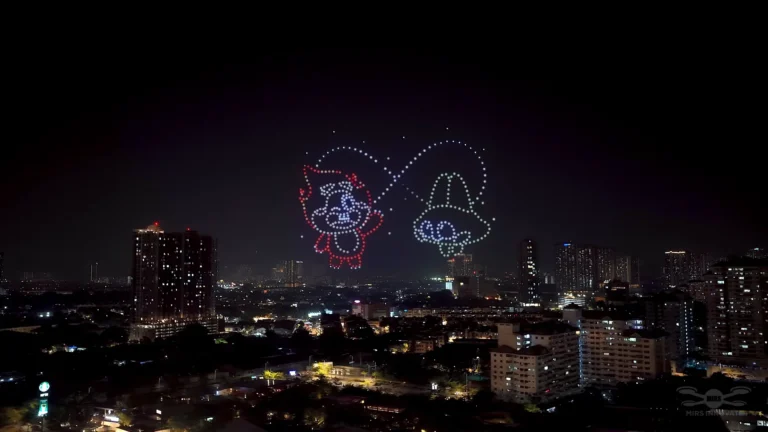
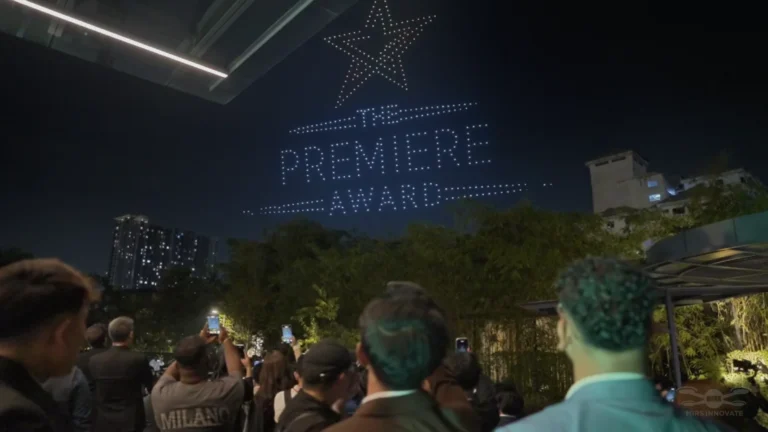
A custom drone light show can form a product silhouette, brand mark, launch date, or short animated sequence above an outdoor venue, waterfront, stadium, or public gathering. The creative needs to be designed for distance, viewing direction, and the message guests should remember.
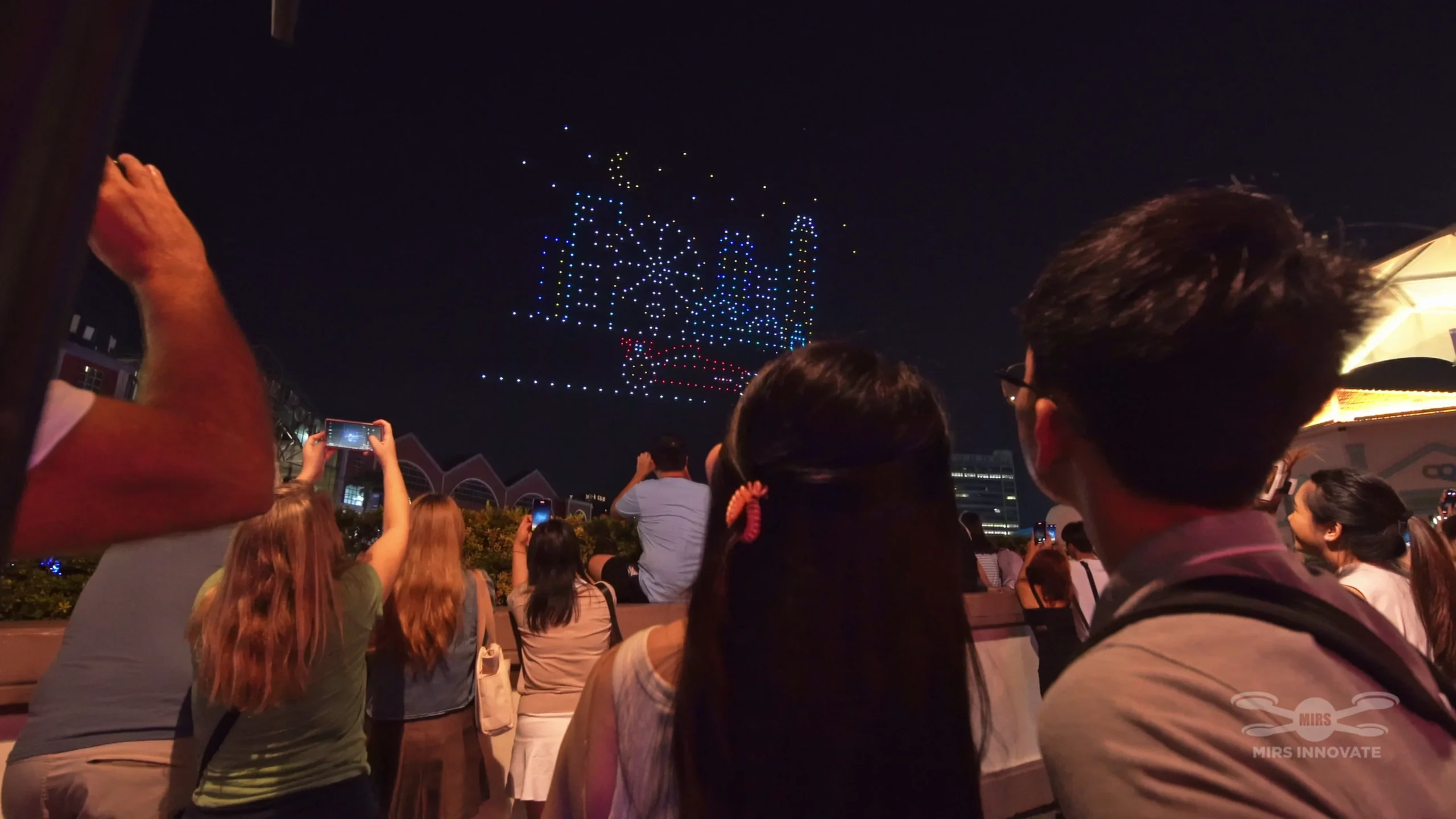
This is especially powerful when the product needs a landmark reveal. The audience sees the message live, while the same sequence becomes instantly recognizable vertical video. Unlike fireworks, the choreography can be precise, repeatable, low-noise, and fully brandable. For an audience that has seen another stage LED wall, the sky remains a genuine interruption.
2. A Product Unveiling That Starts in Darkness
Controlled darkness creates anticipation. Build the room around a single concealed object, then use sound, lighting, projection, and a tightly timed physical reveal to bring it into view. The restraint is the point: one product, one focal direction, one decisive moment.
This approach suits luxury, technology, automotive, and design launches where material details matter. It is less suited to a large outdoor public crowd unless there are sufficient sightlines and screens. If people cannot see the reveal, they cannot share it.
3. Projection Mapping on an Iconic Surface
A building facade, industrial structure, museum exterior, or custom architectural set can become a cinematic canvas for the launch story. Projection mapping gives a brand the ability to make walls fracture, products assemble, and graphic worlds expand at monumental scale.
The trade-off is environmental control. Projection needs darkness, proper viewing angles, and surfaces that support the creative. It can be breathtaking, but it is more vulnerable to competing city light and weather than an indoor installation.
4. A Countdown That Takes Over the Entire Venue
Most countdowns are treated as filler. Make yours the event. Program every available element – screens, lighting, music, performers, table lighting, and environmental effects – to build toward the reveal in a synchronized 60-second sequence.
The key is not adding more effects. It is making every effect feel intentional. A countdown should move from curiosity to tension to release, then immediately give the audience a clear visual of the product and a reason to capture it.
5. A Live Product Story Told in Chapters
Instead of opening with a keynote and ending with an unveiling, create a live show with distinct chapters. Each chapter demonstrates one customer problem, one product capability, or one change in the category. The final chapter reveals the product as the answer.
This format is effective for complex launches where a single visual cannot carry the whole message. It needs disciplined scripting, however. If the story requires too much explanation, it becomes theater with a sales presentation attached. Keep each chapter visual, fast, and easy to understand from the back of the room.
6. An Immersive Arrival That Makes Guests Part of the Launch
The launch begins before the doors open. Create an arrival path that places guests inside the product world through sound, light, interactive surfaces, tactile materials, or responsive visuals. A wellness product might lead guests through calm, sensory spaces; a gaming launch might turn the entrance into a mission.
Immersive arrivals work well for VIPs, media, and creators because they generate content before the main event. They are not always the right choice for high-throughput public events. If thousands of people must enter quickly, prioritize flow and create immersive moments that can be experienced from multiple points.
7. A Citywide Trail of Teasers
For a launch with regional relevance, scatter coordinated clues across a city: storefront installations, branded light moments, pop-up demonstrations, or public screens that reveal parts of a larger message. The final answer appears at the headline event.
This extends attention beyond one venue and gives local media a narrative to follow. It also demands strong operational coordination. Every touchpoint must look premium, communicate the same story, and direct attention toward the final reveal without leaking it too early.
8. A Floating or Waterfront Reveal
Waterfronts can give a launch more visual depth. A product can arrive by boat, emerge from a floating stage, or be framed by an aerial sequence reflected in the water. The setting can work well on camera, provided the event plan accounts for access and viewing positions.
The practical work is more demanding than the visual suggests. Marine permissions, wind conditions, audience safety, power, access, and viewing positions need to be planned early. A waterfront reveal works when those constraints are solved before the creative is locked.
9. A Choreographed Fleet, Not Just a Product Display
For automotive, mobility, and logistics brands, motion can be the message. Coordinate vehicles, robotics, or mobile scenic units into a precise pattern that demonstrates agility, range, or engineering confidence. The product becomes the performer rather than a static prop.
This requires rehearsal space and rigorous safety protocols. It also requires a camera plan. Design movement for both the live audience and the official footage, because the strongest formations often read differently from ground level than from an elevated camera angle.
10. A Creator-First Reveal Zone
Build a dedicated capture environment with the launch visual, excellent lighting, clean sightlines, and an unmistakable branded frame. This is not a generic photo booth. It is a controlled visual asset that makes creator content look editorial rather than improvised.
Give guests a reason to use it immediately after the reveal. A limited-access first look, a detail only visible in the zone, or a timed visual effect can create urgency. The best creator moments feel exclusive while still communicating one clear product message to viewers at home.
11. A Public Spectacle With a Private Second Act
A large public reveal can generate reach, but key stakeholders often need a more intimate product experience afterward. Pair a skyline-scale moment with a private demonstration, executive briefing, tasting, test drive, or hands-on suite.
This two-part structure respects different audiences. The public gets the memorable headline. Press and buyers get the details needed to turn a visual moment into meaningful coverage, consideration, and commercial action.
12. A Finale That Leaves a Physical Proof Point
The final spectacle should not disappear the moment the music stops. Consider a limited-edition artifact, a temporary installation, a live product reservation moment, or a post-event display that visitors can experience the next day.
This is where launch design connects to business outcomes. Attention is valuable, but a next step matters. Make the action appropriate to the product: book a demo, join a waitlist, register for access, or visit a nearby experience center.
Make Spectacle Operationally Sound
A great idea can fail under weak execution. Venue geometry, airspace, local permits, weather contingencies, power, crowd movement, sound restrictions, and camera sightlines should shape the creative from the beginning, not become late-stage obstacles.
For aerial experiences, planning is particularly important. MIRS Drone Show can coordinate creative development with flight planning, permissions, synchronization, and on-site execution, while the launch team focuses on the audience and message. Guests should see a clear reveal, not the operational work behind it.
Budget decisions should follow the desired outcome. If the goal is a viral hero moment, concentrate resources on one visually decisive sequence and secure the production quality to film it properly. If the goal is qualified buyer engagement, invest in the experience after the reveal as well. A smaller spectacle with exceptional storytelling can outperform a larger one that has no strategic connection to the product.
Design for the Phone and the Person Holding It
Every launch now has two audiences: the people present and the people who will see it through a screen. Design for both without reducing the live event to a content factory. The audience should be able to understand the product without an explanation, while cameras should have a clean, high-contrast shot of the reveal.
That means testing logo legibility, avoiding overly dense graphics, planning official camera positions, and staging the product where people can actually see it. It also means letting the moment breathe. When the reveal happens, do not immediately cover it with another speech.
The most valuable launch spectacle is not necessarily the loudest or most expensive. It is the one that makes the product clear, gives the audience a reason to share the moment, and supports the next action the brand needs.
Frequently asked questions
What makes a product launch spectacle worth the budget?
It should support a specific launch outcome: a clear product reveal, press-ready visual, audience attention, or a next step such as a demonstration or registration. The format should be chosen after the product, venue, and audience are understood.
Can a drone show be used for a product launch?
Yes, when the venue, airspace, audience viewing area, weather plan, and required approvals make it feasible. A drone show can form a logo, product silhouette, short story sequence, or final message for an outdoor reveal.
How early should a launch spectacle be planned?
Start as soon as the event date and venue are known. Early planning gives the production team time to assess feasibility, develop the creative, coordinate technical production, and prepare the operational plan.
For a live project reference, see the McDonald’s Malaysia drone show. Explore MIRS drone show services, or contact MIRS for a product launch proposal.

Planning a drone show?
MIRS Drone Show creates bespoke drone light shows for corporate events, launches, celebrations and festivals, with creative and operational planning tailored to each venue and project.