

Drone Show Production Timeline Explained
Understand the drone show production timeline, from concept and permits to choreography, testing, and launch for flawless event execution.
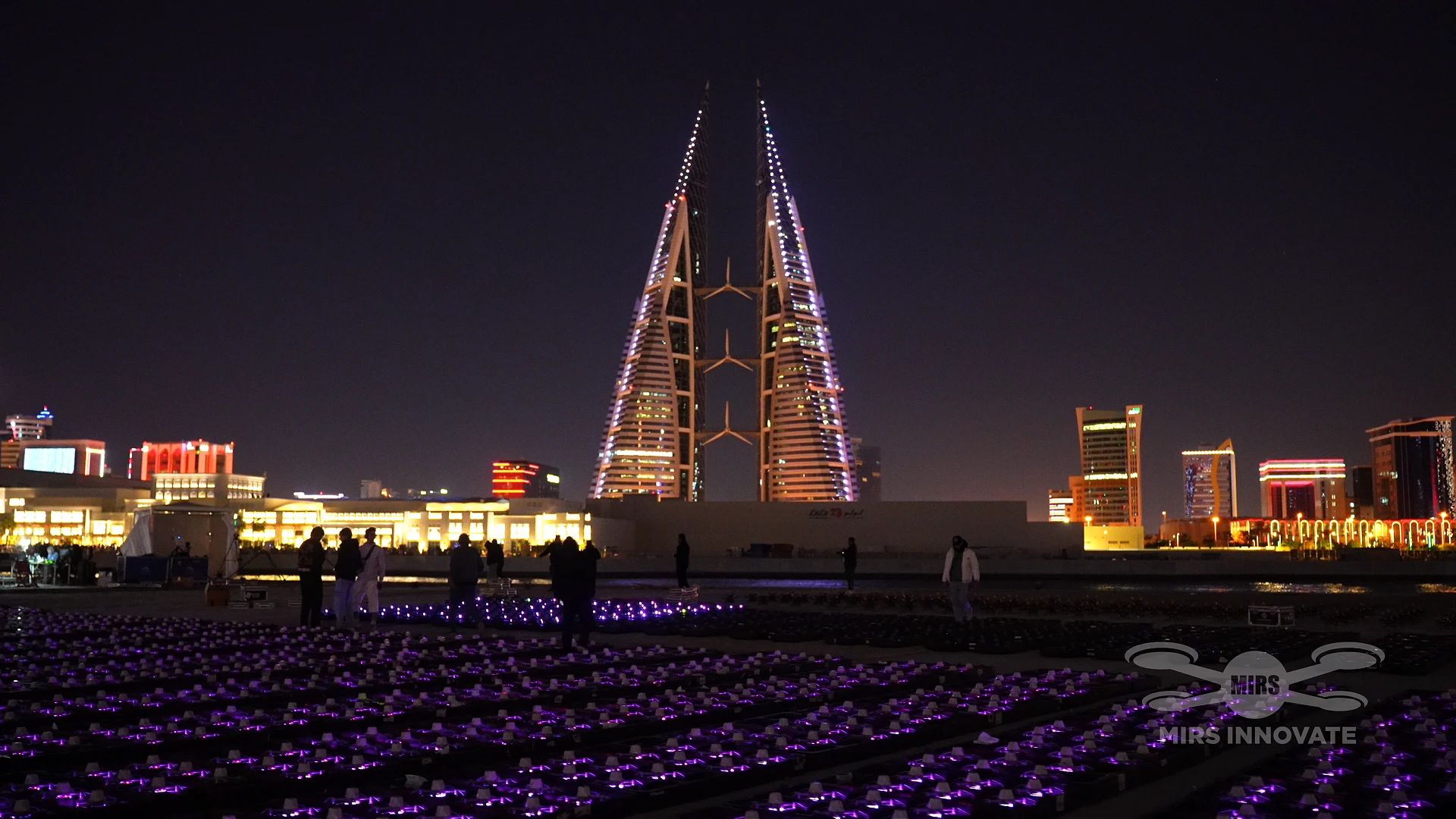
A drone show can look effortless from the crowd. For the team producing it, it is anything but. The drone show production timeline is a disciplined sequence of creative development, regulatory planning, technical programming, logistics, testing, and live execution. When the event carries a brand launch, national celebration, tourism campaign, or luxury private milestone, the timeline is not just a schedule. It is what protects the spectacle.
For event leaders, the real question is rarely, “Can we do a drone show?” It is, “How early do we need to start to do it at the level this event deserves?” The answer depends on show scale, location, airspace complexity, fleet size, custom animation needs, and whether multiple agencies or public authorities are involved. A small private event may move faster. A high-visibility public show with permits, crowd planning, and custom storytelling needs more runway.
What shapes a drone show production timeline
No two productions follow the exact same clock. A proposal for a wedding reveal is not built like a government celebration or a multinational product launch. The biggest variables are venue restrictions, local aviation requirements, launch area conditions, soundtrack synchronization, and the complexity of the visual narrative.
A simple logo reveal and a few elegant transitions can be produced faster than a multi-scene show with 3D illusions, text sequences, branded moments, and precise musical timing. International projects also add a logistics layer. Transporting fleet equipment, batteries, charging systems, crew, and backup units across borders requires planning that cannot be improvised in the final week.
That is why serious drone show production starts with outcome, not hardware. The timeline is built backward from the event date and the audience expectation. If the goal is a landmark moment that earns media attention and social sharing, every stage needs enough time for decisions, approvals, and technical refinement.
A practical drone show production timeline from brief to launch
1. Discovery and concept development
This stage usually begins first. The client defines the event objective, date, location, audience size, budget range, and creative intent. At this point, the most valuable discussions are not about drone count alone. They are about what the show must achieve.
For a brand, that may mean a product silhouette, campaign message, and a finale built for shareable footage. For a tourism board, it may mean cultural storytelling and iconic local symbols. For a private celebration, it may be emotional pacing and personalization.
Once the creative direction is clear, the production partner can recommend show scale, likely technical requirements, and whether the target date is realistic. This is also when early feasibility checks happen. If the location sits in sensitive airspace or near operational constraints, those issues need to surface immediately.
2. Site assessment and feasibility review
A strong concept means very little if the venue cannot support safe operations. The production team assesses launch and landing areas, audience viewing angles, surrounding structures, local lighting conditions, weather patterns, and site access for equipment and crew.
This is one of the most underestimated parts of the process. A waterfront location may look spectacular but bring wind exposure. A city-center event may offer high foot traffic but create more complicated airspace coordination. A remote destination can deliver dramatic visual impact yet require a more involved logistics plan.
At this stage, the team is identifying trade-offs. The best visual backdrop may not be the best operating environment. Sometimes a modest shift in launch position creates a better audience perspective and a safer technical setup.
3. Permits, airspace coordination, and compliance
For public and high-profile events, this phase can determine the entire schedule. Drone shows operate within aviation rules, local authority requirements, safety protocols, and often event-specific permissions. Depending on the market, permit lead times can be short, moderate, or extensive.
This is why last-minute booking is risky for complex events. Even when the creative work can move quickly, approvals may not. Government shows, urban activations, and high-attendance festivals often require coordination with multiple stakeholders, from aviation authorities to venue operators and public safety teams.
Experienced producers build this into the timeline from day one. They know where documents, operational plans, risk assessments, and insurance details will be required. That operational discipline is what turns an ambitious idea into a scheduled performance instead of a delayed one.
Creative production runs in parallel with technical planning
4. Storyboarding and animation design
Once feasibility is confirmed, the visual language of the show takes shape. This includes scene order, transitions, text moments, logo formations, character or symbol design, and the final sequence arc. The strongest drone shows are not just collections of sky images. They are paced experiences.
This is also where decision-makers should stay focused. Too many late-stage creative additions can stretch the timeline and dilute the show. A cleaner, more intentional sequence usually creates greater audience impact than trying to include every possible message.
For premium events, the choreography must do more than look impressive on paper. It must read clearly from audience distance, photograph well, and match the emotional tempo of the event itself.
5. Flight programming and show engineering
After the storyboard is approved, engineers translate creative scenes into flight paths, spacing logic, safety parameters, timing cues, and animation behavior. This stage is highly technical, but the outcome is simple: every drone must know exactly where to be, when to move, and how to maintain visual precision in the air.
Complexity matters here. A show with more drones and more intricate transitions needs more engineering time. The same is true for synchronized music, layered visual effects, and 3D-style sequences. If the event requires custom branded storytelling rather than a standard template, that adds production value and production time.
This is not a drawback. It is the difference between a generic light display and a signature event centerpiece.
6. Logistics, fleet prep, and on-site planning
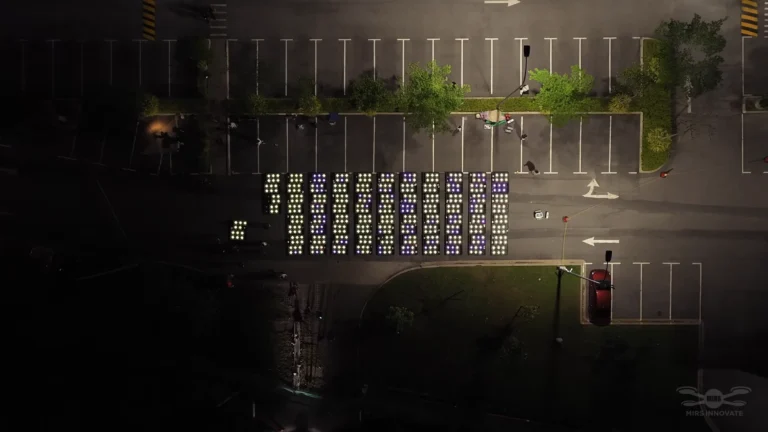
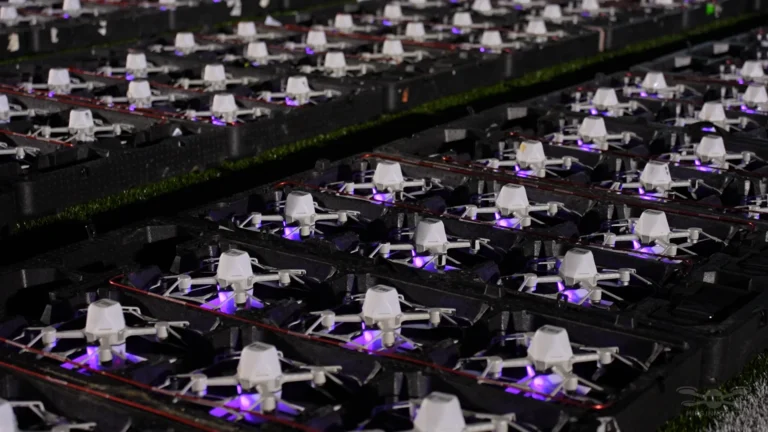
As creative and programming progress, operations teams prepare the physical show. That includes transporting drones and support systems, battery management planning, charging infrastructure, crew scheduling, launch-grid layout, backup equipment, and on-site workflow.
For international productions, logistics can become a major timeline driver. Customs procedures, freight schedules, and venue access windows all matter. The audience never sees this layer, but it directly affects reliability.
For a company operating at premium event scale, this is where confidence is built. Clients are not buying drones. They are buying certainty under pressure.
The final stretch is where good planning proves itself
7. Testing, rehearsals, and contingency planning
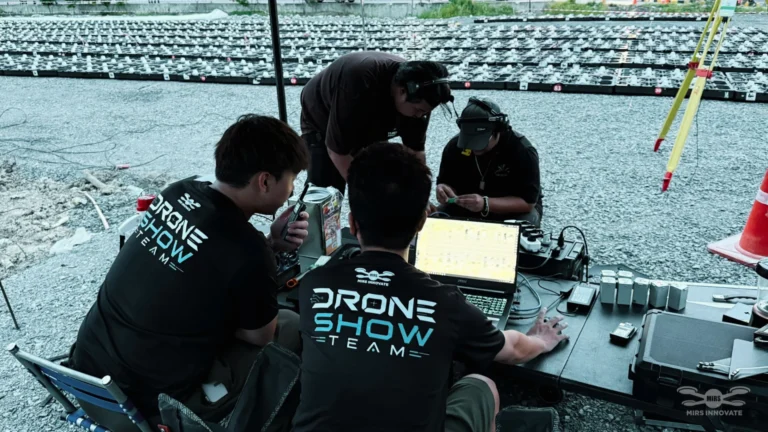
Before show day, simulations and live testing confirm that creative intent and technical execution align. Depending on the event, this may include software validation, sequence checks, site-specific calibration, and rehearsal windows.
Weather is the variable every planner asks about, and rightly so. Wind, rain, visibility, and local conditions can affect operations. A credible production timeline includes contingency decisions well before the audience arrives. That means defining weather thresholds, backup plans, and decision authority in advance rather than improvising during countdown.
The same applies to event-day coordination. Drone shows often sit within a larger production schedule that includes stage programming, speeches, music, fireworks alternatives, or broadcast timing. Rehearsal is not just about the aircraft. It is about the show fitting the event.
8. Show day execution
On the day itself, production becomes tightly controlled. Final site checks, weather monitoring, equipment readiness, launch positioning, safety perimeter control, and timing synchronization all happen before takeoff. By this point, the timeline should feel calm, not frantic.
That calm is earned earlier. If permitting, creative approvals, engineering, and logistics were rushed, show day carries more risk. If they were handled properly, the event team can focus on presentation, audience experience, and capture.
For many clients, this is also where the business value becomes visible. A strong drone show is not just seen by the live audience. It is filmed, posted, shared, and replayed. The production timeline is what makes that one night powerful enough to travel far beyond the venue.
How much lead time should clients expect?
The honest answer is: it depends on ambition. A smaller private event with straightforward creative may be achievable in a shorter window. A major public production with custom scenes, complex airspace, government approvals, and international logistics should be planned much earlier.
As a general rule, more visibility requires more preparation. If the show is meant to headline a campaign, represent a city, or mark a nationally significant moment, the timeline should allow enough room for strategic design and operational control. Rushing a premium production usually costs more than time. It can cost impact.
This is where working with an end-to-end production partner matters. Teams like MIRS Drone Show do not just animate drones. They align concept, compliance, engineering, and execution into one coordinated process, which gives clients clearer timelines and fewer surprises.
The smartest time to start is earlier than feels necessary. Spectacle at this level does not happen because the sky is available. It happens because every stage before takeoff was handled with precision, and that is what gives the final moment its force.
Planning a drone show?
MIRS Drone Show creates bespoke drone light shows for corporate events, launches, celebrations and festivals, with creative and operational planning tailored to each venue and project.