Drone Show Permits and Regulations Explained
Drone show permits and regulations determine whether your event launches on time or never leaves the ground. Learn what approvals are required, what drives timelines, and what causes delays.
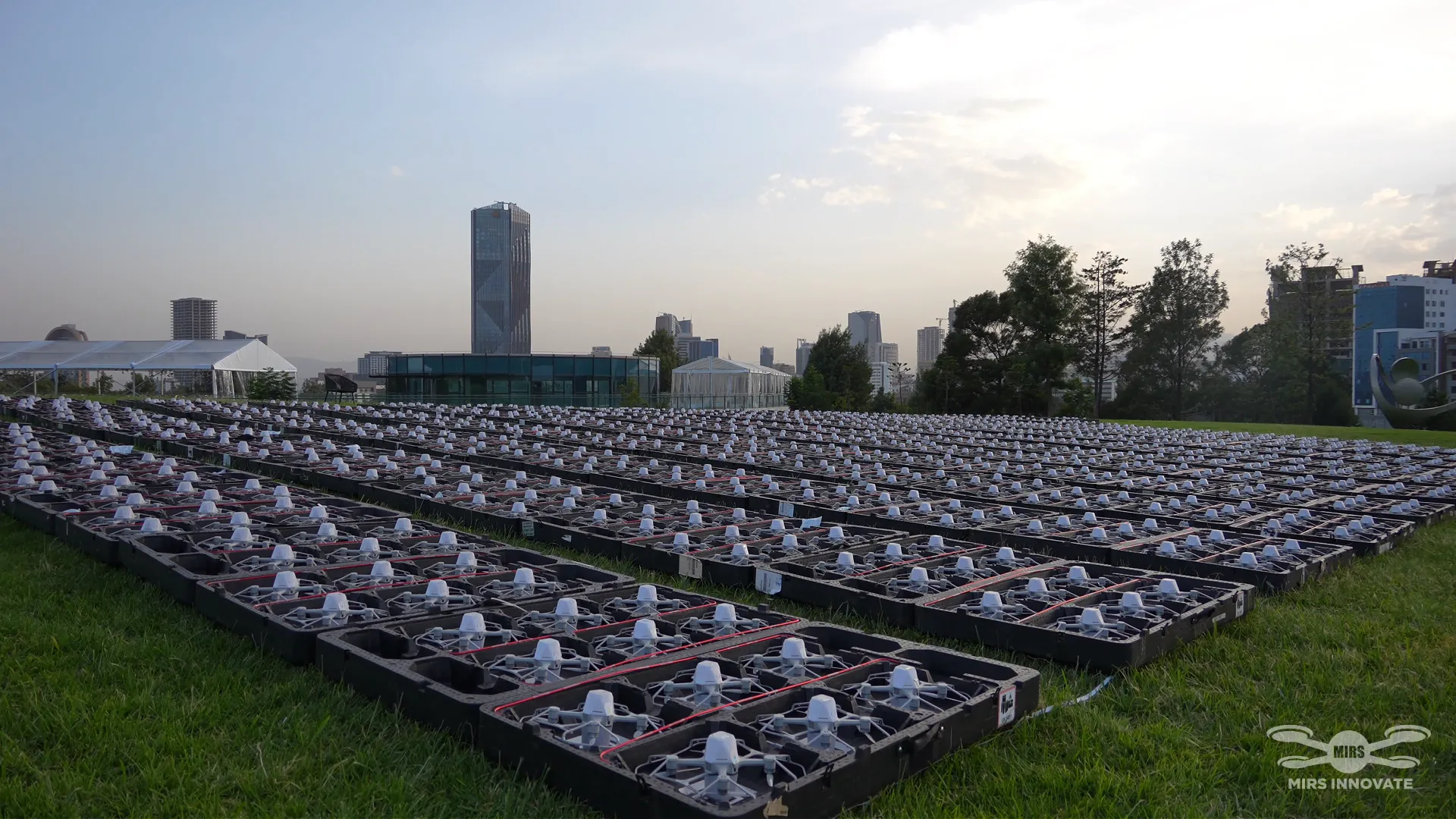
Drone show permits and regulations determine whether a performance launches on time, needs redesigning, or never happens. Most event owners discover this too late – after the concept is signed off, the dates are locked, and someone asks whether the venue actually clears regulatory requirements.
At that point, the approval timeline is already compressed.
When budgets are high and public stakeholders are involved, permitting belongs in the production plan from the start. Altitude decisions, launch-zone placement, show timing, audience positioning, and site selection all carry regulatory dimensions. The creative brief and the compliance brief need to run together.
Why approval rarely comes from one source
Drone shows involve aviation, public safety, event operations, and local government – which means no single authority owns the approval process. Depending on the location, a show may require airspace authorization, local event permits, site-use approval, crowd-safety planning, and emergency-services coordination. Those reviews can run in parallel or in sequence, depending on the jurisdiction.
Many organizers assume that because drone shows are safer than fireworks, the approval process should be straightforward. Safer does not mean unregulated. Drone operations are more controllable than pyrotechnics, but they still introduce aviation risk, operational boundaries, and public-safety obligations that authorities review carefully. The question is not whether drones are generally safe. It is whether this operator, at this site, in this configuration, has accounted for how things can go wrong.
Scale compounds this. A private estate show typically faces a manageable set of approvals. A city waterfront activation, a sports venue, or a national celebration involves layered reviews, restricted airspace, local political context, and timing constraints tied to the broader event schedule.
What authorities actually review
Permit reviews focus on risk control, not spectacle. Authorities want to know where drones will fly, how the flight area is protected from the public, what happens if weather changes, and how the full operation is contained from launch to landing.
They also check the operator: pilot licensing, crew training, documented procedures, aircraft reliability records, geofencing configuration, redundancy systems, and emergency protocols. A drone show is an aviation operation conducted in a public-event environment. The choreography and visuals are built on top of that foundation, not in place of it.
In the US, federal airspace authorization is one piece of the picture. Municipalities, parks departments, venue operators, fire marshals, law enforcement, and property owners may each have independent requirements. In some cases, the most difficult issue is not the aviation clearance but the ground operation: launch-zone access, crowd-flow restrictions, or proximity to roads, buildings, or sensitive facilities.
Experienced producers test site decisions against regulatory conditions before promotional commitments are made. If the concept depends on a specific altitude, footprint, or waterfront position, those choices need to survive a regulatory review before a save-the-date goes out.
The four approval categories
While requirements vary by country and jurisdiction, drone show approvals tend to fall into four categories.
Airspace authorization is usually the first gate. If the venue sits near an airport, helipad, military installation, or controlled airspace, the operator needs specific clearance before anything else is confirmed. A site can look completely open on the ground while the airspace above it is tightly managed.
Local event permits cover the broader gathering: public assembly, amplified sound, road closures, waterfront use, or nighttime operations. The drone show becomes part of the overall event compliance package. An incomplete permit application that omits the drone component can stall the entire approval.
Property and site permissions cover the launch and landing zone. The area must be secured, physically suitable for the fleet, and legally authorized. If the audience’s sightline crosses a property boundary or creates a safety concern near adjacent land, the show design needs to shift – and the earlier that is discovered, the cheaper the adjustment.
Public-safety coordination covers the stakeholders around the show: police, fire, medical teams, venue security, and event operations. Each needs to understand where drones will fly, what areas are restricted during the operation, and what happens if conditions change on the night.
What drives the approval timeline
The most common client question is how long permits take. The answer depends on the location, the airspace classification, the event profile, and the quality of the plan submitted.
A private event in favorable airspace can move through review in a few weeks. A city-centre activation or a government event involving multiple agencies can take several months. Events near national holidays often face longer review queues. Plans that are vague or incomplete get sent back for revision, and every revision cycle adds time.
Ambition also adds complexity. Large fleets require larger safety buffers. Complex sites require more detailed operational plans. Shows over water, near buildings, or in dense urban airspace require additional risk assessment. That does not make large shows impossible, but a 1,000-drone national event goes through a materially different review than a 200-drone brand activation.
Premium operators build the permit timeline into the production schedule at the outset, running design, site planning, and regulatory review in parallel rather than in sequence.
The most common reasons shows get delayed
Most delays come from a small set of preventable choices.
Venue selection based on visual impact alone is the most common. A dramatic skyline backdrop or waterfront view often carries restricted airspace, limited launch-zone options, or multiple layers of local approval. Identifying these constraints during venue shortlisting takes a few days. Discovering them two weeks before the show is a different problem.
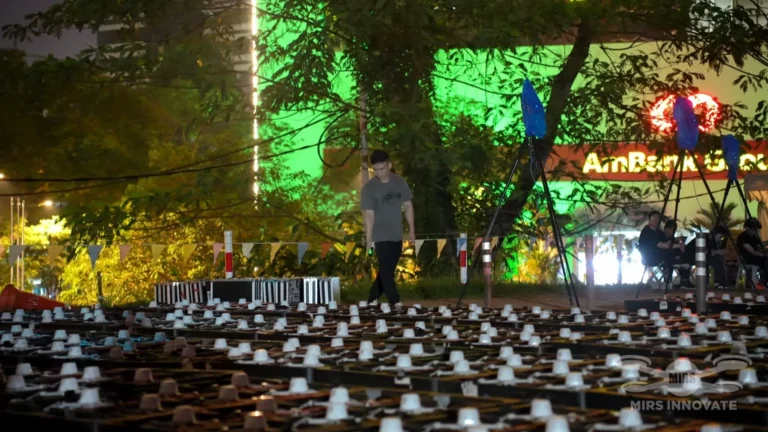
Launch-zone underestimation is the second. Drone fleets need controlled space for staging, calibration, takeoff, and recovery. If the venue is congested during event build, or if the site configuration keeps shifting as logistics evolve, documenting a stable operational plan for regulators becomes much harder.
Late submission is the third. Authorities respond faster and with more confidence to detailed, well-prepared documentation than to urgent requests filed close to the event date. Providing exact flight boundaries, safety procedures, staffing plans, and communication protocols early reduces revision cycles.
Weather planning is the fourth. Regulators expect defined no-go thresholds, documented postponement criteria, and a clear cancellation procedure. A submission that promises good conditions is less convincing than one that explains what the team will do when conditions are not good.
What experienced operators bring to the process
A team that has worked across multiple jurisdictions carries practical knowledge of how regulators think, what documents matter, which questions surface late, and where standard site assumptions break down. That experience shortens timelines because fewer issues need to be resolved through back-and-forth revision.
It also keeps the client’s schedule commitments intact. Sponsor arrangements, media timing, venue hold dates, and internal sign-off carry real costs if the launch date moves. When one production partner owns the connection between design, logistics, safety planning, and regulatory submission, the client does not have to coordinate those threads across separate vendors. A team with a track record in permitting introduces less of that risk.
MIRS Drone Show handles permitting as part of turnkey production execution. That matters for agencies, governments, and brands that are not set up to manage aviation logistics while running the rest of the event.
What clients can do to move the process faster
Even with a full-service production partner, clients can help. Clear event dates, site access details, venue contacts, expected attendance, nearby structures, and a list of overlapping event activities all help shape the permitting path earlier.
It also helps to identify who internally makes the practical decisions before production starts. Regulatory planning tends to surface questions about budget flexibility, backup dates, and venue trade-offs. If those decisions take two weeks to resolve on the client side, the production loses that time regardless of how efficiently everything else is running.
For public events, cross-functional alignment matters more than people expect. The site plan that gets approved is usually the one that satisfies both the visual objectives and the operational constraints, not the one that maximized impact without accounting for what happens on the ground.
Regulatory planning as part of the production standard
A drone show gets commissioned because the event cannot afford to feel ordinary. The permitting process should reflect the same discipline.
Obtaining permission to fly is a baseline, not an achievement in itself. A strong production demonstrates operational control and foresight to venues, officials, sponsors, and the public before the first drone takes off. The shows that deliver that are built around regulatory planning from the start, not adjusted to accommodate it at the end.
Planning a drone show?
MIRS Drone Show creates bespoke drone light shows for corporate events, launches, celebrations and festivals, with creative and operational planning tailored to each venue and project.