



Drone Show Planning Checklist for Events
Use this drone show planning checklist to align creative, permits, safety, logistics, and timing for a flawless event that earns attention.
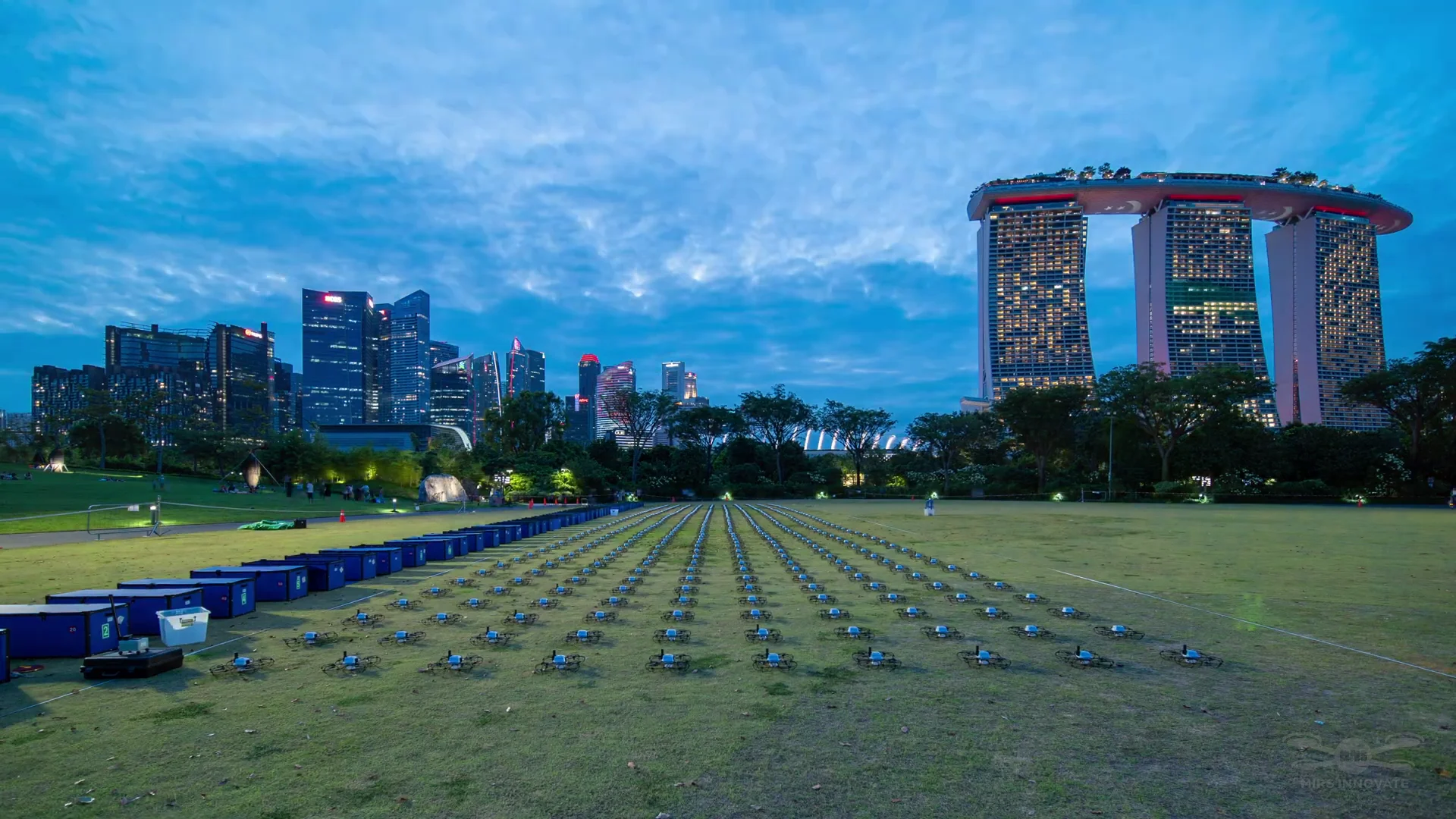
A drone show can become the defining image of an event – or the part everyone remembers for the wrong reasons. The difference usually has nothing to do with ambition. It comes down to planning. A strong drone show planning checklist gives event leaders a way to protect the spectacle while controlling the variables that can derail it, from airspace restrictions to launch-site limitations to creative decisions made too late.
For brands, governments, tourism boards, and luxury event planners, the stakes are high. This is not just another production element. A drone show often carries the headline moment, the social media asset, the press photo, and the emotional peak of the night. That means the planning process has to cover more than flight operations. It needs to connect creative, compliance, audience sightlines, timing, safety, and contingency thinking from the start.
What a drone show planning checklist should cover
The best checklist is not a generic list of tasks. It is a decision framework. Before anyone discusses fleet size or animation complexity, the event team needs clarity on what the show is supposed to achieve. A national celebration has different priorities than a product launch. A wedding values intimacy and personalization. A tourism event may care more about skyline imagery, broadcast coverage, and crowd flow.
When the objective is clear, every later choice gets easier. Show duration, number of drones, formation style, soundtrack, and venue layout should all support a specific result. If the goal is brand recognition, clean logo moments and readable text matter more than constant motion. If the goal is emotional impact, pacing and narrative transitions become more important than squeezing in every possible visual idea.
Start with event intent, not drone count
One of the most common planning mistakes is asking how many drones are needed before defining what the audience should feel and remember. A larger fleet can create more scale and detail, but scale alone does not guarantee impact. Sometimes a shorter, tightly choreographed show with sharp visual storytelling will outperform a longer program packed with competing ideas.
Early planning should answer a few core questions. What is the main message? Who is the audience on-site, and how far are they from the viewing area? Will the show be filmed for broadcast or social distribution? Is the event designed around one hero moment or a series of programmed highlights? Those answers shape the production brief and set realistic creative expectations.
Creative ambition has practical consequences
Every creative request affects operations. Custom animations, 3D illusions, synchronized audio, and multiple branded scenes all require time for design, simulation, testing, and approvals. If stakeholders want last-minute edits, the production schedule must be built to absorb them. Premium results come from creative freedom backed by operational discipline, not from improvisation under deadline pressure.
Site and airspace review come early
A drone show is only as strong as its launch environment. That is why site review belongs near the top of any drone show planning checklist, not in the final week. The venue may look ideal from a guest perspective and still be unsuitable from a flight perspective. Obstacles, nearby buildings, power lines, restricted zones, terrain, and audience proximity all matter.
Airspace is often the first hard constraint. Depending on the location, the event may require aviation coordination, local approvals, or timing adjustments. Coastal sites, urban centers, landmarks, and government-adjacent locations can introduce additional layers of review. This is where experienced production partners create real value. They do not just assess whether a show is possible. They determine the safest, most effective version of the show for that environment.
The viewing angle matters as much as the venue
A visually impressive show can still underperform if the audience is placed poorly. Drone formations are designed to read from a defined perspective. If guests are scattered too widely, text can distort and animations can lose clarity. Planning should account for the main audience axis, VIP viewing positions, camera platforms, and any elevated or distant viewpoints.
Permits, compliance, and safety planning
This is the part buyers often underestimate because it happens behind the scenes. Yet it is one of the reasons drone shows have become a premium production category rather than a plug-and-play add-on. Depending on the market, permits and compliance steps can involve aviation authorities, local municipalities, property owners, law enforcement, fire and emergency coordination, and event security teams.
Safety planning must go beyond regulatory paperwork. The production team should define exclusion zones, launch and landing procedures, emergency protocols, weather thresholds, crowd management considerations, and technical redundancies. If pyrotechnics, live performers, or broadcast infrastructure are part of the same event, the show plan needs to account for shared timing and physical space.
For executive stakeholders, the key issue is confidence. A sophisticated drone show feels effortless to the audience because the operational foundation is rigorous. That rigor protects brand reputation as much as guest safety.
Build the timeline backward from show night
The most effective planning process starts with the live date and works backward through every dependency. Creative development, concept approval, animation production, airspace review, permitting, technical planning, site visits, rehearsals, transport, and setup all need room in the schedule. Compressing these steps does not simply create stress. It reduces options.
A realistic timeline also makes stakeholder management easier. Brand teams often need internal sign-off on logos, taglines, and color treatments. Government and public events may require protocol approvals. Agencies may need to coordinate multiple client decision-makers. If the show carries sponsorship elements or multiple messaging segments, the revision cycle can become longer than expected.
Late changes are possible, but not free
In premium live production, changes can usually be made. The real question is what those changes cost in time, design bandwidth, testing, and risk exposure. A date shift, venue change, or major creative rewrite near show week can affect everything from permit status to launch geometry. The earlier the structure is set, the more room there is for refinement without compromising execution.
Align creative with audience impact
The strongest drone shows are not just technically correct. They are easy to read, emotionally timed, and built for the occasion. A checklist should include review points for narrative flow, formation legibility, brand visibility, soundtrack synchronization, and finale strength. If the show is being used as a marketing asset, planners should also evaluate how well it will photograph and how clearly it communicates on mobile video.
There is always a trade-off between complexity and clarity. Detailed imagery can be stunning, but only if the audience can interpret it instantly. Fast transitions can feel energetic, but too many can reduce memorability. For public celebrations, iconic shapes and bold storytelling often outperform subtle design choices. For luxury private events, a more restrained, elegant cadence may create stronger emotional effect.
Plan for logistics, power, and on-site control
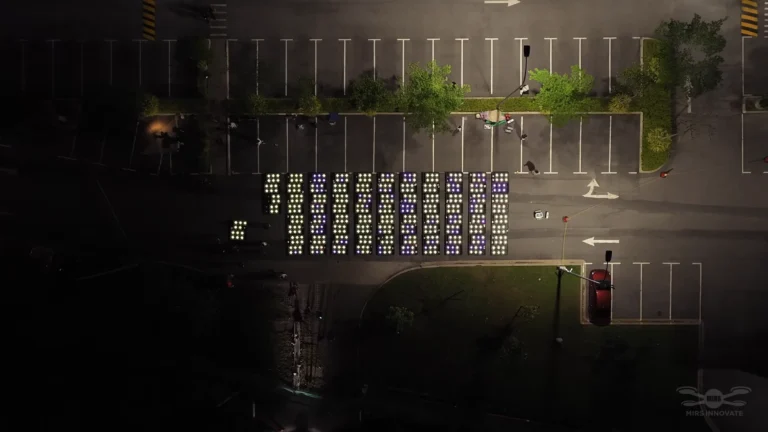
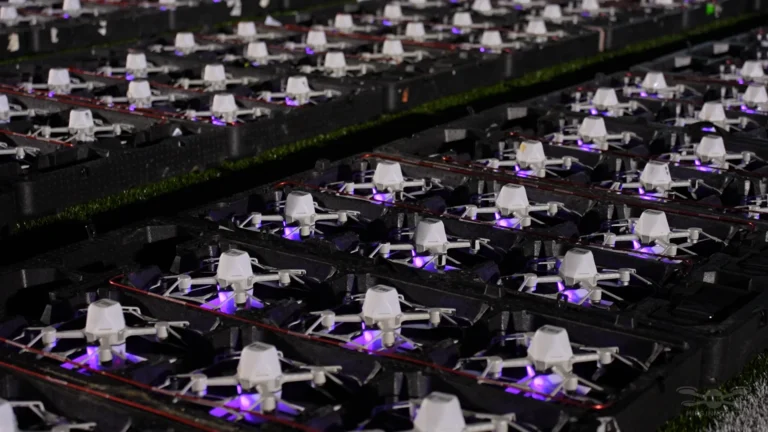
Drone shows may feel cinematic, but they are built on disciplined field operations. Equipment transport, customs handling for international events, secure storage, power access, crew movement, ground surface conditions, and technical command areas all need to be defined early. If the site is remote or the event footprint is crowded, logistics planning becomes even more critical.
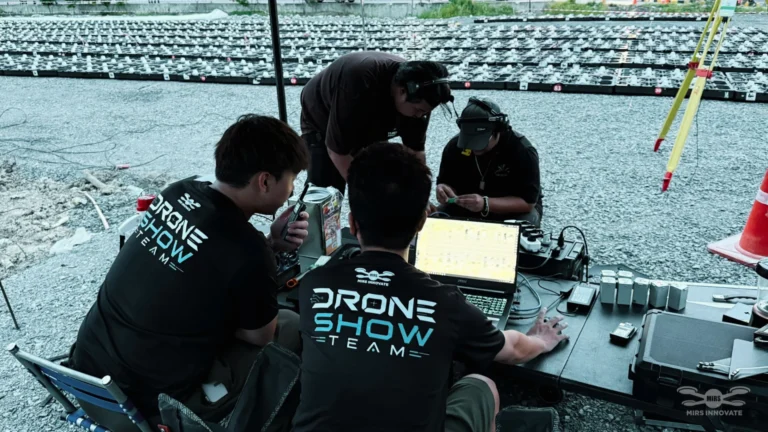
The show also needs an on-site command structure. Who approves final go or no-go decisions? Who communicates with venue operations, security, and stage management? Who owns the countdown if the drone show is tied to a live speech, concert cue, or midnight moment? Clear control prevents confusion when timing becomes tight.
This is where turnkey capability matters. A company like MIRS Drone Show brings value not only through visual scale, but through the ability to integrate creative, engineering, compliance, and execution into one production path.
Weather and contingency planning are part of the show
No serious drone show planning checklist is complete without weather scenarios. Wind, rain, visibility, and temperature can affect operations depending on the fleet, location, and performance design. Clients should know in advance what thresholds apply, when final weather calls are made, and what contingency options exist.
That does not always mean cancellation. In some cases, the answer is a modified timing window, a revised run-of-show, or an alternate event sequence. But those decisions only work when they are structured ahead of time. Contingency planning is not a pessimistic exercise. It is how premium events protect the guest experience.
The final checkpoint before approval
Before the show is locked, decision-makers should be able to answer a simple set of questions with confidence. Is the objective clear? Is the site viable? Are permits and authority coordination on track? Is the creative approved and readable for the audience position? Are the timeline, logistics, and weather contingencies realistic? If any of those answers is uncertain, the show is not ready to move forward at full speed.
A great drone show feels effortless in the sky because it was meticulous on the ground. If you treat the checklist as a strategic tool rather than an admin exercise, you give the spectacle what it needs most – the structure to become unforgettable.
Frequently asked questions
How early should a drone show be planned?
Start the conversation as early as practical, especially when the event has a complex venue, a public audience, or a fixed launch date. Early planning gives room for site review, creative development, permits, and weather contingencies.
What information does a drone show company need first?
Share the event date, venue, audience size, desired show moment, brand or campaign objective, and any production constraints. A site layout and event timeline are also useful for an initial feasibility review.
Do permits and safety planning affect the creative concept?
Yes. Airspace, take-off and landing areas, audience separation, venue conditions, and weather plans can all shape what is practical. Good concepts are designed with those realities from the start.
Planning an event? Explore MIRS drone show services, see how a drone show in Malaysia can be planned, or contact MIRS for a tailored proposal.
Planning a drone show?
MIRS Drone Show creates bespoke drone light shows for corporate events, launches, celebrations and festivals, with creative and operational planning tailored to each venue and project.