

Drone Show for Tourism Campaign Results
See how a drone show for tourism campaign turns destinations into headline moments with safer, brandable spectacle and lasting media reach.
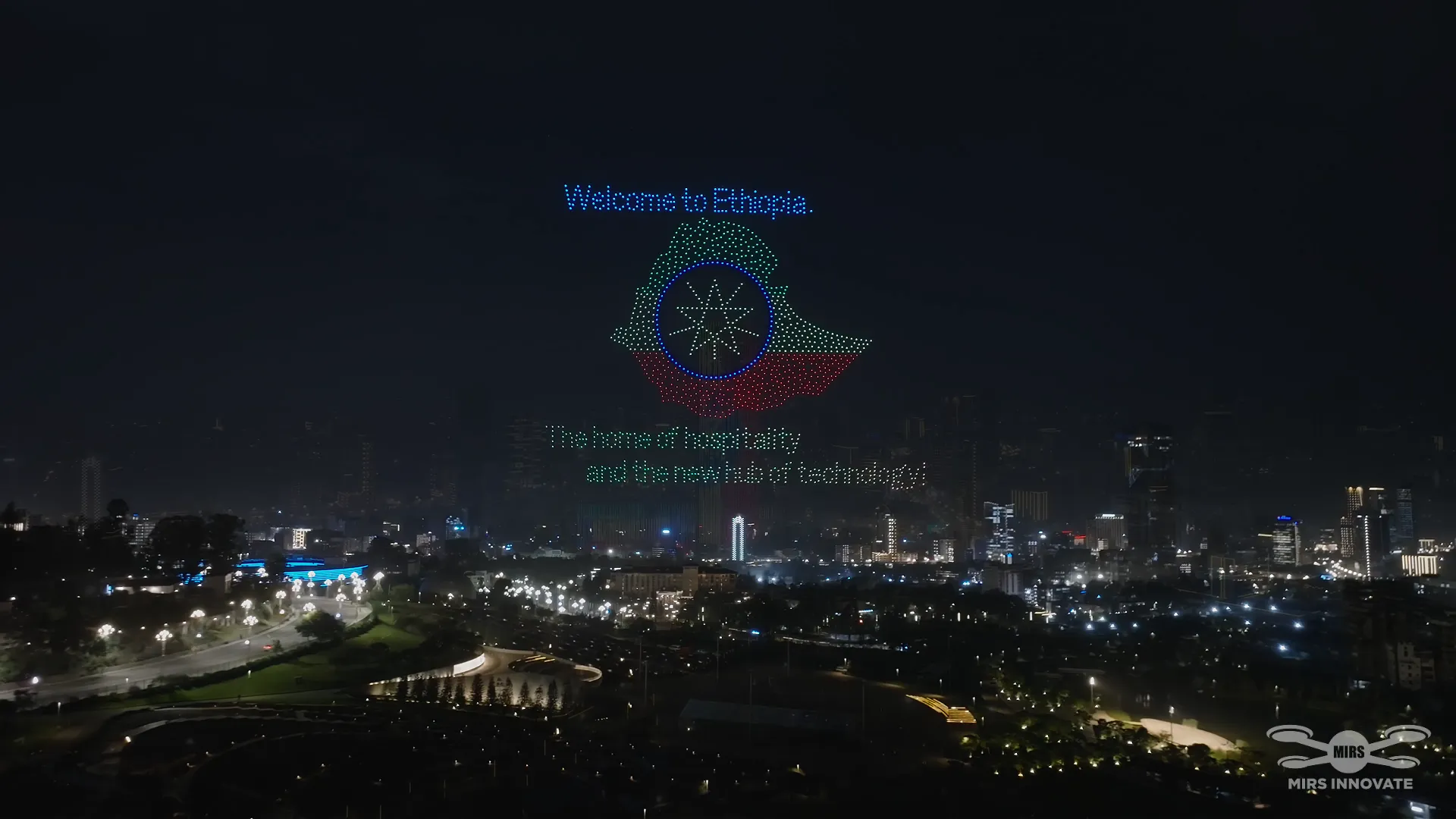
A tourism campaign has only a few seconds to make a destination feel unmissable. Beautiful footage helps. Celebrity partnerships help. But when a city skyline becomes the canvas and hundreds of synchronized drones tell a destination story in midair, attention changes shape. A drone show for tourism campaign does more than entertain a crowd for one night. It creates a public spectacle designed for attendance, press pickup, social sharing, and long-term destination recall.
For tourism boards, city marketers, and event agencies, that shift matters. Travelers are flooded with polished content every day. What cuts through is a real-world moment people want to film, post, and talk about. The right aerial performance turns a campaign from promotion into proof: proof that a destination can stage something ambitious, modern, and worth traveling for.
Why a drone show for tourism campaign works
Tourism marketing is different from product marketing. You are selling atmosphere, identity, and a future memory rather than a single item. Static billboards and standard stage effects often struggle to carry the full weight of a destination message.
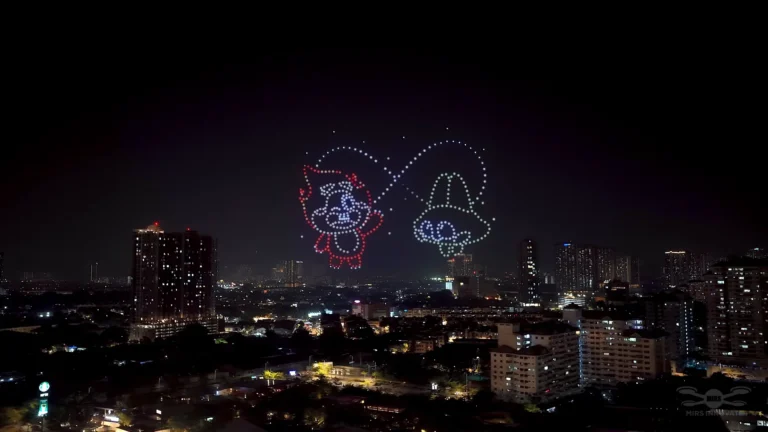
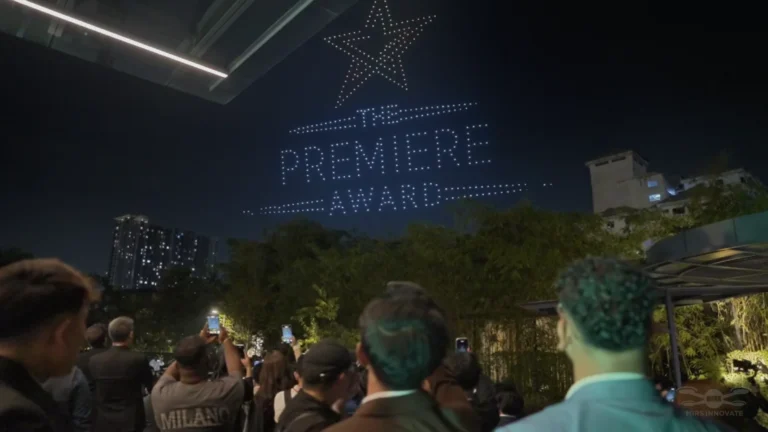
A drone show changes the format. Instead of asking audiences to imagine the destination promise, it stages that promise live. A coastline can appear above the waterfront in light. A national symbol can transform into a festival emblem. A destination tagline can emerge in the sky and then evolve into a 3D sequence that reflects local culture, nature, architecture, or seasonal programming.
That combination of scale and narrative gives tourism campaigns an advantage across several channels at once. It delivers a live audience moment, a broadcast-ready visual, and a stream of user-generated content from every angle in the crowd. The campaign no longer depends on one official camera feed. The audience becomes the distribution network.
Destination marketing needs spectacle with strategy
Big visuals alone are not enough. Tourism authorities are usually balancing multiple objectives at once: increasing visitor interest, supporting a festival or public celebration, strengthening destination branding, and showing stakeholders measurable campaign value. A drone show performs well when it is built around those goals rather than treated as decoration.
That starts with message discipline. The best shows do not try to say everything about a place. They identify the destination’s strongest visual assets and build a concise story around them. A beach market might focus on ocean, nightlife, and cultural energy. A heritage city might center architecture, national identity, and a signature annual event. A luxury destination may emphasize exclusivity, elegance, and world-class hospitality.
The medium is flexible, but the strategy has to be sharp. Too many icons in one sequence can dilute the message. Too much text can weaken the visual impact. The strongest tourism campaigns use drone choreography to create a few unforgettable images, then let those images carry the brand story across social media and earned media.
What audiences actually remember
People rarely remember event technology for its own sake. They remember the feeling of seeing something they did not expect. For tourism campaigns, that emotional response is the point.
A well-designed aerial show can create anticipation before launch, capture attention during the performance, and keep the destination in circulation long after the event ends. Viewers remember the moment the skyline changed. They remember the crowd reaction. They remember the transformation of familiar local symbols into something cinematic.
That emotional memory matters because travel decisions are not purely rational. People choose destinations based on status, excitement, curiosity, family appeal, and shareability. If your campaign can turn a place into a live social moment, you are not just informing potential visitors. You are moving the destination higher in their mental shortlist.
Safer and more controllable than fireworks
For public-facing tourism events, safety and control are not side issues. They are central to approval, planning, and reputation. Fireworks still carry excitement, but they also bring noise, smoke, fallout, and less creative control. For waterfront districts, dense urban settings, environmentally sensitive locations, and premium hospitality zones, those limitations can become serious barriers.
Drone light shows offer a different profile. They are quieter, more precise, and far more adaptable to branded storytelling. Shapes, logos, messages, and animated sequences can be programmed in advance and refined with exact timing. That makes them especially effective for tourism campaigns that need to align with government messaging, sponsor visibility, and destination identity.
There are trade-offs. Drone shows require detailed planning, airspace coordination, weather assessment, and highly disciplined execution. They are not an improvised add-on. For organizations that need a safer, cleaner spectacle with greater brand control, that planning burden is usually a strength rather than a drawback. It leads to a more deliberate and more defensible event asset.
Designing a drone show for tourism campaign impact
A tourism-focused drone show should begin with campaign outcomes, not drone count. Bigger fleets can create extraordinary visuals, but scale only matters when it supports the message and venue.
The first question is what the show needs to achieve. Is it launching a new tourism brand? Anchoring a national holiday? Driving international press during a global trade event? Supporting a destination relaunch after major infrastructure investment? Each use case changes the creative and production approach.
From there, the design should map the destination story into visual chapters. One sequence might establish the location with a recognizable landmark. Another might introduce cultural identity through pattern, motion, or symbolic imagery. A final sequence could reveal a campaign slogan or event logo timed to music and crowd peak. The point is progression. A strong show feels composed, not crowded.
Venue selection matters as much as the storyboard. Waterfronts, beaches, stadium-adjacent districts, and civic plazas can all work well, but visibility, safety perimeter, audience flow, and filming angles need to be built into the plan from the start. A beautiful sequence loses value if the crowd cannot see it clearly or if media crews have poor sightlines.
The logistics behind a headline-worthy destination event
Tourism authorities and event agencies often face pressure from multiple stakeholders: city officials, sponsors, public safety teams, and hospitality partners. A drone show has to satisfy creative ambition and operational scrutiny at the same time.
That means the production partner must handle more than animation design. Airspace permissions, regulatory compliance, launch area management, synchronization, weather contingencies, and on-site technical control all shape the success of the event. International campaigns add another layer through customs, transport, local coordination, and jurisdiction-specific approvals.
For clients planning high-visibility campaigns, turnkey delivery is not a luxury. It is what protects the event timeline and the brand behind it. A destination reveal can generate millions of impressions, but only if the execution is exact.
Experienced providers such as MIRS Drone Show are brought in early for this reason. The value is not only the visual outcome. It is the ability to convert an ambitious campaign concept into a reliable live production in real-world conditions.
Measuring return beyond the night of the show
Tourism marketers are rightly cautious about one-night activations that produce little afterglow. The strongest case for drone shows is that they extend well beyond the event itself.
Aerial performances create marketing assets before, during, and after launch. Teaser content can build anticipation. Live coverage drives attendance and local buzz. Audience-shot video spreads across short-form platforms almost instantly because the spectacle is easy to capture and easy to share. Press outlets gain a strong visual hook. Destination partners, hotels, airlines, and sponsors gain content they can repost across their own channels.
Outcomes depend on timing, creative quality, crowd size, media strategy, and the destination’s existing visibility. But compared with many event visuals that disappear the moment the lights go down, a drone show is unusually durable as campaign content.
When it makes the most sense
A drone show is especially powerful for destination anniversaries, tourism rebrands, major festivals, national celebrations, resort launches, and international event openings. It is also effective when a location needs to change perception: from conventional to new, from overlooked to iconic, from regional favorite to global contender.
It may be less suitable for campaigns with very limited public visibility, weak event infrastructure, or no plan for media amplification. The show can create the moment, but the surrounding campaign still needs distribution, stakeholder alignment, and a clear destination message.
At its best, a drone show becomes the campaign centerpiece: a live landmark event that turns a place into a story people want to witness and share. For destinations competing for attention, that kind of visibility is strategy made visible in the sky.
Frequently Asked Questions
What is a drone show for a tourism campaign?
A drone show for a tourism campaign is a live aerial performance where hundreds of synchronized drones form shapes, symbols, and animations representing a destination’s identity. Tourism boards and city marketers use them to generate live audience attendance, press coverage, and social media content in a single event.
How many drones do you need for a tourism destination drone show?
Most tourism campaigns with large outdoor crowds use 500–2,500 drones for maximum visibility across the audience zone. MIRS Drone Show’s Bahrain New Year’s Eve production deployed 2,500 drones for a major public destination event. Smaller destination launches work effectively from 300–500 drones depending on venue scale.
How much does a drone show for a tourism campaign cost?
Tourism campaign drone show pricing depends on fleet size, event scale, location, and permit requirements. Smaller productions start from USD 30,000–50,000; major national destination events with 1,000+ drones typically exceed USD 100,000. Contact MIRS Drone Show for a quote based on your campaign brief.
Do drone shows work for destination marketing?
Yes. Drone shows generate live audience moments, broadcast-quality visuals, and a high volume of user-generated social content simultaneously. Compared with static advertising formats, a drone show creates a real-world event moment that extends campaign reach through press coverage and organic sharing long after the show ends.
How do I plan a drone show for a tourism event?
Start with the campaign objective: destination rebrand, national celebration, or festival anchor. Then assess the venue, set the timeline (allow at least 10–12 weeks for permits and production), and work with an experienced operator who can manage airspace approval, creative design, and on-site execution. MIRS Drone Show handles end-to-end production for tourism clients internationally.
Planning a drone show?
MIRS Drone Show creates bespoke drone light shows for corporate events, launches, celebrations and festivals, with creative and operational planning tailored to each venue and project.