

How to Brand a Drone Show That Gets Seen
Learn how to brand a drone show with logos, story arcs, timing, and visual design that turn live events into memorable, shareable brand moments.
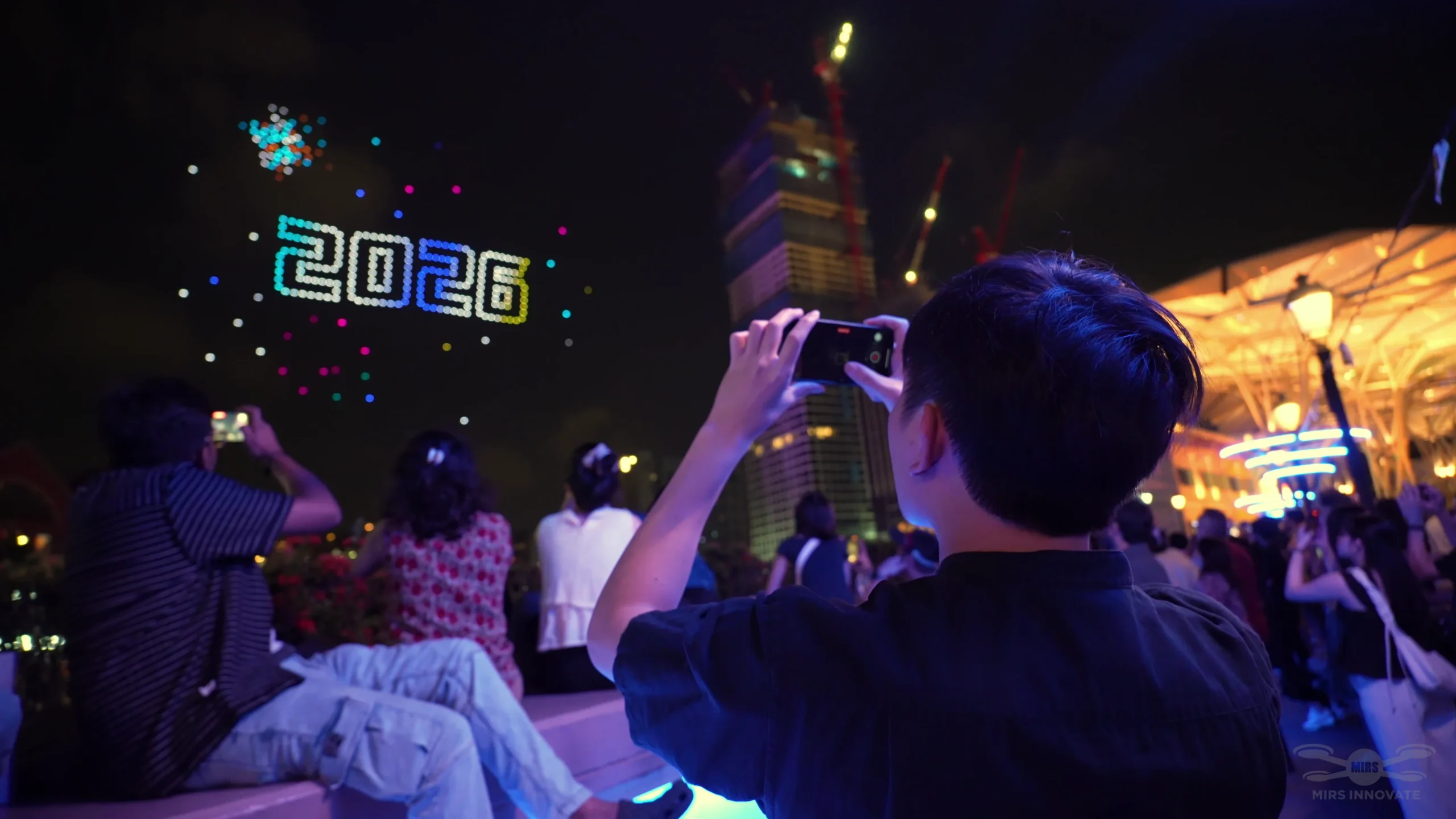
A drone show can put your logo in the sky. That alone is not branding. If you want to know how to brand a drone show in a way that actually moves an audience, the real work starts long before takeoff.
The strongest branded shows do not feel like ads floating overhead. They feel like landmark moments. The audience sees the brand, but they also feel the message, recognize the occasion, and leave with a clear visual memory tied to your event. That distinction matters if your goal is not just spectacle, but recall, press value, and social sharing.
How to brand a drone show starts with the event goal
Every effective drone show brand concept begins with one question: what is this show supposed to do for the event? A product launch needs a different creative structure than a national holiday, destination campaign, luxury wedding, or public festival finale.
If the goal is awareness, the show may need strong iconography, a bold name reveal, and a simple visual message that reads clearly from a distance and on camera. If the goal is emotional connection, the show should lean into story progression, symbolic imagery, and pacing that builds toward the brand moment instead of forcing it too early.
This is where many organizers get it wrong. They start with a logo animation and try to build a show around it. A better approach is to define the audience outcome first. Do you want applause in the moment, press photos the next day, viral clips online, or a prestige statement for stakeholders and sponsors? Usually, the right answer is some combination of all four, but one should lead.
Brand the experience, not just the sky
A branded drone show works best when the aerial performance is part of a larger event language. The colors, music, countdown, stage visuals, presenter script, and camera plan should all support the same message.
That means the show should not feel dropped in from another event. A tourism board might center regional symbols, landmarks, and cultural motifs before revealing its destination mark. A consumer brand might build anticipation with product-inspired shapes, campaign colors, and a concise tagline timed to a key launch moment. A government celebration may need a more ceremonial arc, where national identity carries equal weight with sponsor presence.
This is one of the biggest creative trade-offs. The more aggressively promotional a show becomes, the more likely it is to lose emotional lift. The more cinematic and story-led it becomes, the less direct the branding may feel. The best solution is rarely choosing one side. It is designing a sequence where the brand arrives as the climax of a visual story the audience already cares about.
What audiences actually remember
People rarely remember every formation. They remember two or three images, one emotional peak, and the ending. That is why branding decisions should focus on memory, not volume.
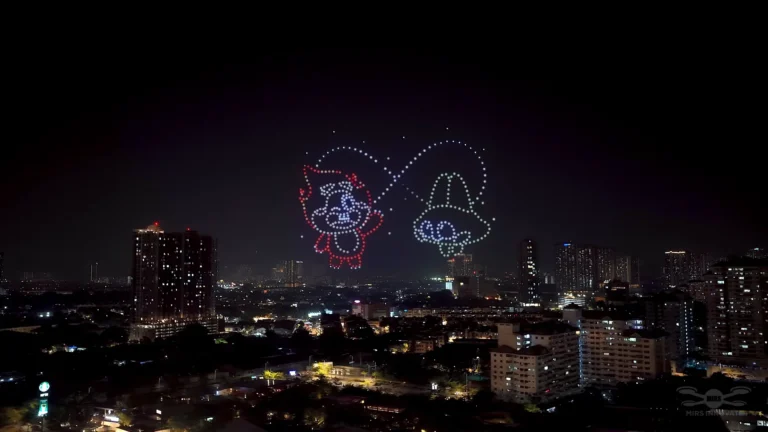
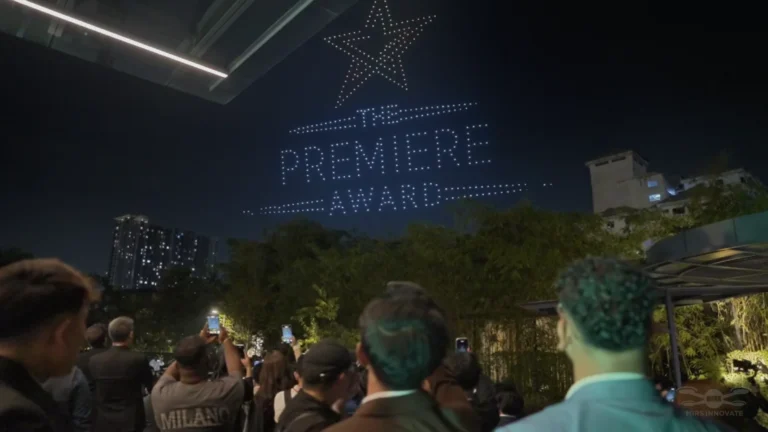
A clean logo reveal often outperforms a complicated one. A short line of text can work, but only if it is readable at distance and on mobile video. A mascot, skyline, product silhouette, or national symbol may carry more impact than a dense branded montage. In a premium production, restraint often looks more powerful than overloading the sky.
Visual identity must be designed for air, not print
Traditional brand systems are not automatically drone-show ready. A logo that works beautifully on packaging or a website may become weak in the sky if it relies on thin lines, small details, gradients, or layered typography.
To brand a drone show well, you have to translate the identity into aerial geometry. That usually means simplifying forms, strengthening silhouettes, enlarging spacing, and choosing colors that read clearly at night. The goal is not perfect brand replication. The goal is instant recognition under live conditions.
This also applies to motion. Drone shows are choreography, not static design. Brand assets should be built to transform smoothly from one recognizable shape to the next. Some logos convert beautifully into aerial transitions. Others need a more symbolic lead-in before the final reveal. It depends on the shape language and how much time the show has to tell the story.
Color choices need discipline
Not every brand palette performs equally well in the sky. Some colors are brighter, cleaner, and more camera-friendly than others. Darker tones, subtle gradients, and low-contrast combinations may underdeliver in real-world viewing conditions.
That does not mean abandoning brand standards. It means prioritizing visibility. A premium drone show partner will usually adapt the palette for aerial performance while keeping the identity intact. This is especially important for events designed to generate media coverage, because the show has to read as well on smartphones and broadcast footage as it does live on-site.
Story structure is what turns branding into spectacle
If you strip away the technology, a drone show still succeeds or fails on timing. Branding should have a narrative role. It needs an entrance, a purpose, and a payoff.
A strong show often opens with broad, audience-friendly imagery that establishes theme and scale. Then it narrows into more specific symbols connected to the host, campaign, or destination. Finally, it delivers the branded reveal at the moment of highest attention, when the audience is already emotionally invested.
That structure matters because audiences respond better when the brand feels earned. For a sports event, that might mean building from energy and team pride into sponsor integration. For a luxury private event, it may mean starting with romance or family symbolism before revealing a monogram or custom message. For a city celebration, the story might move from heritage to ambition to destination branding.
How much branding is too much?
There is no fixed rule, but there is a practical one: if every scene is asking for attention, none of them lands. Over-branding can make a show feel transactional. Under-branding can make it beautiful but forgettable.
In most cases, one major logo reveal and a few strategically chosen branded moments are enough. The rest of the show should create the context that makes those moments matter. This balance is especially important for public audiences, who are more receptive to sponsored spectacle when it still feels like a gift, not a pitch.
Production realities shape creative choices
A great brand concept still has to survive the real conditions of a live event. Venue size, viewing angles, local airspace rules, show duration, weather planning, soundtrack timing, and fleet size all affect what is possible.
That is why branding decisions should never happen in isolation from production planning. A very detailed logo may require more drones to render cleanly. Text-heavy scenes may only work from certain audience positions. A waterfront launch, urban skyline backdrop, or stadium environment may change how shapes read and how high the performance should sit.
Executive buyers usually care about one thing here: confidence. They need to know the show will look as strong in reality as it did in the pitch deck. That comes from combining creative ambition with operational discipline. MIRS Drone Show approaches branding as both visual storytelling and live production engineering, because one without the other is where disappointment starts.
Build for phones, press, and the live crowd at once
A branded drone show has three audiences, not one. The live crowd sees scale. The camera sees composition. Social media sees moments.
That means the show should be designed to produce high-value captures at multiple points, not just a single ending frame. Wide formations create grandeur for the audience on site. Clear icons and concise brand messages play better on vertical video. Strong transitions help media teams capture clips that feel dynamic even without full event context.
This is another place where strategy beats decoration. If the show is part of a launch or destination campaign, the branded scenes should be timed so photographers, broadcast crews, and social teams are ready. A sky moment only becomes marketing value if someone can capture it well.
The best branded shows feel inevitable
When a drone show is branded properly, the audience does not experience it as a collection of technical effects. They experience it as the natural high point of the event. The visuals fit the occasion. The message is unmistakable. The brand appears at exactly the moment it should.
That is the standard worth aiming for. Not more drones for the sake of more drones. Not more logos for the sake of visibility. A better question is whether the show expresses who you are, why this moment matters, and what people should remember after the lights go out.
If you are planning a high-visibility event, the smartest branding choice is often the one that feels most precise. Make the story clear, make the visuals readable, and make the final reveal impossible to forget.
Frequently asked questions
How can a brand appear in a drone show?
A drone show can form a logo, product silhouette, campaign phrase, mascot, or a sequence that connects those elements into one story. The design needs to be simplified for viewing distance and movement in the sky.
When should branding be planned for a drone show?
Bring the brand and campaign objective into the first creative brief. That gives the production team time to test whether the shapes, timing, venue, and audience sightlines support the intended message.
Can a drone show work for product launches and corporate events?
Yes. It is particularly useful when the event needs a clear reveal moment, an audience-facing brand story, and visual material that can travel through press and social coverage.
Planning an event? Explore MIRS drone show services, see how a drone show in Malaysia can be planned, or contact MIRS for a tailored proposal.
Planning a drone show?
MIRS Drone Show creates bespoke drone light shows for corporate events, launches, celebrations and festivals, with creative and operational planning tailored to each venue and project.