



How to Replace Event Fireworks Smartly
Learn how to replace event fireworks with safer, brandable aerial experiences that deliver spectacle, control, and lasting audience impact.
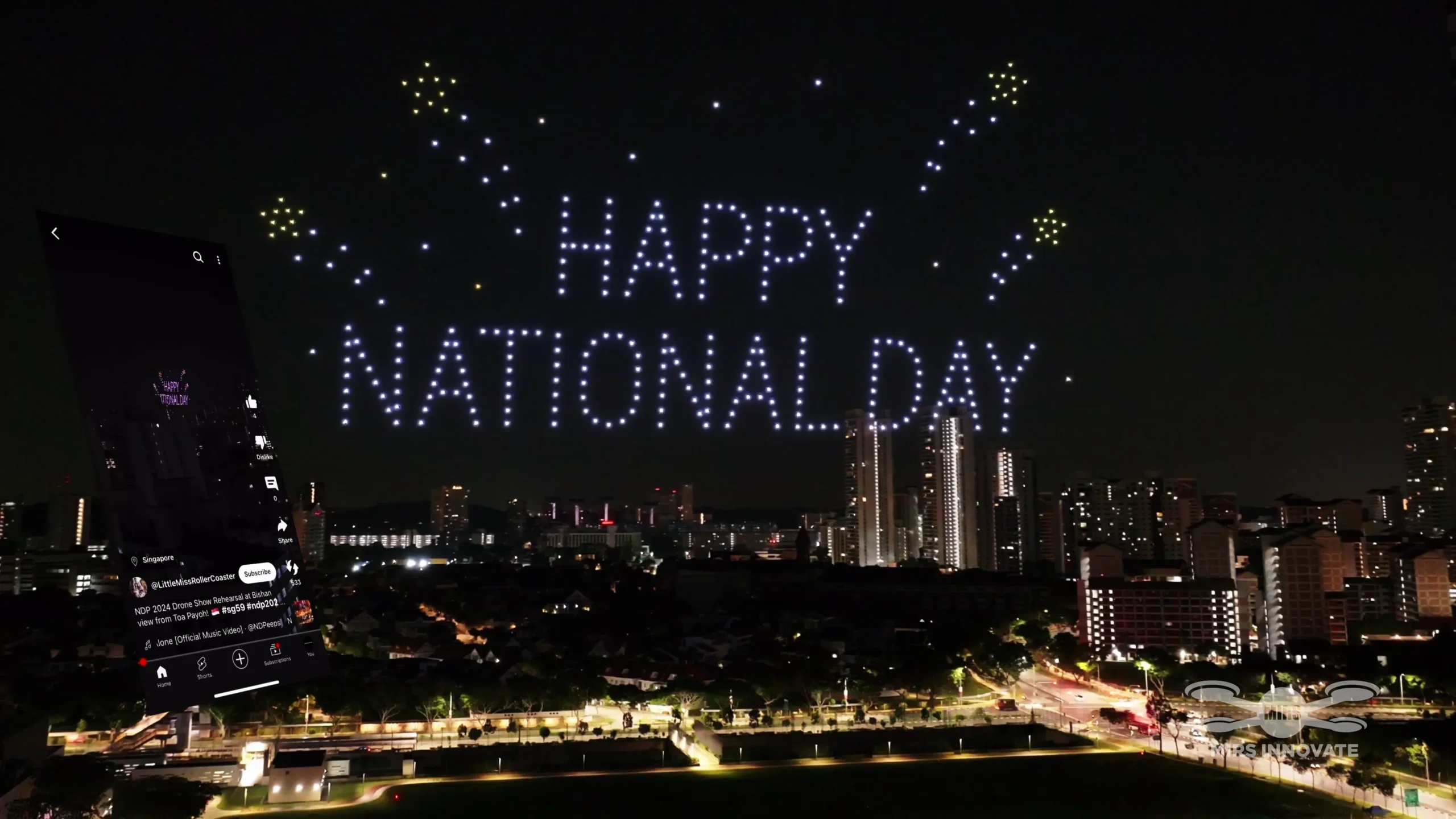
A fireworks finale used to be the safe choice. Now it is often the risky one, in safety terms and in creative terms. Audiences have seen it before. Cities are tightening restrictions. Brands want more control over what appears in the sky. If you are deciding how to replace event fireworks, the real question is not what can fill the last five minutes of a show. It is what can create a bigger moment, with fewer compromises.
For high-visibility events, the strongest replacement is not a smaller pyrotechnic effect or a louder stage cue. It is a fully designed aerial experience that can carry story, branding, timing, and precision at the same time. That is why drone light shows have moved from novelty to headline attraction.
Why organizers are replacing fireworks now
The pressure is coming from several directions at once. Public safety standards are tighter. Venue rules are stricter. Environmental concerns are more visible. And audiences expect an event centerpiece that looks original on-site and on camera.
Traditional fireworks still deliver scale, but they are limited in what they can communicate. They can create excitement, color, and impact, yet they cannot easily render a logo with clarity, animate a product reveal, display sponsor messaging, or shift from one visual chapter to another with exact control. For a private celebration, that may be acceptable. For a brand launch, civic milestone, tourism campaign, or national event, it often is not.
That is the gap modern aerial production fills. A replacement needs to do more than imitate fireworks. It needs to outperform them where event stakes are highest – safety planning, creative control, audience recall, and media value.
How to replace event fireworks without losing spectacle
The biggest misconception is that replacing fireworks means sacrificing emotion. In practice, the opposite is often true. Spectacle lands harder when it is intentional.
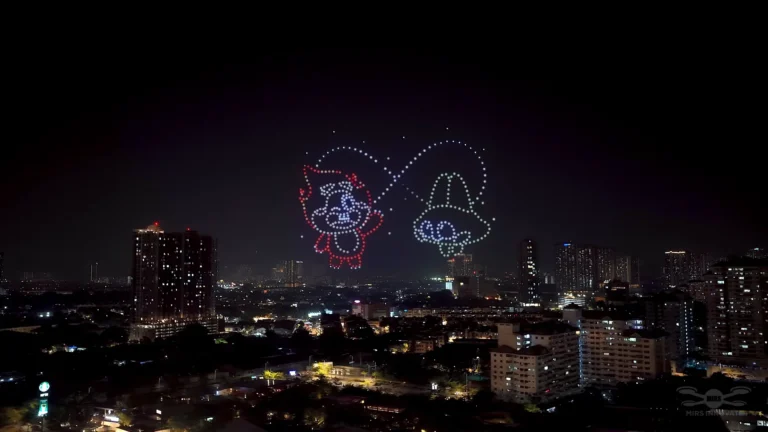
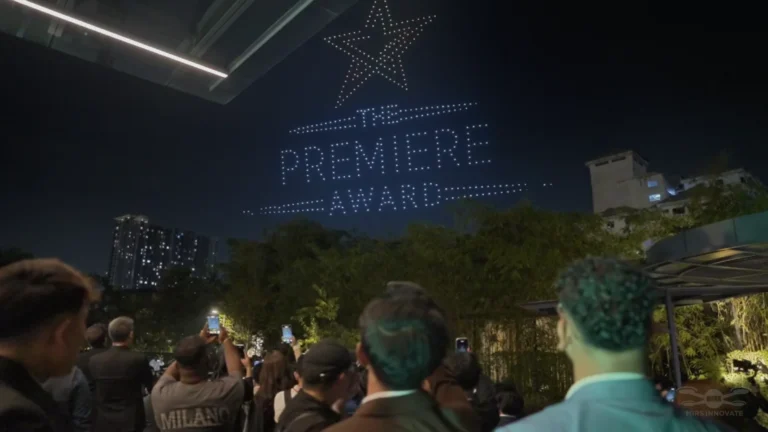
A drone light show can build a sequence rather than just a burst. It can open with a countdown, transition into icons tied to the event, form a brand mark, reveal a product silhouette, then end on a cinematic closing image designed for wide shots and social clips. That level of narrative control changes the audience experience. Instead of watching abstract effects, they are watching a sky performance made specifically for that occasion.
This matters because memorable events are not remembered for noise alone. They are remembered for signature moments. If your audience can describe exactly what they saw in the sky, the show did its job.
There is also a practical advantage. Drone shows are highly programmable, which means timing can be synchronized with music, stage content, live announcements, or broadcast cues. For producers managing a complex run-of-show, that control is valuable. It reduces improvisation at the exact moment when precision matters most.
The best replacement depends on the type of event
Not every event needs the same solution. A municipal celebration has different demands than a luxury wedding or a global brand launch. The replacement strategy should reflect the event’s purpose, location, and audience behavior.
For public festivals and city celebrations, the priority is often scale, safety, and public visibility. Organizers need an ending that feels major, photographs well from long distances, and aligns with permitting realities. Drone shows are particularly strong here because they can deliver civic symbols, local landmarks, patriotic imagery, and sponsor integration in one coordinated performance.
For corporate events, product launches, and brand activations, the need is usually more specific. The sky needs to say something recognizable. This is where fireworks tend to fall short. A brand cannot rely on abstract bursts if the objective is recall, campaign imagery, or earned media. A custom drone show can render logos, slogans, mascots, and animated narratives with precision that supports the marketing goal rather than sitting beside it.
For private luxury events, the equation changes again. The priority may be exclusivity, elegance, and emotional personalization. Fireworks can feel generic if the event is deeply personal. A drone show can feature names, monograms, portraits, custom symbols, or a visual love story. It creates a finale that belongs to the client, not just to the format.
What to evaluate before making the switch
If you are serious about how to replace event fireworks, start with operational reality, not just visuals. The strongest show concept still depends on venue conditions, airspace, and production timing.
First, look at the event environment. Is the venue in an urban center, near an airport, beside water, or surrounded by residential areas? Fireworks and drones each come with site requirements, but in many locations, the ability to plan a controlled aerial display with clear parameters is a major advantage.
Second, define what success actually means. Some events need a crowd-pleasing finale. Others need viral video, sponsor visibility, or a nationally broadcast moment. Once the outcome is clear, the show can be designed backward from that objective. This is where executive buyers often make better decisions than creative committees. They focus on what the moment must achieve, not just what looks exciting in theory.
Third, consider the content value. A drone show is not only a live experience. It is also a visual asset. Wide shots, vertical clips, teaser edits, and press photography all benefit from imagery that is clean, legible, and unmistakably tied to the event. Fireworks create atmosphere. Drone shows create identifiable media.
Safety and control are part of the show value
Decision-makers rarely choose a show format on aesthetics alone. They choose based on what they can stand behind publicly and operationally.
That is one reason the shift away from fireworks is accelerating. Safety is not a side benefit. It is part of the event’s reputational framework. Public agencies, destination marketers, and major brands are under pressure to produce bold experiences without introducing avoidable risk.
Drone shows offer a different kind of certainty. They are planned, simulated, tested, and flown within a structured operational model. That does not make them simple – high-level aerial productions are not simple at all – but it does make them more controllable. For event organizers, that matters. Fewer unknowns at the climax of the program means stronger confidence across internal stakeholders, venues, sponsors, and public authorities.
There is a trade-off, of course. Drone shows require advance planning, technical coordination, and a production partner that understands both creative ambition and airspace discipline. They are not a last-minute plug-in. But for premium events, that planning is usually a strength rather than a drawback. It is what allows the final result to feel intentional instead of improvised.
Why drone shows are becoming the premium standard
The premium event market does not reward repetition. It rewards moments people have not seen before, or at least not in the same way. That is where drone light shows have become such a powerful replacement.
They scale from intimate to monumental. They can match brand identity with exact colors and forms. They can be choreographed to fit a launch, a national holiday, a tourism campaign, or a wedding with equal precision. Most importantly, they turn the sky into a communication surface.
That shift is bigger than entertainment. It gives event leaders a way to transform a finale into a signature asset. Instead of ending the night with something spectacular but anonymous, they can end with a visual statement that belongs only to their event.
For organizations with reputations to protect and audiences to impress, that distinction matters. It is why premium producers, tourism boards, governments, and global brands increasingly treat aerial storytelling as part of strategy, not decoration. Companies like MIRS Drone Show are being brought in to engineer a flagship moment that holds up live, on camera, and across international production standards.
The smarter question to ask
The real issue is not whether fireworks can be replaced. They already are being replaced at every level of the market. The smarter question is what should take their place.
If the answer is something safer, more controllable, more brandable, and more memorable, the path becomes clear. Aerial spectacle has evolved. The best finales now do more than explode. They communicate.
When your event matters to the public, to stakeholders, or to the story your brand is trying to tell, replacing fireworks is not about giving something up. It is about finally choosing a format that can carry the weight of the moment.

Planning a drone show?
MIRS Drone Show creates bespoke drone light shows for corporate events, launches, celebrations and festivals, with creative and operational planning tailored to each venue and project.