


Drone Show for Product Launch Events
A drone show for product launch events turns brand stories into sky-scale spectacle with safer execution, custom visuals, and viral audience impact.
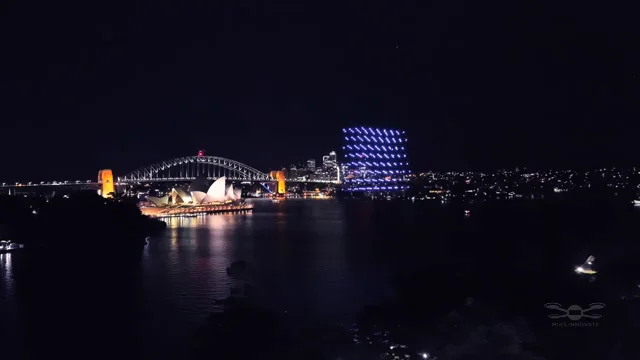
A product launch has a short window to do something very difficult: stop the room, frame the story, and make the brand feel larger than the product itself. A drone show for product launch events is moving from novelty to headline strategy for exactly that reason. When the sky becomes part of the reveal, the launch stops being a presentation and becomes a public moment people record, post, and remember.
For brands under pressure to create real impact, that shift matters. Audiences have seen LED walls, pyrotechnics, stage lifts, and conventional reveal choreography. They still work, but they rarely own the conversation the next morning. A well-designed drone show can own it, giving marketing leaders a controlled, high-visibility format that blends spectacle with brand storytelling at a scale few launch tools can match.
Why a drone show for product launch works so well
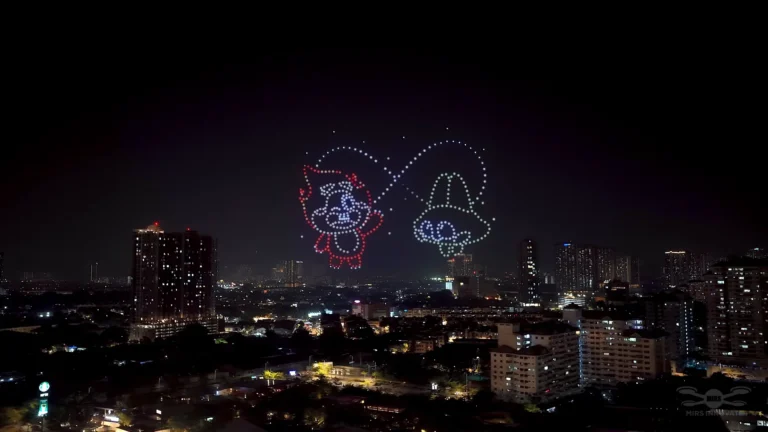
Most launch formats are limited by the stage. Even very expensive productions ask viewers to look in one direction, from one vantage point, at one screen. Drone shows break that boundary. They lift the launch narrative into open air, where logos, product silhouettes, taglines, icons, and animated sequences can unfold above the audience in a way that feels cinematic and immediate.
That visibility changes the emotional weight of the event. A new device, vehicle, fragrance, destination, or corporate initiative is introduced as an event in the sky rather than appearing on a screen. For high-stakes launches, that distinction is valuable because perception often drives coverage before features do.
There is also a practical reason this format performs well. Drone shows are highly brandable. Fireworks can create excitement, but they cannot form a clean product outline, spell a campaign message, or animate a logo transformation with precision. Drones can. That makes the show part of the brand system rather than a generic celebration tacked onto the end.
The real advantage is controlled spectacle
The strongest launch experiences are aligned, with every creative decision tied to the launch objective rather than to general spectacle. A drone show gives brands unusual control over that alignment.
Every frame can be designed around the launch objective. If the priority is reveal, the choreography can build suspense and culminate in a product form emerging from abstract light. If the goal is media capture, the sequence can be optimized for wide shots, recognizable brand moments, and social-ready timing. If the launch needs to signal innovation, the show itself becomes proof of technical ambition.
That control extends beyond visuals. Music synchronization, countdown moments, keynote timing, and live reveal cues can all be integrated into the show design. The result feels less like entertainment between agenda items and more like the centerpiece of the launch architecture.
Premium execution is what makes this feel effortless. A drone show only appears smooth when it has been engineered with discipline. Airspace coordination, safety planning, site assessment, weather evaluation, animation design, and operational rehearsal all sit behind the spectacle. Senior event buyers understand this. The sky may look magical, but the outcome depends on production rigor.
What a launch audience actually remembers
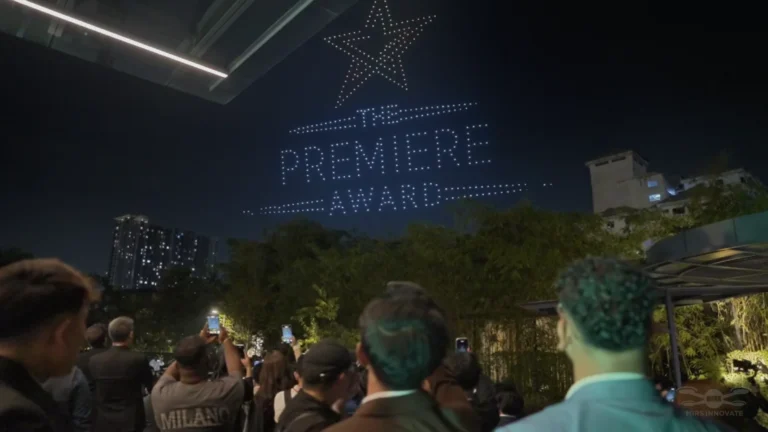
Audiences do not retain every product specification announced on launch night. They remember the moment the room changed. They remember the image that made everyone raise a phone at once. They remember the scene that turned a corporate event into something shareable.
A drone show is built for that memory economy. It creates signature imagery that can carry the campaign beyond the venue: a product contour suspended over a waterfront, a logo reveal over a stadium crowd, a sequence that transforms brand heritage symbols into the newly launched product. These are content assets generated live, in front of real audiences, with instant social proof.
That matters because launch ROI is no longer measured only inside the event perimeter. It includes earned media, attendee posts, press photography, partner amplification, and replay value across marketing channels. The best launch productions are designed with that expanded footprint in mind.
When drone shows outperform fireworks and traditional effects
For some brands, fireworks still fit the brief. They are loud, celebratory, and familiar. But familiarity is also the limitation. A launch usually needs something more specific than excitement alone. It needs identity.
A drone show offers a safer and more controllable alternative with far greater narrative range. It can present exact brand marks, product features, campaign text, and multi-scene storytelling with consistency. It is also better suited to brands that want a premium visual language without smoke-heavy fallout or a generic finale feel.
The format depends on the event. If the site has severe airspace constraints, poor weather conditions, or a schedule that leaves no room for proper technical planning, another reveal format may be the smarter choice. High-impact events are won by matching creative ambition to operational reality.
Designing a drone show around the launch objective
The most productive planning question is simple: what should the audience believe when the show ends?
If the answer is innovation, the visual language should feel clean, advanced, and precise. If the answer is luxury, pacing and composition should emphasize elegance over visual overload. If the answer is scale, the choreography should lean into wide formations, bold transitions, and unmistakable brand dominance.
Custom design is what makes this work. The same fleet can create very different launch experiences depending on storytelling choices. A consumer tech launch may call for fast transformations, wireframe-inspired graphics, and 3D product forms. An automotive reveal might use motion trails, engineering motifs, and dramatic silhouette work. A beauty or fashion launch may benefit from softer transitions, iconic branding, and image-led symbolism rather than dense messaging.
Strong creative also respects audience attention span. Often, the most powerful frame is the clearest one: a perfectly rendered logo, a product profile, a single line of launch text suspended above the crowd at exactly the right second.
What executive buyers should evaluate before booking
Not every provider is built for high-visibility launches. If the event carries brand risk, the decision should go beyond showreel appeal.
Buyers should assess whether the production partner can manage end-to-end delivery. Creative development is only one part of the assignment. Permit handling, aviation compliance, logistics, international deployment, site planning, rehearsal workflows, and on-site execution are what protect the event when complexity rises.
Scale is another consideration. A launch for invited press at a private estate needs a different production approach than a mass-audience reveal at a city waterfront. The right partner should be able to adapt fleet size, visual density, and operational planning to the venue, audience profile, and campaign ambition.
The show also needs to fit the broader event ecosystem. A premium launch rarely stands alone. It sits inside a larger production with staging, audio, lighting, VIP hosting, broadcast capture, and press choreography. The drone element should enhance that system, not compete with it.
The strategic value goes beyond the launch night
The immediate reaction is the obvious win, but the longer value is often stronger. A drone show creates a branded visual event that continues to work after the last guest leaves. Video recaps become more compelling. Press coverage has stronger imagery. Social teams have real spectacle to distribute. Internal stakeholders see a launch that looks decisive, modern, and market-leading.
For brands launching into crowded categories, that edge is meaningful. It frames the product as a market event rather than a routine announcement. A brand willing to put its story into the sky is not introducing something quietly.
Global event buyers increasingly treat drone shows as a strategic production investment rather than a decorative add-on. When executed at a high level, they combine creative distinction, operational control, and media value in a single format. For launch teams looking for more than a standing ovation, that combination is worth building toward.
Frequently Asked Questions
How do drone shows enhance product launches?
Drone shows turn a product launch into a visual event that generates organic social media content. Video footage of a brand logo or product formation in the sky is shared widely and reaches audiences far beyond those at the event. They create a clear, memorable brand moment that advertising alone cannot replicate.
How many drones do you need for a product launch drone show?
Product launch drone shows commonly use 300–1,300 drones depending on the visual complexity of the formations and the size of the launch event. MIRS Drone Show’s Pop Mart Singapore launch used 1,300 drones; the Coca-Cola Philippines campaign also used 1,300. Smaller brand launches work effectively with 300–500 drones.
How much does a drone show for a product launch cost?
Drone show pricing for product launches varies by fleet size, choreography complexity, location, and market. Budget from USD 25,000 for a modest regional launch to USD 150,000+ for a large-scale flagship production in a regulated market. MIRS Drone Show provides project-specific quotes based on your brief.
Can drones display a product, logo, or animated sequence at a launch?
Yes. Drone choreography can render 2D and 3D formations including logos, product silhouettes, brand mascots, animated transitions, and text. The brand creative team works with MIRS’s choreography designers to translate the visual brief into a flight-path simulation before any drones fly.
How long before a product launch should I start planning a drone show?
Start planning at least 10–12 weeks before the launch date. This allows time for site assessment, permit applications, creative design, simulation testing, and equipment logistics. In heavily regulated markets such as Singapore, allow 14 weeks or more.
Planning a drone show?
MIRS Drone Show creates bespoke drone light shows for corporate events, launches, celebrations and festivals, with creative and operational planning tailored to each venue and project.