

How to Stage an Aerial Logo Reveal for Major Events
Learn how to plan an aerial logo reveal for a product launch, brand activation, or major event, from visual design and timing to safety and audience viewing.
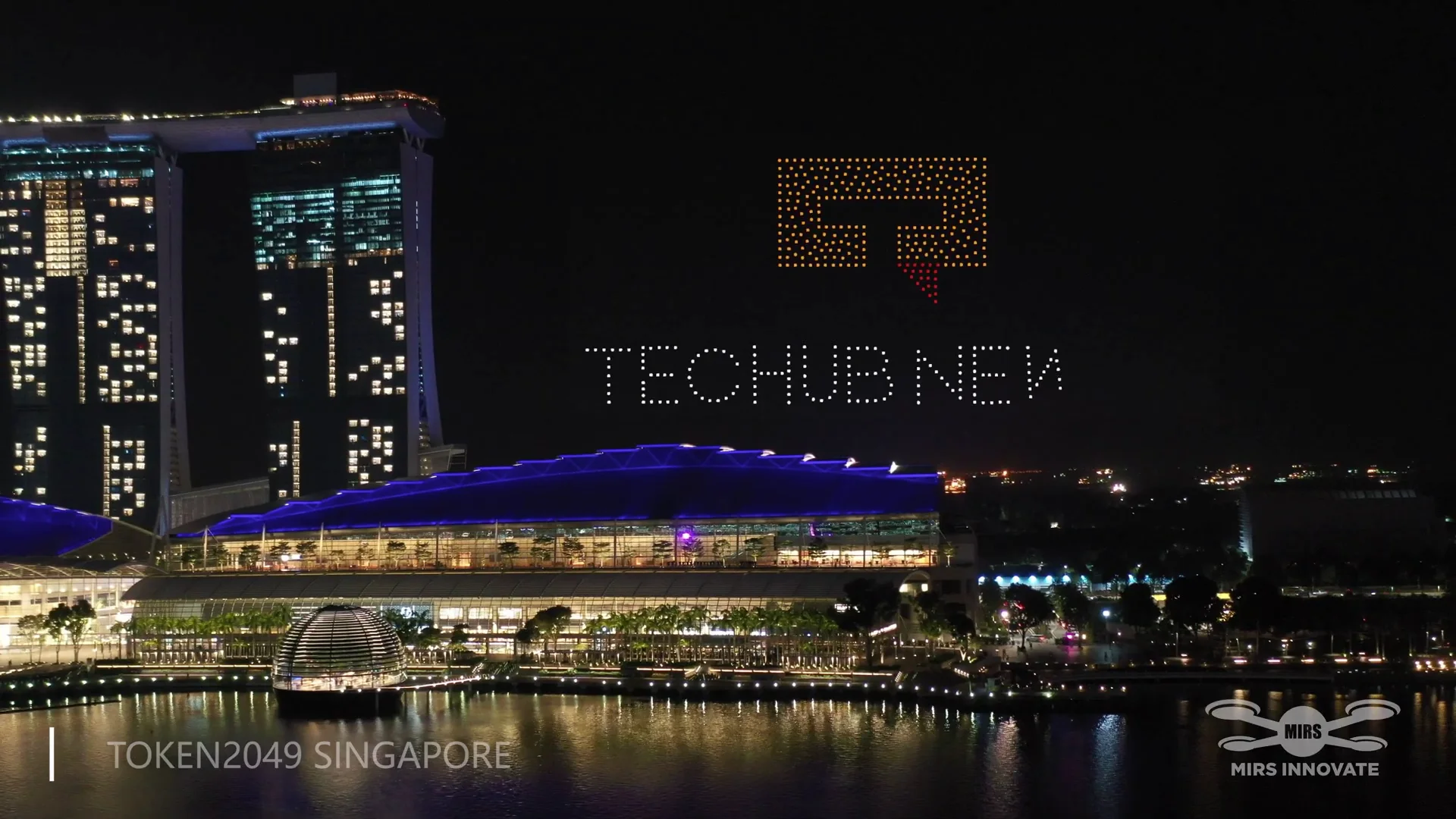
When a product launch reaches its final countdown, a festival headliner takes the stage, or a national celebration pauses for its defining moment, the sky can deliver the reveal no screen can match. Learning how to stage an aerial logo reveal is not simply a matter of putting a mark in the air. It is about building anticipation, controlling the audience’s gaze, and giving a brand its most cinematic entrance.
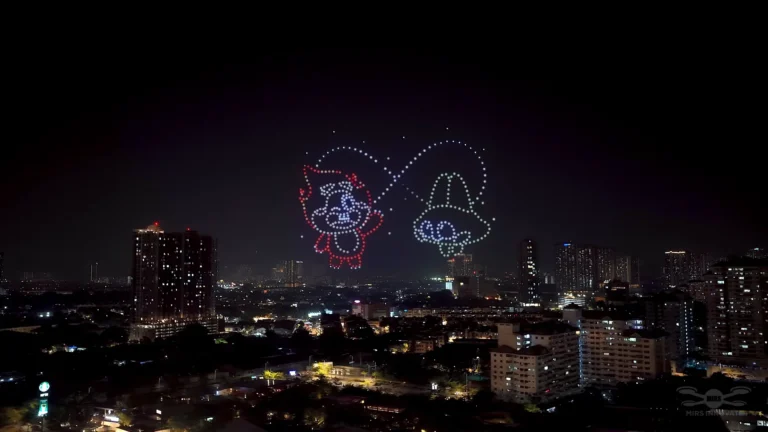
A drone logo reveal can turn a corporate identity into a landmark event image. Done well, it creates a moment guests record, media outlets publish, and audiences remember long after the final drone lands. Done poorly, it can feel like a static graphic displayed at the wrong time. The difference is creative direction, technical planning, and disciplined live-event production.
How to Stage an Aerial Logo Reveal With Impact
The logo is the destination, not the entire performance. Start by defining what the reveal must accomplish: announce a new brand, crown a sponsorship, launch a product, celebrate an anniversary, or create a visual signature for a public event. That objective determines the right story, fleet scale, viewing angle, and duration.
For a brand launch, the strongest structure often begins with visual mystery. Drones might form abstract particles, a product silhouette, or a sequence inspired by the brand’s category before resolving into the logo. For a tourism board, the reveal may evolve from a regional landmark or cultural motif into the destination identity. At a sports event, the crowd may see an emblem emerge from motion, team colors, and a countdown timed to the opening ceremony.
This progression matters because a logo that appears without context can be impressive but fleeting. A logo that arrives as the final beat of a purpose-built aerial narrative earns attention. It gives the audience a reason to wait, react, and share.
Give the logo room to read
A brand identity designed for a website header is not automatically designed for the night sky. Fine lines, tiny taglines, intricate gradients, and tightly packed lettering can lose clarity at distance. The best aerial logo designs simplify the mark while protecting its most recognizable elements: its silhouette, color palette, iconography, and letterforms.
Legibility depends on more than the design file. It depends on the viewing distance, audience spread, drone count, and the logo’s size in the formation. A compact VIP event may need a different composition than a waterfront celebration viewed by tens of thousands across a broad public area.
The practical question is not, “Can the drones form our logo?” It is, “Will every priority audience member recognize it instantly from where they are standing?” A professional creative team will test the formation against the venue geometry before the show reaches final production.
Build the Reveal Around the Audience Journey
The most successful aerial reveals are choreographed around what the crowd sees and feels moment by moment. Before selecting animations, identify the primary viewing zone. Is the audience facing a main stage, gathered along a beach, seated in a stadium, or distributed throughout a city plaza? The show needs a clear front, even when it is designed to create impact from multiple locations.
Music, lighting, stage content, and live announcements should support the reveal rather than compete with it. If a presenter asks guests to look upward, the drones should already be positioned to reward that attention within seconds. If the event uses a countdown, the final number should land precisely as the logo completes its formation.
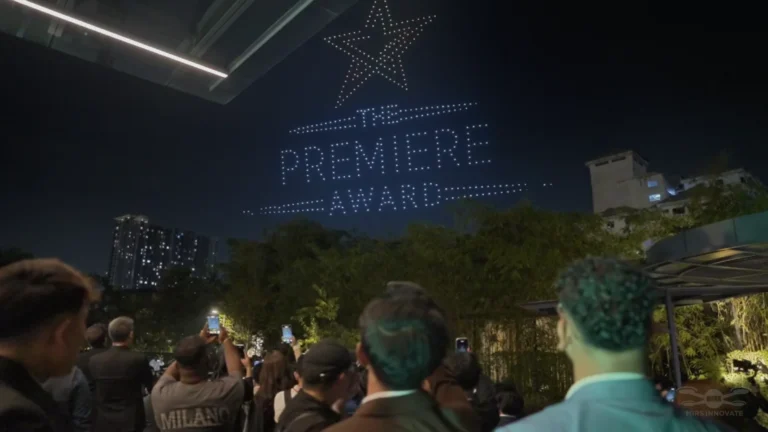
Timing is especially important for media capture. A logo reveal needs enough hold time for guests to recognize it, raise their phones, frame the shot, and record. Rushing past the final image may look efficient in a storyboard, but it sacrifices the image that will travel farthest after the event. Holding the logo, followed by a short branded animation or a celebratory burst of light, usually gives both the live audience and press photographers what they need.
Design for the camera, not only the crowd
An aerial logo reveal is a live experience and a content engine. Event planners should plan for official camera positions early, including wide establishing shots, crowd-reaction angles, and a clean frontal view of the formation. These assets can become launch-day social content, campaign creative, highlight films, and future event promotion.
That does not mean designing only for a drone camera. Phone footage from the crowd is part of the value. High contrast, distinct colors, bold motion, and a logo that holds clearly against the sky all improve the odds that audience-created content will represent the brand well.
Choose the Right Scale and Show Length
Fleet size shapes what is creatively possible. A smaller fleet can produce elegant monograms, simple icons, and intimate wedding or private-event reveals. Larger fleets create the resolution needed for detailed logos, readable text, layered animation, 3D-style depth, and major public spectacle.
More drones are not automatically the right answer. The right fleet is the one that supports the logo at a readable scale while leaving enough capacity for the journey leading into it. If the entire fleet is needed to form one static logo, there may be limited room for the transition that makes the reveal memorable. Conversely, a simple, iconic symbol may gain more power from a restrained composition than from unnecessary complexity.
Show duration also depends on the event context. A 60- to 90-second sequence can be highly effective as a concert or conference punctuation point. A longer performance may be appropriate for a city celebration, destination campaign, or headline entertainment program. In either case, the logo should appear at the emotional peak, not as an afterthought added to the end.
Treat Airspace, Safety, and Timing as Creative Foundations
Aerial spectacle only feels effortless when the planning behind it is rigorous. Drone show production requires evaluation of the launch site, performance area, audience perimeter, nearby structures, local aviation requirements, weather conditions, and operational access. These details influence the creative plan from the beginning.
For example, a venue with limited clear launch space may affect where the fleet can be positioned. A waterfront or city-center show may require additional coordination around restricted airspace, public safety zones, and event traffic. Wind, visibility, and timing around sunset can affect the preferred show window. These are not obstacles to address after the animation is approved. They are production realities that help determine what can be delivered safely and precisely.
That is why turnkey production matters. At MIRS Drone Show, creative development is connected to engineering, airspace coordination, permits, flight planning, synchronization, and on-site execution. Clients receive a show designed for the real conditions of their event, not a beautiful concept that falls apart when it reaches the venue.
Establish a clear approval process
Brands often have multiple stakeholders involved in a logo reveal: marketing leaders, creative agencies, event producers, venue teams, legal reviewers, and executive leadership. A defined approval process keeps the production moving without diluting the idea.
Approve the core narrative first, then the logo treatment, key frames, colors, timing, music cues, and final show visualization. Keep brand guidelines available, but allow the aerial design team to make the adaptations needed for nighttime visibility. Trying to preserve every detail of a print-style logo can weaken the final sky formation.
It also helps to decide early whether the reveal includes text. A short message, product name, or anniversary date can add context, but text takes formation capacity and requires a longer hold for readability. If the logo already communicates the message, a cleaner visual sequence may create stronger impact.
Make the Final Frame Worth Remembering
The best aerial logo reveal leaves the audience with a single, unmistakable image. It may be a luxury brand mark suspended above a gala, a new vehicle badge emerging from a constellation of light, or a destination emblem shining over a waterfront crowd. Whatever the occasion, the frame must feel earned by the story that came before it.
Plan the final seconds with the same care as the opening: the logo settles, the colors hold, the music resolves, and the audience has time to absorb what they are seeing. Then let the moment breathe. A sky filled with your identity does not need to hurry.
Frequently Asked Questions
Can a drone show display a complex company logo?
Yes, but the logo usually needs to be adapted for distance, movement, and nighttime viewing. Fine lines, small type, and intricate details may need to be simplified so the main audience can recognise the mark quickly.
How long should an aerial logo hold in the sky?
The final logo should hold long enough for the audience to recognise it, take a photo, and capture video. The right duration depends on the viewing distance, event timing, and how quickly the formation can be understood.
When should airspace and venue checks begin?
Start the feasibility review as soon as the event date and venue are known. The launch area, audience layout, airspace, weather plan, and required approvals can affect both the creative direction and the final schedule.
Does an aerial logo reveal work for product launches and corporate events?
It can work well when the reveal supports a clear event moment, such as a product launch, anniversary, sponsorship, gala finale, or public celebration. The sequence should be designed around the audience view and the message the organiser wants people to remember.
Planning a logo reveal for an event? Explore the MIRS drone show service or contact MIRS Drone Show for a proposal based on your venue, audience, and event programme.
Planning a drone show?
MIRS Drone Show creates bespoke drone light shows for corporate events, launches, celebrations and festivals, with creative and operational planning tailored to each venue and project.