


Drone Formations for Events That Own the Night
Drone formations for events turn launches, festivals, and celebrations into precise, branded sky spectacles built for safety, scale, and sharing at scale.
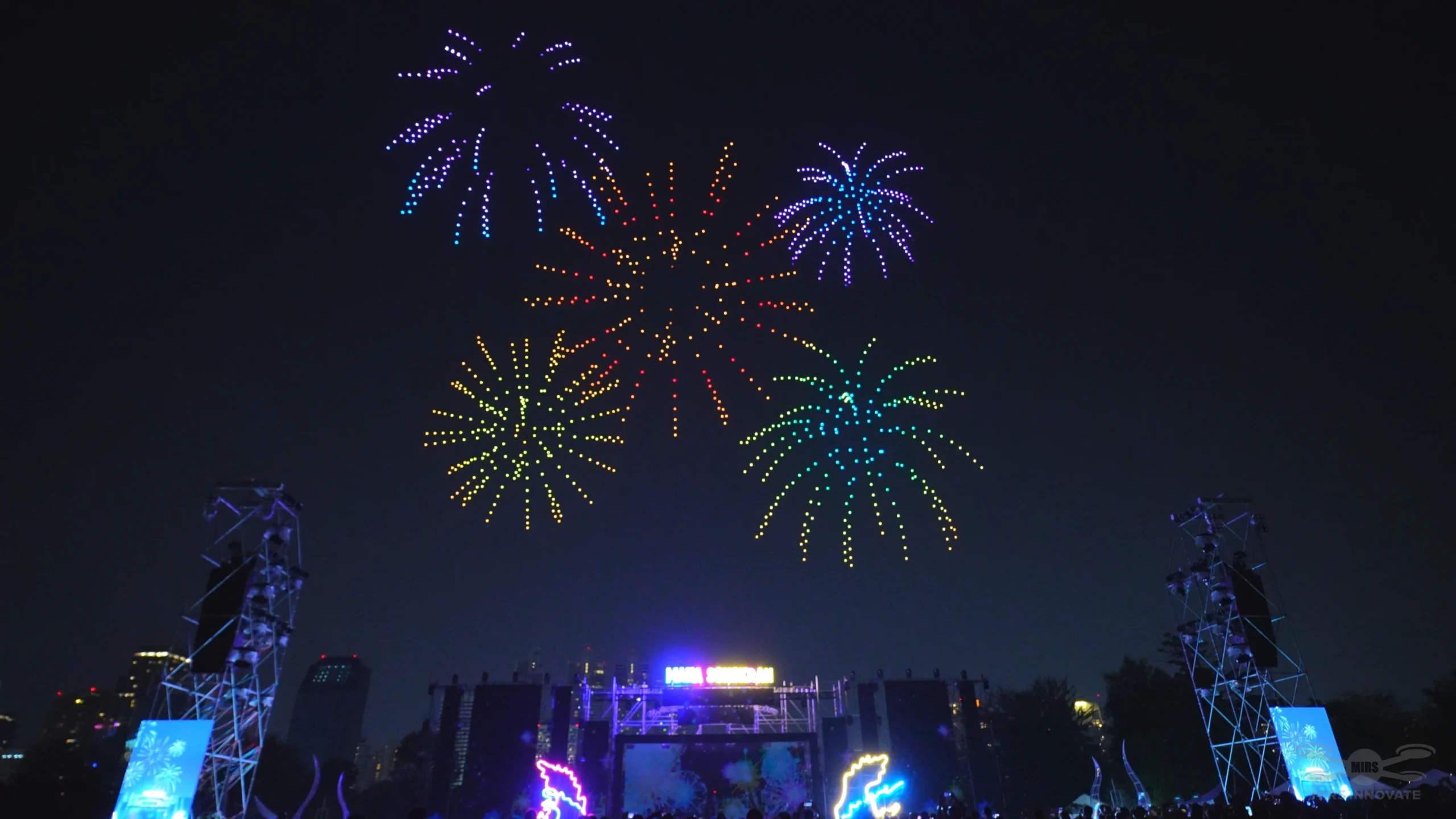
A countdown reaches zero. The venue lights fall away. Then hundreds of points of light rise above the crowd, assemble into a brand mark, transform into a product, and finish as a scene everyone reaches for their phone to capture. Drone formations for events create the moment that audiences remember long after the stage has cleared.
For event leaders, that distinction matters. A drone show is not simply an aerial effect. It is a programmable, high-visibility storytelling platform that can carry a campaign, honor a national occasion, reveal a destination identity, or give a private celebration a signature finale. Every formation is designed around the audience below and the message that needs to travel beyond the venue.
Why Drone Formations for Events Create More Impact
Traditional event visuals often compete for attention in predictable ways: a larger screen, a louder countdown, another pyrotechnic finale. Drone formations change the frame entirely. The sky becomes the stage, and the show has the scale to command attention without asking guests to choose between watching the performance and engaging with the event around them.
The strongest shows combine spectacle with meaning. A corporate anniversary can move from the company’s founding year to a sequence of defining innovations, then resolve into a logo. A tourism campaign can animate local landmarks, wildlife, or cultural motifs in a visual language that international audiences understand instantly. A wedding can turn shared memories, initials, and a proposal story into a personal aerial film.
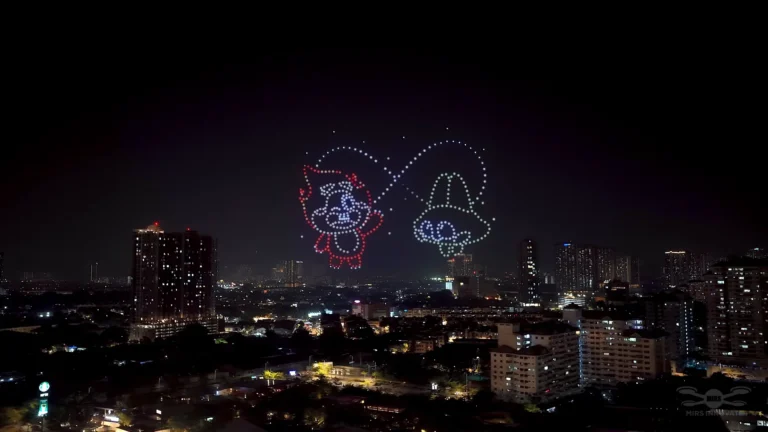
This is where drone technology earns its place in the production plan. LED-equipped drones can form text, logos, symbols, characters, geometric patterns, and animated 3D sequences with frame-by-frame control. The result is not a generic light display. It is a custom performance designed to make one event impossible to confuse with another.
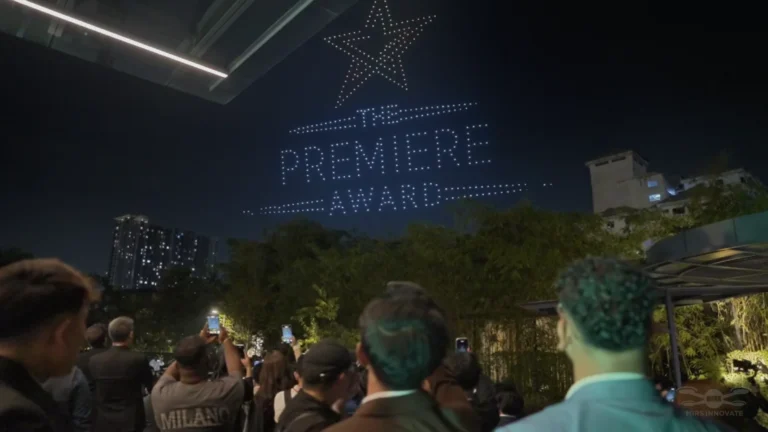
The audience value extends beyond the viewing field. Clear shapes, bold color transitions, and cinematic reveals are naturally built for social video. When guests share the show, a single live moment can reach people who were never at the venue. For brands, tourism boards, and public-event organizers, that earned attention can be as valuable as the on-site reaction.
Start With the Moment You Need to Own
A drone show works best when it is planned as the centerpiece of an event journey, not added as a last-minute closing effect. The first creative question is simple: what should people feel, understand, or do when the final formation appears?
For a product launch, the objective may be anticipation followed by a crisp visual reveal. For a national celebration, it may be pride, unity, and a powerful shared image. For a festival, it may be an iconic nightly attraction that draws repeat attendance. For a luxury private event, it may be the one deeply personal gesture guests never expected.
That objective guides the show’s pacing. A high-energy brand launch may use quick transformations, kinetic motion, and a final logo moment timed to music or a live announcement. A heritage-focused performance may move more deliberately through recognizable symbols and emotional scenes. Neither approach is inherently better. The right choice depends on the crowd, venue, schedule, and the story the event needs to tell.
Creative design should also account for viewing distance. A formation that reads beautifully from a waterfront promenade may need different scale and line weight than a show viewed from a compact rooftop gathering. Large, recognizable silhouettes are powerful for broad public audiences. More detailed sequences can work when guests have a closer, controlled sightline.
What Can Be Formed in the Sky?
The creative range is broad, but clarity should lead the concept. A well-designed aerial sequence can include a logo, product outline, short message, flag-inspired imagery, mascot, landmark, seasonal icon, or an animated narrative that connects several of those elements.
Text deserves particular discipline. Short phrases read better than dense copy, especially for a moving audience spread across a large event footprint. The most effective wording is often a campaign line, a name, a date, or a direct callout that supports the larger visual story. The sky rewards boldness, not clutter.
Scale Is a Creative and Operational Decision
Fleet size influences more than how large the show appears. It affects the detail available in logos, the fluidity of animation, the number of elements visible at once, and the visual density of the final reveal. A smaller fleet can produce elegant, intimate moments for private celebrations. A large fleet can build landmark-scale imagery for city festivals, stadium events, national holidays, and major brand experiences.
More drones do not automatically mean a better show. A simple concept with strong timing can outperform a crowded sequence that tries to say too much. The goal is to match the fleet and creative ambition to the importance of the occasion, expected audience size, viewing environment, and desired media impact.
Duration is another strategic choice. A compact, high-intensity performance can be ideal when the show supports a packed program or a product reveal. A longer aerial narrative may fit a public celebration where the drone display is the featured attraction. Music, stage content, fireworks alternatives, and live performers can all influence the ideal runtime and pacing.
Safety, Airspace, and Site Conditions Shape the Show
Premium aerial spectacle depends on disciplined planning before a single drone takes off. The visible performance may last minutes, but the operational work begins far earlier with site assessment, flight planning, airspace coordination, local permissions, safety procedures, and technical rehearsals.
A professional production partner evaluates the launch area, audience position, nearby structures, surrounding air traffic, local regulations, weather patterns, and contingency requirements. These details are not creative limitations to work around after the fact. They are the foundation that lets the creative team build a show that is both ambitious and executable.
Weather is a practical example of why experience matters. Wind, rain, visibility, and local conditions can affect flight operations. Responsible producers establish clear operating thresholds and backup plans rather than promising a performance under conditions that compromise safety. For an organizer, this means building the drone show into the event schedule with realistic decision points and a prepared alternative if conditions change.
Drone shows are often selected as an alternative to traditional fireworks because they avoid smoke, falling debris, and explosive materials. That can make them particularly valuable near sensitive venues, waterfronts, urban settings, hospitality properties, and locations where fire risk or noise restrictions demand another approach. Still, every site is different, and approvals remain essential.
Build the Show Into the Event, Not Around It
The most successful drone productions feel connected to everything else guests experience. The launch can follow a keynote, a ribbon cutting, a concert finale, a countdown, or a quiet emotional pause. Sound design, lighting, screen content, and emcee cues should be timed around the aerial sequence so the transition feels intentional.
Guest flow matters as much as show flow. Audiences need a clear view toward the performance area and enough time to gather before takeoff. At large public events, organizers should think through crowd orientation, viewing zones, arrival patterns, and how the show will be announced without creating congestion. A remarkable formation loses some force if half the audience is facing the wrong direction when it begins.
For brands, the show should be integrated with the campaign rather than treated as isolated entertainment. The same visual identity can appear in invitations, venue graphics, screens, social content, and the aerial sequence itself. This creates a stronger impression because the final sky moment feels like the culmination of the brand experience.
MIRS Drone Show approaches this as end-to-end production: creative development, technical engineering, approvals, international logistics, synchronization, and on-site execution are planned as one coordinated operation. That single point of accountability is especially valuable when a high-profile event has no room for fragmented vendors or unclear responsibilities.
Measuring the Value Beyond Applause
Applause is immediate evidence that the show landed. But decision-makers should also define what success looks like after the event. For a brand, that may include audience reach, user-generated content, press interest, campaign recall, or launch-day engagement. For a destination, it may mean increased attendance, repeat visitation, and a recognizable annual image that people associate with the city or festival.
Capture planning should be part of the production conversation. Professional ground cameras, elevated venue angles, and audience reaction footage can extend the life of the performance. The goal is not to replace the live experience with content. It is to preserve the scale, emotion, and brand visibility that made the live experience valuable.
A drone formation is at its best when the final image is more than beautiful. It should give the crowd a reason to look up together, a reason to record, and a reason to talk about the event after the lights return to the ground.
Planning a drone show?
MIRS Drone Show creates bespoke drone light shows for corporate events, launches, celebrations and festivals, with creative and operational planning tailored to each venue and project.