

12 Questions Before Hiring a Drone Show Company
Ask these questions before hiring a drone show company to protect your event, confirm airspace readiness, and create a sky story audiences share widely.
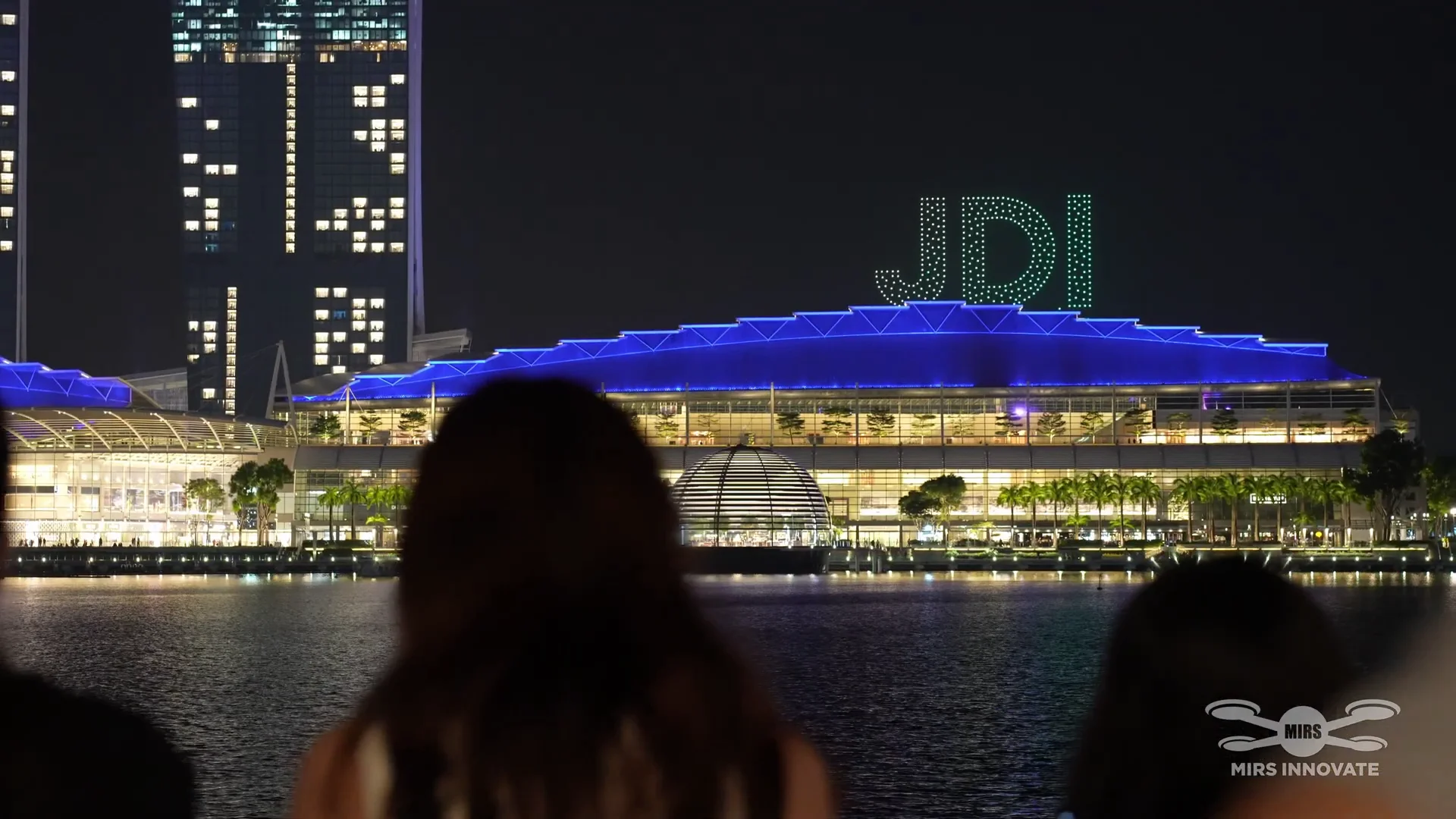
A drone show can become the image everyone carries away from your event: a product reveal floating above a stadium, a national symbol rising over a waterfront, or a newly married couple’s initials lighting the night. But that result is never created by drones alone. It is created by a production partner with the creative range, aviation discipline, and operational control to deliver under real-world conditions.
The right questions before hiring a drone show company help separate a compelling proposal from a dependable live-event production. For a high-visibility event, the decision is not simply about fleet size or price. It is about whether the team can turn a moment of public attention into a precisely executed, shareable spectacle.
1. Can You Create a Show Around Our Story, Not a Template?
A drone light show should not feel interchangeable. Your audience may remember the scale, but they will share the moment that belongs unmistakably to your brand, destination, celebration, or campaign.
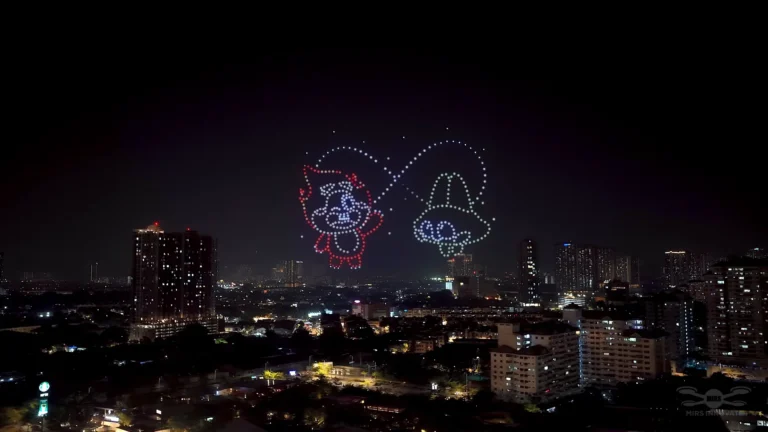
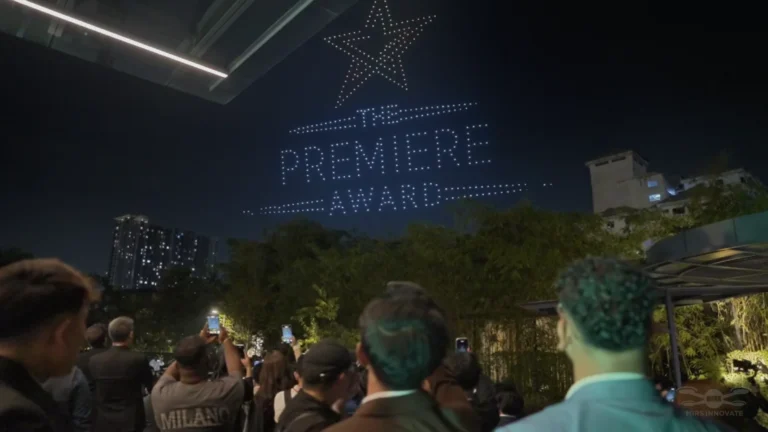
Ask how the creative process begins. A capable producer should want to understand the event’s purpose, audience sightlines, brand assets, music, narrative, and emotional peak. Then ask to see how that strategy becomes animation. Logos, messages, product silhouettes, mascots, cultural symbols, and 3D sequences all require different design decisions in the sky.
Some events need a bold 90-second finale. Others need a longer visual story with multiple chapters. The best choice depends on the program, the venue, and what you want guests to film and remember.
2. What Fleet Size Does the Concept Actually Require?
More drones can create greater resolution, richer motion, and larger visual forms. They also affect production complexity, budget, launch footprint, and venue requirements. A provider that recommends a fleet before discussing your creative ambition may be selling a number rather than designing an experience.
Ask what will be visible from your audience’s viewing area. A 300-drone show may deliver striking graphic impact for an intimate private event, while a major public celebration or stadium performance may call for a much larger fleet to make text, detailed logos, and dimensional animations read clearly at distance.
The key question is not, “How many drones do you have?” It is, “What number of drones will make this particular story look exceptional from where our guests are standing?”
3. Who Handles Permits, Airspace, and Aviation Coordination?
This is one of the most important questions before hiring a drone show provider. Airspace access is not an administrative detail to solve after the creative is approved. It can determine whether a show is possible, where it can launch, how high it can fly, and what time it can operate.
Ask who owns the approval process from beginning to end. That may include aviation authorities, local governments, venue operators, law enforcement, emergency services, and nearby airports or heliports. The exact requirements vary by location, and some sites require significantly more lead time than others.
A premium production partner will explain the approval path clearly, identify constraints early, and build the show around what can be delivered safely and legally. Be cautious if the answer is vague, especially for urban, waterfront, landmark, or government events.
4. What Is Your Safety Plan for the Venue and Audience?
Drone shows offer a compelling alternative to fireworks because they create spectacle without open flame, falling debris, or explosive materials. That does not mean they are risk-free. Professional execution demands detailed site planning, controlled launch and landing operations, audience separation, trained crew, and weather monitoring.
Ask for a practical explanation of the operational footprint. Where will the fleet launch? How large is the secured area? How are spectators kept clear of flight operations? What coordination is needed with venue security and emergency teams?
The strongest operators treat safety as part of the show design, not a disclaimer at the end of a proposal. Their team should be able to work confidently alongside your producers, security staff, and local authorities without adding confusion on event day.
5. What Happens If Weather Changes?
Weather is a live-event reality, not an exception. Wind, rain, low visibility, lightning, and temperature can affect whether a drone performance can proceed. The question is not whether a provider can promise perfect conditions. No responsible aviation team can. The question is whether it has a clear, tested decision process.
Ask about weather thresholds, monitoring tools, go/no-go authority, and the latest point at which the team can make a safe call. Also ask whether the schedule allows a backup performance window. For a festival, destination event, or multi-night celebration, a contingency date can protect the value of the investment.
A credible answer will be specific without pretending weather can be controlled. Operational honesty is a mark of experience.
6. Will the Show Work With Our Music, Lighting, and Program Timing?
A great aerial performance is not an isolated technical act. It should land at the exact emotional point your program needs it to. That requires coordination with stage management, audio, lighting, broadcast teams, talent, countdown cues, and sometimes fireworks or pyrotechnic elements.
Ask how the company synchronizes the show and who calls the final cue. If music is involved, clarify whether the drone animation is designed to a final track or a temporary edit. Late changes to music timing can affect visual choreography, so this should be managed well before show day.
For televised or streamed events, discuss camera positions and rehearsal requirements. A formation that looks extraordinary to a live crowd may need different framing to produce the footage that travels across social media the next morning.
7. What Experience Do You Have With Events at Our Scale?
A private estate wedding, a brand launch, a city anniversary, and a national holiday each present different operational demands. Ask for relevant experience, not just an impressive highlight reel.
A partner experienced in large public events will understand crowd density, government coordination, multiple stakeholder approvals, media presence, and the pressure of a fixed broadcast moment. For luxury private events, the priorities may include discretion, restricted access, elegant pacing, and a production footprint that respects the property.
Past work does not guarantee the same result for your event. Still, it reveals whether the team understands the type of pressure, planning, and precision your occasion requires.
8. What Is Included in the Proposal?
Drone show pricing can vary substantially because no two productions are identical. A low initial number may omit creative development, permits, travel, site surveys, music synchronization, insurance, local logistics, or contingency planning.
Ask for a scope that makes inclusions and assumptions clear. You should understand the fleet size, show duration, creative rounds, crew, transport, approvals, required venue support, and any potential costs that depend on local conditions.
This is not about forcing a standardized package onto a custom event. It is about ensuring the proposal reflects the complete production needed to deliver the promised result. A clear scope protects both the client and the show team from last-minute surprises.
9. How Do You Manage International Logistics?
For global campaigns, tourism activations, and destination celebrations, the ability to transport equipment and deploy an experienced crew across borders can be decisive. International delivery may involve customs documentation, import rules, local aviation requirements, freight timing, and coordination with regional vendors.
Ask whether the company has a proven process for overseas productions and how it plans for delays. The ideal partner does not simply arrive with drones. It arrives with an operational roadmap, local coordination strategy, and enough planning margin to keep a complex event moving forward.
MIRS Drone Show approaches every location as both a creative canvas and a live aviation environment, bringing design, technical planning, and on-site execution into one coordinated production.
10. What Is the Backup Plan if Equipment Fails?
Technology should create confidence, not uncertainty. Ask how the operator checks aircraft, batteries, communications systems, and control equipment before the performance. Ask whether backup drones and redundant systems are available on site.
You do not need every engineering detail, but you do need confidence that the show is built on disciplined preflight procedures. The audience sees a single moment of magic. Behind it should be a team that has anticipated the problems the audience never needs to see.
11. Who Is Our Decision-Maker on Site?
High-profile events move quickly. A venue manager may need an answer about access. A stage producer may need to adjust a cue. A public official may ask whether the airspace is clear. Determine who has authority to make operational decisions and how that person communicates with your event lead.
A single accountable production contact reduces confusion. It also ensures creative, safety, and timing decisions are not being passed between disconnected vendors during the final hours before launch.
12. What Will Make This Show Worth Sharing?
A drone show earns its full value when it extends beyond the viewing area. The right visual moment can drive press coverage, attendee posts, brand reach, and a lasting association between your event and something genuinely extraordinary.
Ask how the creative team designs for the camera as well as the crowd. Strong aerial storytelling includes recognizable shapes, clean transitions, a clear visual climax, and enough time for guests to capture key moments. It should feel spectacular in person while remaining instantly legible in a short video.
The most memorable shows do more than fill the sky. They give an audience a reason to look up together, record the moment, and send it far beyond the event boundary. Choose a partner that treats that moment with the scale, imagination, and operational rigor it deserves.
Planning a drone show?
MIRS Drone Show creates bespoke drone light shows for corporate events, launches, celebrations and festivals, with creative and operational planning tailored to each venue and project.