


Beyond the Billboard: How Drone Shows Become Viral Brand Campaigns
A drone light show does not end when the drones land. How the most forward-thinking brand teams in 2026 use aerial formations to generate earned media, organic social content, and brand recall that outlasts the event.
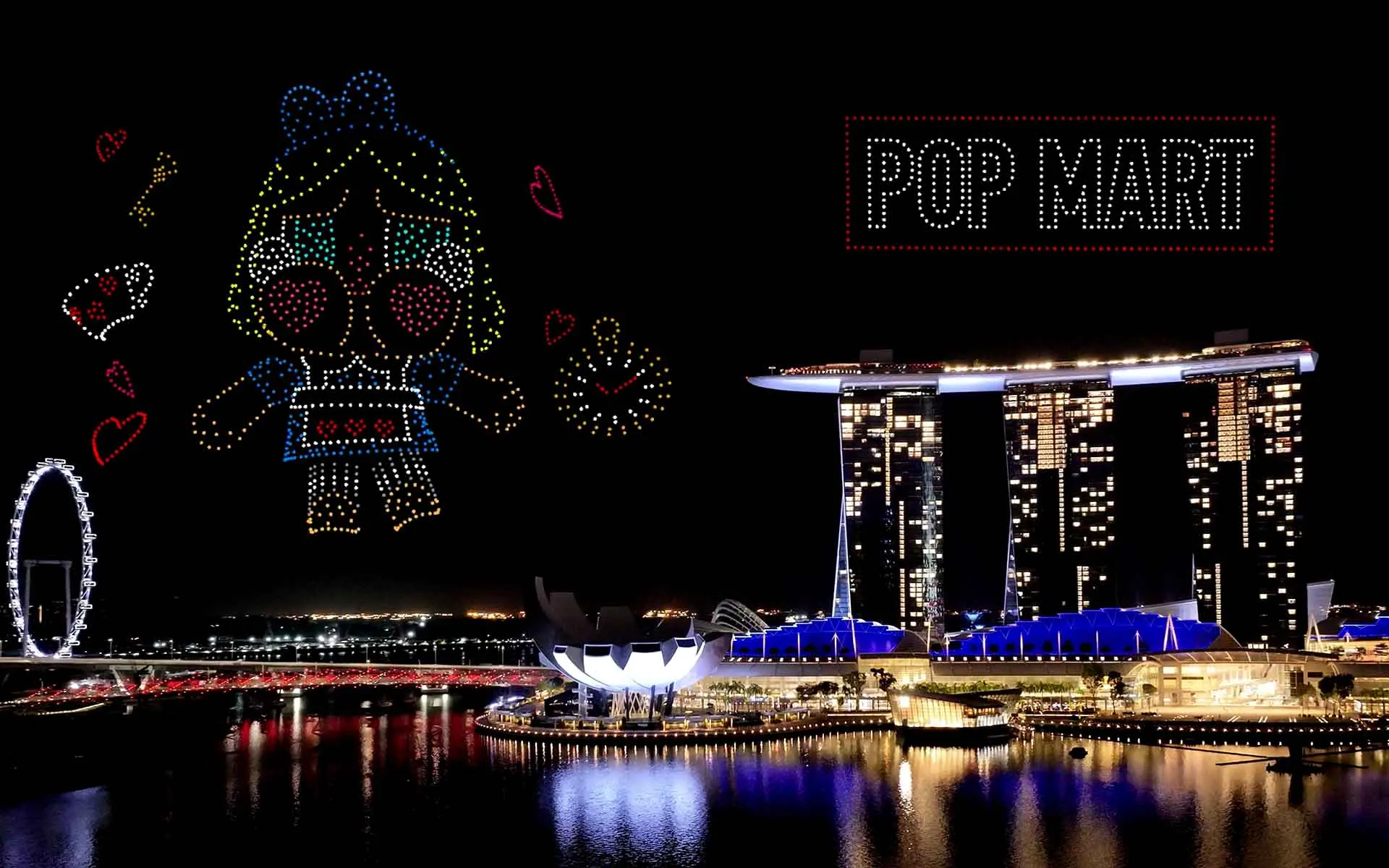
A billboard impression lasts three seconds. A drone light show generates footage, social sharing, press coverage, and brand recall that compounds for weeks. In 2026, the most forward-thinking marketing teams in Southeast Asia, the Middle East, and Europe are treating drone shows as a media production strategy, turning a single live moment into a multi-platform content campaign.
Why Drone Shows Are Becoming the Highest-ROI Live Event Investment
Traditional live event spending on stages, lighting, AV, and catering produces an experience that ends when the guests leave. A drone light show produces a visual moment so distinct that audiences film it, share it, and talk about it. The aerial formation carrying your brand logo at 200 metres altitude is earned media that no advertising budget can replicate at equivalent cost.
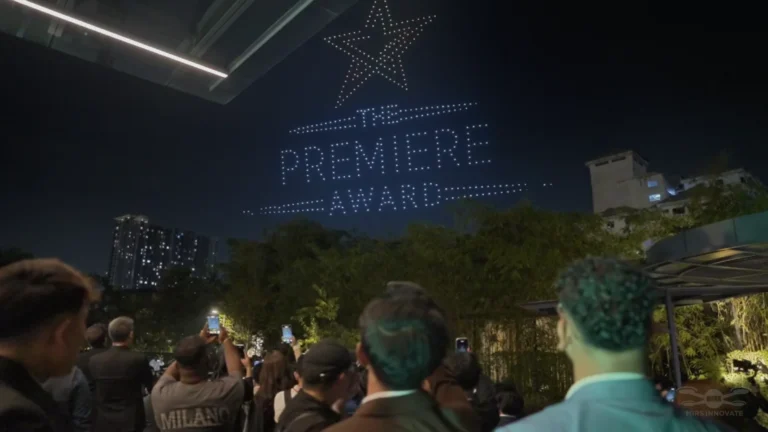
The mechanism is straightforward. A 500-drone swarm executing a branded 3D choreography sequence generates dozens of unique video angles from the audience, press, and brand cameras simultaneously. Each piece of footage is different. Each is shareable. Together they create a distributed content library from a single five-minute performance.
Why Drone Show Content Spreads Online
Three properties make drone show footage unusually effective on social platforms. First, the visual is unexpected. Most audiences have never seen 500 drones simultaneously form a brand logo in the sky above them, and the surprise response triggers immediate filming. Second, the content is unique to the event. Unlike a fireworks display, drone formations carry specific brand identity, making the footage impossible to confuse with any other event. Third, the aerial perspective produces vertical video that performs natively on TikTok, Instagram Reels, and YouTube Shorts without any editing.
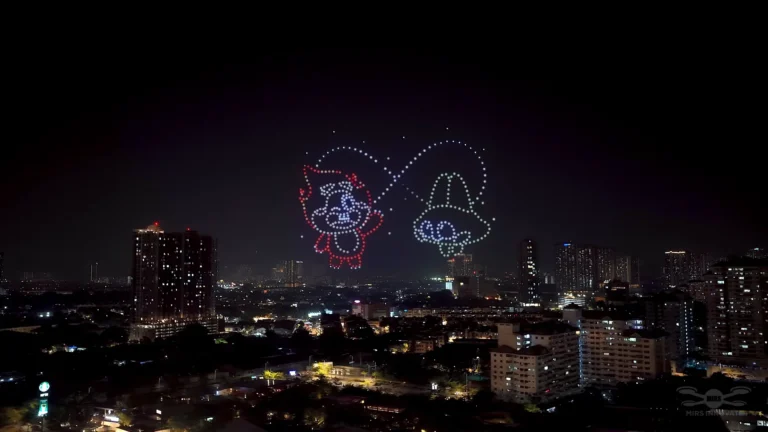
MIRS Drone Show’s production for McDonald’s Malaysia generated multi-platform organic coverage within 24 hours of the event. The show footage appeared across consumer social channels, news sites, and influencer accounts without any paid amplification. The brand logo formation in the night sky was the entire campaign, making the drone show simultaneously the event and the content.
Drone Shows vs. Traditional Event Marketing Spend
A brand spending USD 50,000 on a drone show is replacing more than a single line item. It replaces the combination of a production crew, an event AV installation, a post-event content shoot, and a paid social media amplification budget, because the drone show produces all of those outputs simultaneously in a single live moment.
The comparison that matters is cost-per-impression across earned channels. A drone show that generates 2 million organic social impressions in 48 hours, a realistic outcome for a well-executed brand show at a public event, delivers those impressions at a fraction of the equivalent paid media CPM. Add press coverage, influencer content, and brand photography to the earned total and the ROI calculation shifts dramatically in the drone show’s favour.
Brands That Have Used Drone Shows as a Marketing Strategy
The brands that have deployed drone shows as part of a deliberate marketing strategy share a common approach: they treat the show as the campaign centrepiece and build the surrounding content strategy around the aerial footage.
- McDonald’s Malaysia — 500-drone brand show generating organic social and press coverage as the primary campaign asset for the launch period.
- Deloitte 25th Anniversary — drone show at a corporate milestone event that reached the firm’s target professional audience through LinkedIn and press channels in a way a gala dinner cannot achieve.
- Formula 1 Grand Prix Singapore — aerial drone choreography integrated into the broadcast identity of the night race, reaching global F1 audiences through official media channels.
- Cartier Thailand — 450-drone luxury brand show where the aerial formation reinforced brand positioning and generated content aligned with the brand’s premium visual language.
- Coca-Cola Christmas Philippines — 1,300-drone show generating festive brand content at national scale across a public audience of thousands.
In each case, the show footage became a reusable content asset deployed across channels far beyond the event night itself.
How to Maximise the Content Value of a Drone Show
The content value of a drone show comes from deliberate pre-production planning. Five decisions made before the show significantly determine the content output:
- Formation design — every formation should be designed with the final video frame in mind. Logos, text, and 3D brand characters need enough LED payload density to photograph cleanly from drone cameras, event cameras, and audience phones simultaneously.
- Camera positioning — the best aerial footage comes from a pre-planned camera grid that captures the show from multiple elevations and angles. A single locked-off tripod produces usable footage; a planned multi-camera setup produces a content library.
- Show duration — five to eight minutes is the optimal range for content value. Shorter shows limit the number of distinct formation moments. Longer shows strain audience attention for filming.
- Audience placement — an audience positioned within the ideal viewing cone, at the right distance from the flight zone, produces better organic phone footage than a crowd too close or at the wrong angle.
- Pre-event seeding — announcing the drone show in advance, without revealing the formations, generates anticipation content. Post-show footage then delivers the resolution that pre-event audiences are already primed to share.
Drone Shows vs. Traditional Aerial Advertising
Traditional aerial advertising, including banner planes, blimps, and skywriting, reaches a local audience with a fixed message and produces no shareable content. A drone light show reaches a live audience and simultaneously produces footage that travels globally through social media, press, and broadcast channels. The live audience is the seed audience; the content they produce and share is the amplification layer.
The most impactful drone shows in recent years have been at events where audience size and filming behaviour were treated as production inputs. Contact MIRS Drone Show to discuss how aerial creative can be built into your next campaign strategy. For a view of how drone show safety and technical infrastructure supports these productions, see the drone show safety and technical trust guide.
Frequently Asked Questions: Drone Shows and Brand ROI
What is the ROI of a drone light show for a brand?
ROI from a drone show is measured across earned media, organic social reach, press coverage, and brand recall. A well-executed show at a public event can generate millions of organic impressions within 48 hours. When the footage value, press value, and audience engagement are calculated alongside the event cost, drone shows consistently outperform equivalent event production spend in terms of cost-per-impression across owned and earned channels.
Why do drone shows generate more social media sharing than other events?
Drone shows produce a visually unexpected moment at altitude. Most audiences have never seen hundreds of drones form a brand logo in the sky above them, and the surprise triggers immediate filming. The content is unique to the brand, performs natively in vertical video formats on TikTok and Instagram, and is shareable without any editing. No other live event format produces this combination of properties simultaneously.
How do brands use drone show footage after the event?
Drone show footage is used across paid social campaigns, press releases, brand websites, partner communications, LinkedIn content, and broadcast channels. Because each formation is brand-specific, the footage is inherently branded content rather than generic event video. MIRS Drone Show recommends planning the post-event content strategy before the show, so the camera setup and formation sequence are designed to produce the most usable footage assets.
What size drone show produces the best content value?
For content value, 300 to 600 drones in a well-planned venue with good audience sightlines consistently produces the strongest footage. Above 1,000 drones, the scale of the show increases but the marginal content value per additional drone decreases. The most important factors for content value are formation design, camera positioning, and show duration, not purely drone count.

Planning a drone show?
MIRS Drone Show creates bespoke drone light shows for corporate events, launches, celebrations and festivals, with creative and operational planning tailored to each venue and project.