




Planning a drone show in Malaysia starts with the event site, not a generic permit checklist. A waterfront, mall launch, hotel lawn, stadium, rooftop, or city-centre venue can each introduce different operating questions. The flight area, audience position, nearby buildings, local airspace, weather exposure, and event schedule all affect what needs to be assessed before a show can be confirmed.
That is why a useful question is not simply, “Do I need a drone show permit in Malaysia?” It is, “What information does the production team need to assess this event properly?” A clear brief makes the approval process more efficient and prevents a good creative idea from reaching the venue too late to be practical.
This guide explains how event organisers can prepare for a drone show in Malaysia without assuming that every venue follows the same path. Requirements depend on the location, proposed flight plan, timing, local restrictions, and the relevant authorities or site operators.
Start with the event site
The venue is the starting point for any drone show approval discussion. Before a team can assess the show, it needs the exact venue name, event date, expected show time, site address, audience area, and a practical indication of where aircraft could be staged and launched.
A site that looks open on a map can still have obstacles that affect a flight plan. Buildings, cranes, power lines, trees, roads, water, access routes, and temporary event structures all need to be considered. The audience view matters too. A formation designed for a waterfront crowd may not read clearly from a narrow hotel terrace or a venue surrounded by towers.
For Malaysia events, start by sharing the site plan as early as possible. That allows the production team to assess whether the proposed location suits the show concept before a creative route or event running order becomes fixed.
Prepare the brief before approval planning begins
A strong event brief gives the production team enough information to assess the operational route. Include the event objective, expected guest count, venue contact, show date, preferred show time, run-of-show, music or stage cues, and any planned pyrotechnics, lighting effects, or other aerial activity.
It also helps to state what the audience needs to see. Is the drone show a corporate anniversary moment, a product reveal, a public celebration, or a tourism activation? The answer affects fleet size, formation detail, flight duration, launch layout, and the amount of time needed for set-up and recovery.
For a broader view of the decision process, see this guide to drone show permits and regulations. It explains why an approval conversation must sit alongside the creative brief rather than after it.
Airspace and local coordination are part of the project plan
Drone shows are live aviation operations. The production team needs to understand the proposed flight area, the site environment, and the authorities or venue stakeholders that may need to be involved. There is no sensible one-size-fits-all answer because a beach, shopping district, resort, or urban event field can create very different constraints.
Event organisers should avoid promising a show to guests before the feasibility review is complete. The professional route is to confirm the event brief, assess the site, identify the relevant coordination work, and then build the show around what can be operated safely and clearly.
Read more about the operational side in how to coordinate event airspace. The point is not to turn the organiser into an aviation specialist. It is to make sure the right questions are asked early enough.
Give the launch area the attention it needs
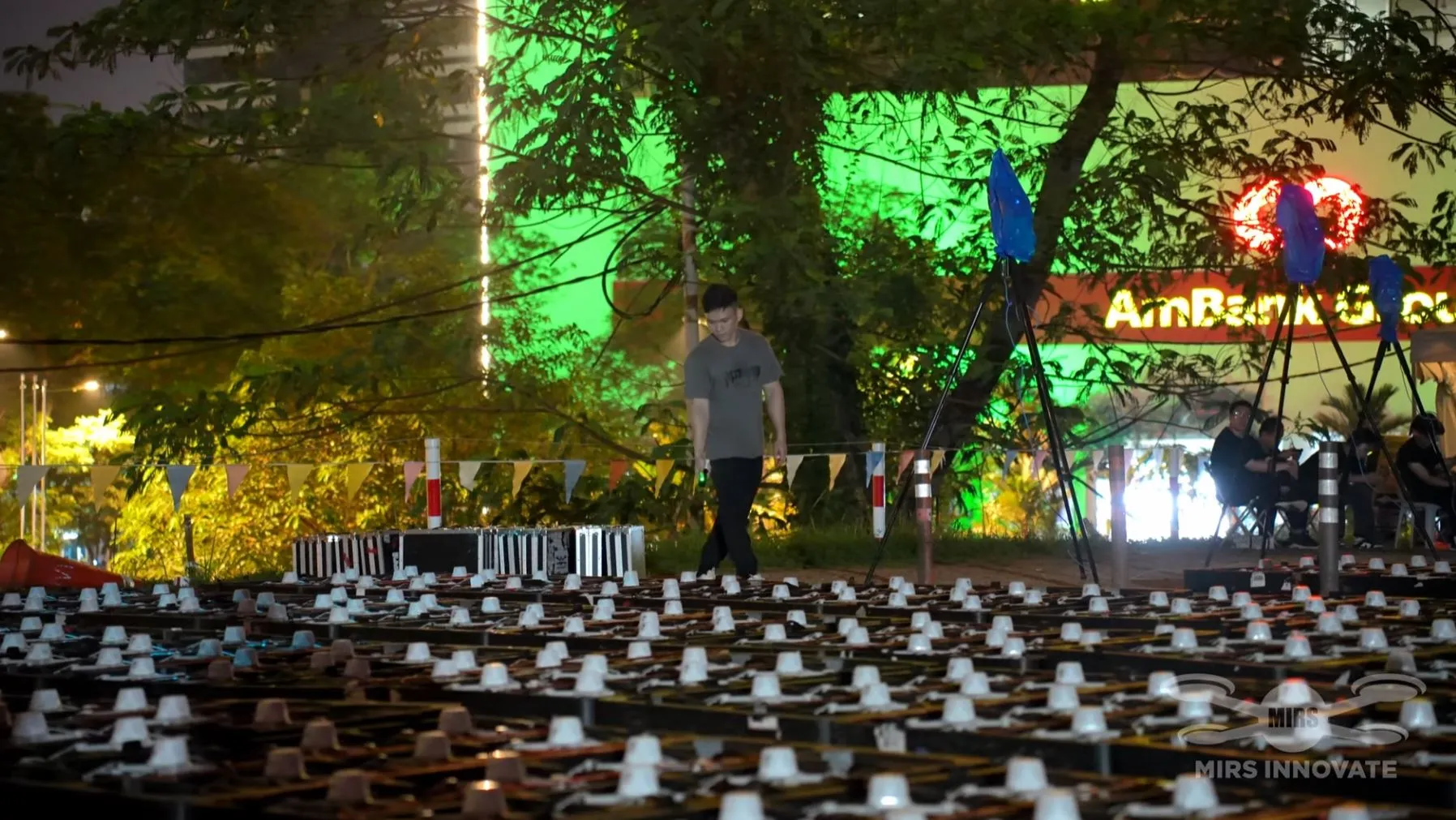
The launch area is working space, not a decorative corner of the venue. It needs controlled access, room for the fleet and equipment, a practical route for crews, and separation from guests. Event build-outs can change quickly, so the final plan should account for tents, generators, barricades, catering zones, vehicles, and other temporary structures.
The safest launch location is not always the closest point to the stage. Sometimes a slightly more distant and controlled area gives a better flight path, cleaner audience view, and more reliable working conditions for the crew. That decision should be made with the venue plan in hand, not on the afternoon of the event.
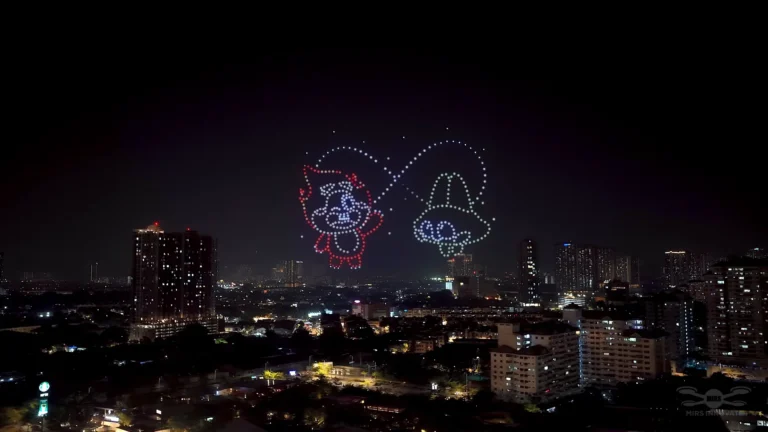
A Malaysia project such as the Antara Mall drone show shows why venue scale, terrain, guest viewing, and logistics must be considered together. The specific operating plan will always depend on the event being proposed.
Build weather into the event programme
Weather is a planning input from the first conversation. Wind, rain, visibility, and lightning can affect whether a fleet can operate safely and whether the audience will see the show as intended. A responsible event plan defines who receives updates, who can make an operational call, and what happens if conditions require a delay or a no-go decision.
For a fixed-date event, the programme should leave room for a weather hold where possible. A keynote, live performance, hospitality segment, or other programme element can give the team time to review conditions without leaving the audience waiting in silence.
This does not mean every uncertain forecast cancels a show. It means the team should use site-specific monitoring and agreed operating thresholds. The drone show weather requirements guide explains the factors that normally shape that decision.
Set a realistic planning timeline
For major Malaysia events, treat the drone show as a production workstream, not a last-minute entertainment booking. A general lead time of six to eight weeks gives room for a site review, creative development, operational planning, venue coordination, and contingency preparation. Some projects may need more time, especially when the site is complex or the event has several stakeholders.
Early planning also improves the creative result. When the flight area, audience sightlines, and event timing are understood from the start, the animation can be designed for the venue instead of being forced into it later.
What to send MIRS Drone Show
When you are ready to explore a drone show in Malaysia, send the venue name, date, expected show time, event type, estimated audience, site plan if available, and the message or moment you want the show to create. MIRS can then assess the event and advise on the next practical steps.
Explore drone shows in Malaysia or contact MIRS Drone Show with your event brief.
Frequently asked questions
Do drone shows need permits in Malaysia?
Permission and coordination requirements depend on the venue, flight area, event timing, local restrictions, and the relevant authorities or site operators. A production team should review the exact event brief before confirming the approval path.
How early should I plan a drone show in Malaysia?
For a major event, begin the conversation around six to eight weeks before the date where possible. Complex venues or events with multiple stakeholders may require more time.
Can a drone show operate in Kuala Lumpur or Selangor?
Feasibility depends on the exact site, proposed flight area, audience layout, local conditions, and required coordination. A venue review is needed before a show can be confirmed.
What information should an organiser provide first?
Share the venue, date, preferred show time, event type, audience size, site plan, and the creative objective. Those details allow the production team to assess the event properly.
Planning a drone show?
MIRS Drone Show creates bespoke drone light shows for corporate events, launches, celebrations and festivals, with creative and operational planning tailored to each venue and project.