

How Drone Shows Work for Live Events
Learn how drone shows work, from flight planning and animation to permits, safety systems, and live execution for high-impact events.
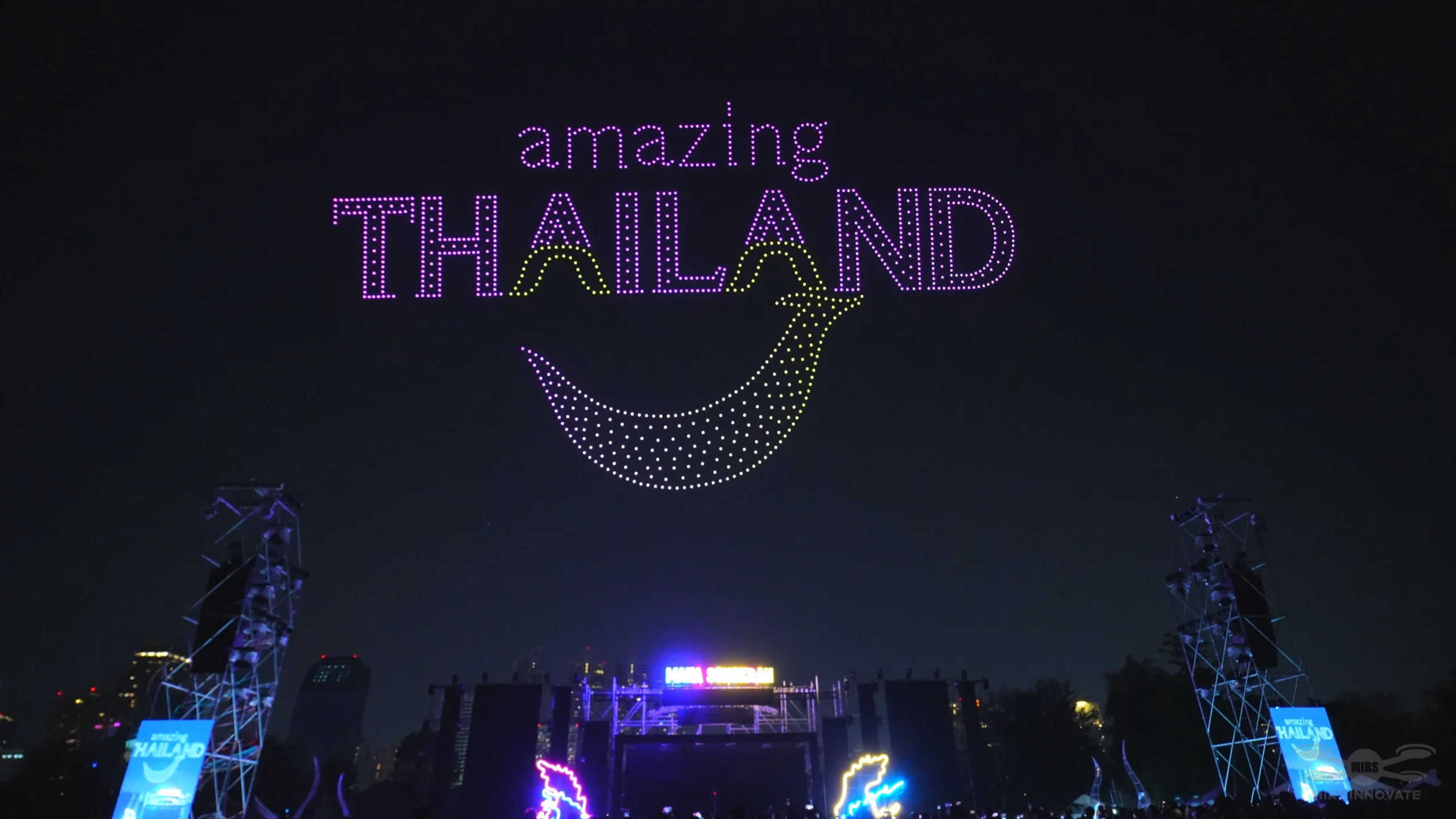
A great drone show looks effortless from the crowd. Hundreds of lights rise, align, transform into logos, symbols, and moving scenes, and land with perfect timing. But if you are evaluating how drone shows work for a major event, the real story is not just the visual effect. It is the coordination of creative design, aviation planning, software control, safety engineering, and live production discipline.
That is what makes a drone show more than a novelty. For brands, cities, tourism boards, and event producers, it is a controlled aerial medium – one that can deliver spectacle with precision, repeatability, and far more creative flexibility than traditional pyrotechnics.
How drone shows work behind the scenes
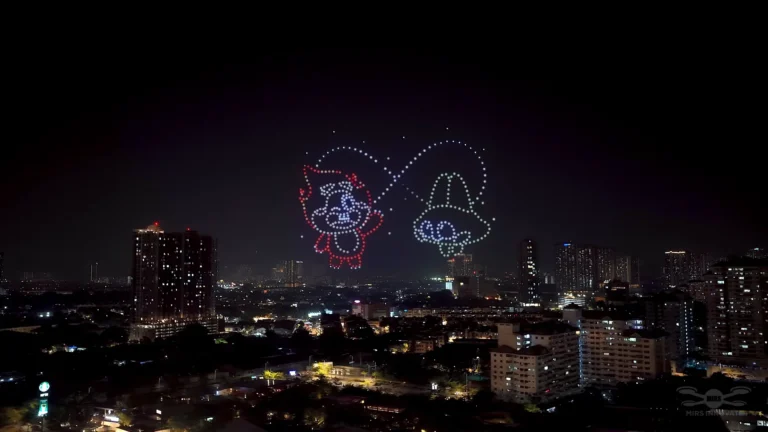
At the simplest level, a drone show is a fleet of small aircraft equipped with bright LED lights, flying pre-programmed paths in a synchronized formation. Each drone acts like a single pixel in the sky. When hundreds or thousands of those pixels move together, they create images, words, patterns, and animated sequences visible from long distances.
What the audience sees as a floating logo or a sweeping 3D effect is actually the result of exact positioning. Every drone has a defined route, speed, altitude, timing cue, and lighting instruction. The show control system tells each aircraft where to go and when to change color, while built-in positioning technology constantly checks whether the formation is holding correctly.
That is the basic answer to how drone shows work. The more useful answer, especially for event decision-makers, is that the performance only succeeds when creative ambition is matched by operational control.
It starts with the story, not the drones
The strongest shows are designed around a message. A product launch may need a brand reveal and a dramatic countdown. A national celebration may need cultural symbols and a final patriotic tableau. A luxury wedding may call for monograms, custom animations, and a cinematic finale.
This is why the production process usually begins with concept development. Before any aircraft are assigned a path, the creative team maps the narrative arc of the show. What should the first image do to capture attention? Which moments are meant for phones to come out? What sequence is likely to travel on social media the next morning?
Drone choreography is powerful because it turns a static sky into programmable media. But there is a trade-off. Not every visual idea translates cleanly into an aerial formation. The most effective concepts account for viewing distance, formation density, animation speed, and audience angle. Simpler shapes can often hit harder than overly detailed graphics when the goal is instant recognition.
Designing images for the sky
Once the concept is approved, designers convert those scenes into drone-friendly formations. This includes logos, text, icons, objects, and animated transitions. Every frame must be engineered for visibility, spacing, and motion.
If a brand mark is too intricate, it may need to be simplified for legibility in the air. If a message is too long, it may be broken into shorter moments. If a 3D sequence is planned, the team must assess whether the venue and audience position support that effect. Great drone show design is part art direction, part spatial engineering.
The flight plan is where the show becomes real
After creative development, the animation is translated into flight paths. This is one of the most technical parts of how drone shows work. Specialized software assigns each drone a route through the sky so that it can move from one formation to the next without collisions, drift, or timing errors.
Think of it as choreographing hundreds of performers who must all hit exact marks in three dimensions. Each drone needs separation from the others, enough battery to complete its route, and a movement profile that stays within performance limits. Fast transitions may look exciting, but they also increase complexity. More intricate animations can require more drones, more space, and tighter planning.
This is where premium execution matters. Large-scale productions are not built by simply drawing shapes and pressing start. They depend on simulation, test runs, route optimization, and contingency planning. A show may look magical, but it is engineered with the discipline of an aviation operation.
Positioning, timing, and synchronization
Drone fleets rely on high-precision positioning systems to know where each unit is in real time. The exact setup varies by production, but the goal is always the same: maintain formation accuracy and timing across the entire fleet.
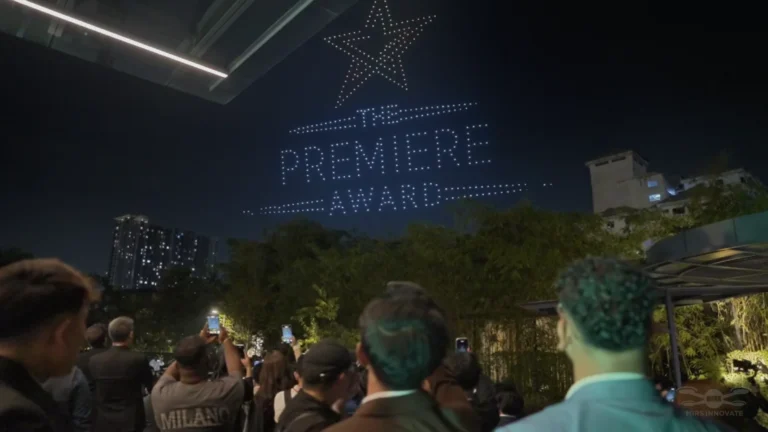
Synchronization is not limited to movement. It also includes LED color changes, animation pacing, and often coordination with music, narration, fountains, stage lighting, or pyrotechnic elements. When those layers are aligned well, the show feels cinematic. When they are not, even strong visuals can lose impact.
For event producers, this is a critical distinction. A drone show is not just an air display. It is a timed media performance, and the quality of that performance depends on how well the aerial system integrates with the broader event run-of-show.
Safety and permits are not side issues
For many buyers, especially governments, public event organizers, and major brands, the biggest question is not whether drone shows look impressive. It is whether they can be executed safely and responsibly. That concern is valid.
The answer lies in layered planning. Professional drone show operations include airspace assessment, local regulatory review, site surveys, weather monitoring, emergency procedures, geofencing, and controlled launch and landing zones. The venue footprint must be evaluated carefully, including audience placement, surrounding buildings, trees, power lines, and restricted airspace considerations.
Permitting is often one of the most underestimated parts of the process. Depending on the location, organizers may need aviation approvals, municipal permissions, land-use coordination, and event-specific safety documentation. International productions add another level of complexity through import logistics, local compliance, and operational coordination across jurisdictions.
This is one reason many clients choose a turnkey production partner rather than trying to piece together vendors. The show itself may last ten minutes. The planning behind a safe, compliant, high-impact performance can take weeks or months.
Weather, venue, and scale all affect the final result
One of the most common misconceptions about drone shows is that they can be dropped into any event format with identical results. In reality, how drone shows work depends heavily on context.
Wind conditions can affect launch windows and formation performance. Ambient light influences visibility. Coastal humidity, urban skylines, and audience distance all shape how the show reads in real life. A compact private event and a national celebration may both use drones, but the creative and technical approach will be very different.
Scale also changes the possibilities. Smaller fleets can create elegant monograms, symbols, and short branded scenes. Larger fleets allow for more detailed graphics, fuller animations, and stronger visual density. More drones generally mean more design freedom, but not automatically a better show. The right fleet size depends on the message, the venue, and the level of spectacle the event demands.
Why drone shows often replace fireworks
For many clients, drone shows are not competing with nothing. They are replacing fireworks, static projection, or conventional stage effects. The advantage is control.
A drone show can display a brand mark exactly as intended. It can spell out campaign messaging, animate a product silhouette, or build a custom story tied to a destination, anniversary, or public milestone. It can be rehearsed, refined, and synchronized with other show elements in ways fireworks cannot.
That does not mean drones are always the answer. Fireworks still deliver a particular sensory impact, especially for tradition-driven celebrations. But for clients who want safety, message control, repeatable quality, and strong social media value, drones offer a different category of event centerpiece.
What happens on show day
By the time guests arrive, most of the important decisions have already been made. On-site teams establish the launch area, verify communications, inspect aircraft, confirm weather conditions, and run final systems checks. The fleet is positioned, the control system is armed, and the show timing is locked to the event schedule.
During the performance, operators monitor the fleet continuously. The show is automated, but not unattended. Professional execution means active supervision, clear command protocols, and the ability to respond if conditions change. Precision in the air begins with discipline on the ground.
For clients, this is where the full value becomes visible. A well-produced drone show does not feel like a technical demo. It feels like a landmark moment, built specifically for the audience in front of it. That is why companies like MIRS Drone Show approach the medium as experience design, not just flight coordination.
If you are considering a drone show for a launch, celebration, destination campaign, or public spectacle, the key question is not simply how the technology works. It is whether the production partner can turn that technology into a clear, safe, unforgettable message in the sky.
Frequently asked questions
How are drone show formations created?
Designers first develop the story and visual sequence, then translate each formation into coordinated flight paths. The final animation is tested against spacing, speed, visibility, and safety requirements before show day.
Are drone shows safe for public events?
They are planned around controlled flight zones, trained crews, weather checks, site procedures, and required approvals. The exact safety plan depends on the venue, local rules, and event layout.
What happens if weather conditions are unsuitable?
The team monitors conditions before and during the event. A sensible event plan includes a decision process and contingency options rather than treating weather as an afterthought.
Planning an event? Explore MIRS drone show services, see how a drone show in Malaysia can be planned, or contact MIRS for a tailored proposal.
Planning a drone show?
MIRS Drone Show creates bespoke drone light shows for corporate events, launches, celebrations and festivals, with creative and operational planning tailored to each venue and project.