



Drone Show Safety vs Fireworks
Are drone shows safer than fireworks? Compare risk, control, permits, crowd impact, and event planning tradeoffs for modern public spectacles.
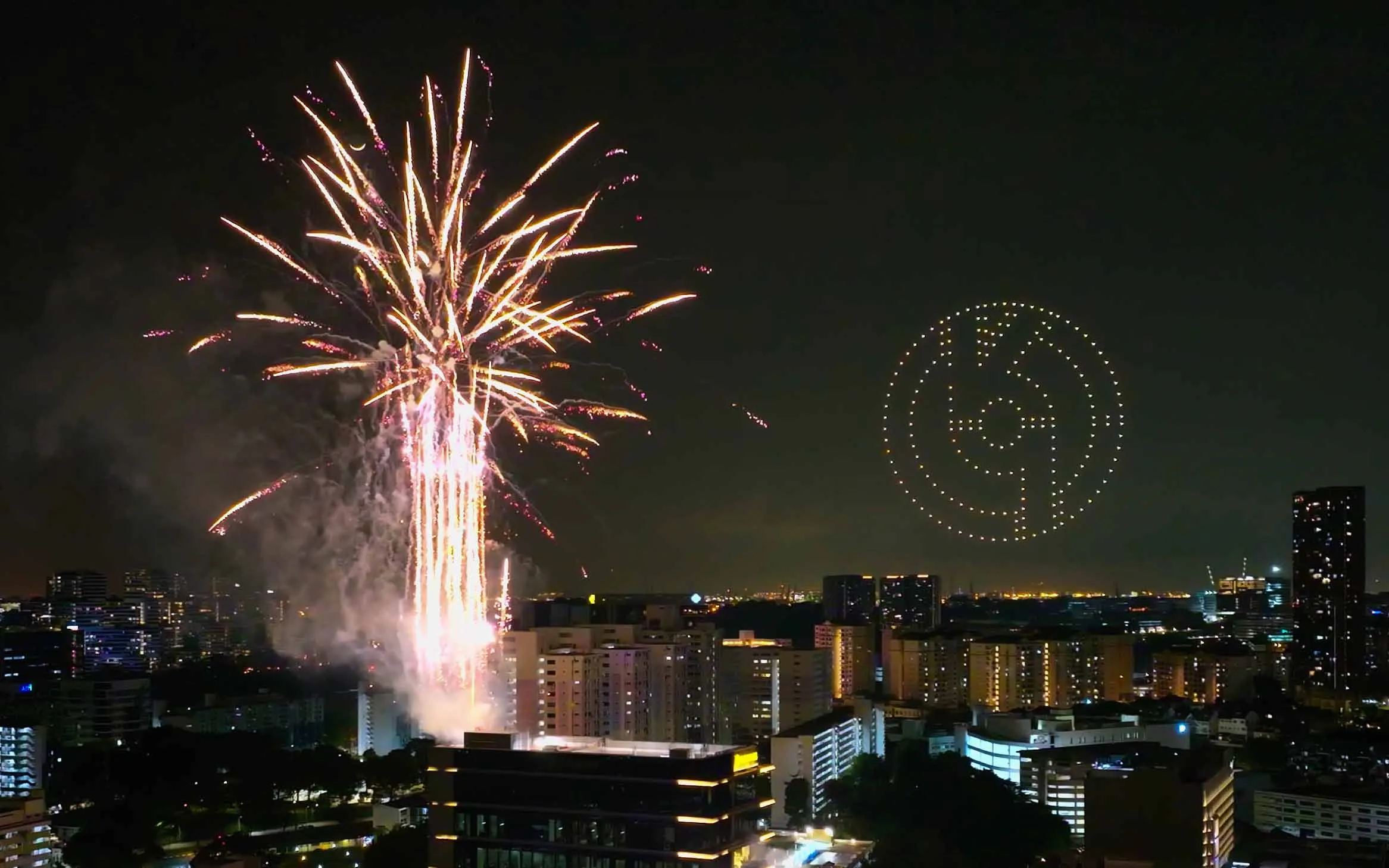
A fireworks finale can electrify a crowd for a few minutes. It can also trigger fire risk, smoke complaints, fallout zones, noise concerns, and a long list of operational restrictions. More event leaders are now asking a sharper question before signing off on a public spectacle: are drone shows safer than fireworks?
For many events, the answer is yes. But serious planners know the real answer is more useful than a simple headline. Safety comes down to controllability, environment, crowd proximity, site conditions, airspace, vendor discipline, and what kind of experience the event actually needs to deliver.
How drone show safety compares to fireworks in practice
Drone shows give organizers a level of control that fireworks cannot match. Fireworks are built around combustion. They rely on explosive charges, pyrotechnic timing, launch hardware, fallout areas, and weather conditions that can shift quickly. Even when professionally managed, they involve heat, ignition, debris, smoke, and loud concussive effects by design.
Drone shows operate differently. They are choreographed aircraft systems with programmed flight paths, geofencing, pre-show testing, monitored launch procedures, and controlled landing sequences. That does not mean they are risk-free. It means the nature of the risk is different and, in many scenarios, more manageable.
For a city celebration, luxury wedding, brand launch, or tourism event near sensitive surroundings, that distinction matters. If your event is close to rooftops, dry landscapes, waterfront developments, hotels, animals, or dense public areas, the question is not only which option creates impact. It is which option gives your team more command over what happens before, during, and after the show.
Why fireworks carry more obvious safety exposure
The biggest safety issue with fireworks is straightforward: they are designed to explode. That creates a chain of predictable concerns. There is fire danger at launch and on descent. There is smoke that can drift over roads, stages, residences, and VIP areas. There is debris and unexploded material. There is noise intensity that can distress children, pets, veterans, and wildlife. There is also the need for broad exclusion zones because the effect itself is uncontrolled once fired.
For public agencies and major event producers, these factors create planning pressure long before showtime. Fire marshals, property owners, insurers, and municipal stakeholders often need reassurance on every variable, from wind to fallout radius to emergency response readiness. In dry seasons or high-risk regions, approvals can become more difficult or disappear entirely.
Fireworks are no longer a default decision for many high-visibility events. The spectacle is familiar, but the operational burden can be heavy.
Where drone shows reduce risk
Drone shows reduce several of the most common fireworks-related hazards because they do not use combustion, open flame, or explosive payloads. There is no pyrotechnic fallout raining onto nearby surfaces. There is no smoke cloud hanging over the venue. There is no repeated concussive blast pattern rolling across neighborhoods.
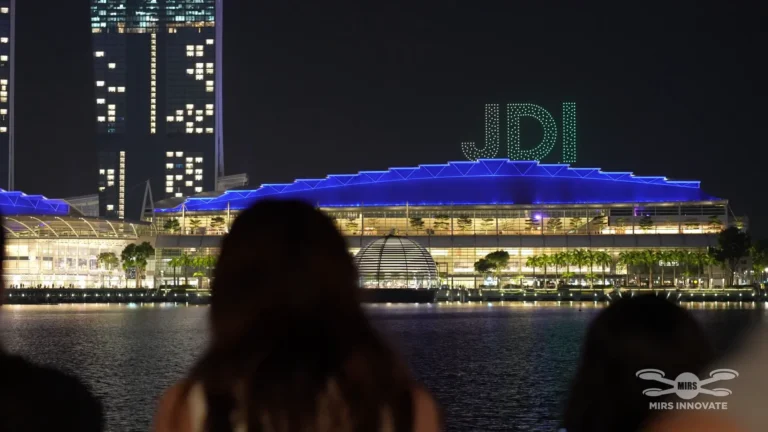
That changes the audience experience and the planning equation. Organizers can often stage a drone performance in environments where fireworks would be disruptive, restricted, or simply too risky. Waterfront districts, urban mixed-use venues, hospitality properties, branded event campuses, and culturally sensitive sites all benefit from a show format that is visually dramatic without creating the same fire and noise profile.
Drone shows are also highly programmable. Every movement is mapped in advance. Visuals can be simulated before deployment. Flight behavior is monitored in real time. If conditions fall outside acceptable parameters, operators can delay, modify, or abort with far more precision than a pyrotechnic sequence already loaded for ignition.
For executive stakeholders, that control is a strategic advantage.
The safety trade-offs event planners still need to understand
Drone shows are not automatically safer in every situation.
They depend on professional aviation-grade planning. Airspace approvals, launch geometry, redundancy protocols, pilot oversight, battery management, weather thresholds, and crowd standoff distances still matter. A poorly managed drone show can create risk just as a poorly managed fireworks display can. The difference is that a well-produced drone show is built around controlled motion rather than controlled detonation.
Weather is one of the clearest examples of trade-offs. Strong winds, rain, or unstable atmospheric conditions can affect drone operations and may force postponement. Fireworks have weather constraints too, especially around wind and fire spread, but the operational decision tree is different.
There is also the question of failure mode. When a firework malfunctions, the consequences can be severe and immediate because ignition and explosion are intrinsic to the effect. When a drone experiences a technical issue, the system should be designed with safety procedures that isolate and minimize the problem. That makes vendor quality, fleet maintenance, and production discipline essential.
So are drone shows safer than fireworks? Usually, yes, especially where fire prevention, noise control, environmental sensitivity, and audience comfort matter most. But only when delivered by an experienced production partner with rigorous operational standards.
Safety covers the entire event environment, not just accident prevention
Event decision-makers often frame safety too narrowly, thinking in terms of injury or incident. The broader view includes crowd comfort, neighborhood impact, environmental exposure, site protection, and reputational risk.
A fireworks show that irritates residents, triggers complaints, creates smoke drift over a sponsor activation, or forces a last-minute permit issue is not a clean operational success. It may still happen, but it leaves behind friction.
A drone show changes that dynamic. It can be quieter, cleaner, and more compatible with premium venues and mixed-use public settings. It also aligns with modern brand standards. A company or municipality that wants to project innovation, responsibility, and technical excellence gets more support from a drone performance than from smoke-heavy pyrotechnics.
Major events are no longer judged only by the live audience. They are judged by video capture, social media replay value, sponsor alignment, public sentiment, and press optics. A safer experience is often a stronger brand experience.
Permits, compliance, and operational confidence
One of the least glamorous but most decisive parts of the comparison is compliance. Fireworks often require extensive local approvals, fire safety coordination, storage and transport controls, and broad site limitations. Drone shows also require permits and airspace coordination, but the process is tied to aviation operations, not explosives handling.
For many organizers, that shift is significant. It can mean fewer fire-related constraints, more clarity around the performance zone, and a cleaner conversation with venue partners who are wary of heat, debris, or property exposure. It does not eliminate bureaucracy, but it often replaces a volatile category of risk with a more structured and measurable one.
Experienced production matters most here. A serious drone show provider handles choreography, engineering, permits, risk planning, synchronization, and on-site execution as one disciplined system. MIRS Drone Show operates in that lane because premium spectacle only works when creative ambition is matched by operational control.
When fireworks may still make sense
There are still events where fireworks fit the brief. If the goal is a classic holiday tradition, a short explosive finale, or a specific sensory effect built around sound and flash, fireworks may remain part of the equation. Some large celebrations combine both formats.
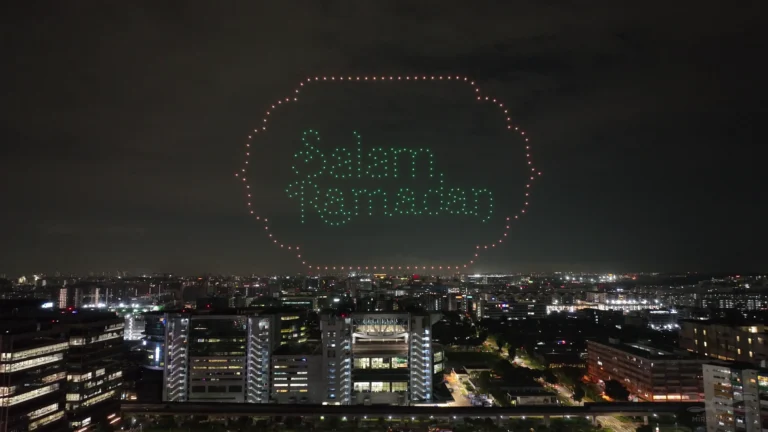
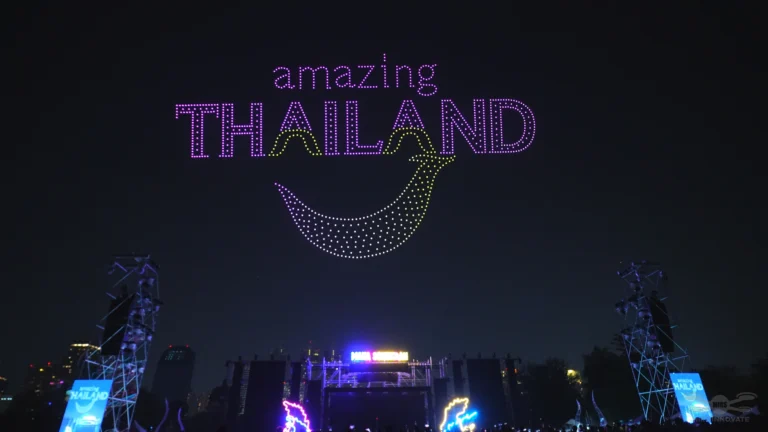
Planners should be honest about what they are choosing. Fireworks deliver familiarity and raw impact. Drone shows deliver precision, customization, quieter operation, and a stronger safety profile in many modern venues. If your event is about logos in the sky, storytelling, sponsor integration, national symbols, or shareable visual sequences, drones outperform fireworks.
The right question is not whether one technology is universally better. It is whether the show format fits your site, your stakeholders, your audience, and your risk tolerance.
What high-visibility events are really buying
At the top end of the market, organizers are buying certainty alongside spectacle. They want a centerpiece that can excite a crowd, satisfy regulators, protect the venue, support brand objectives, and generate images that travel far beyond the event itself.
The safety conversation has become central to show design because modern events demand more from the moment of awe. They need control, clarity, and a production model that can stand up to scrutiny.
If your team is weighing drone shows against fireworks, look at the total operating picture: noise, fallout, fire exposure, site restrictions, environmental impact, creative flexibility, and how much precision your event demands. Do not reduce the decision to novelty versus tradition.
The safest spectacle is rarely the loudest one. It is the one designed to impress without forcing the rest of the event to absorb unnecessary risk.
Planning a drone show?
MIRS Drone Show creates bespoke drone light shows for corporate events, launches, celebrations and festivals, with creative and operational planning tailored to each venue and project.