
How Long Does It Take to Plan a Drone Show?
How long does it take to plan a drone show? Learn realistic timelines for permits, design, logistics, rehearsals, and large-scale event delivery.
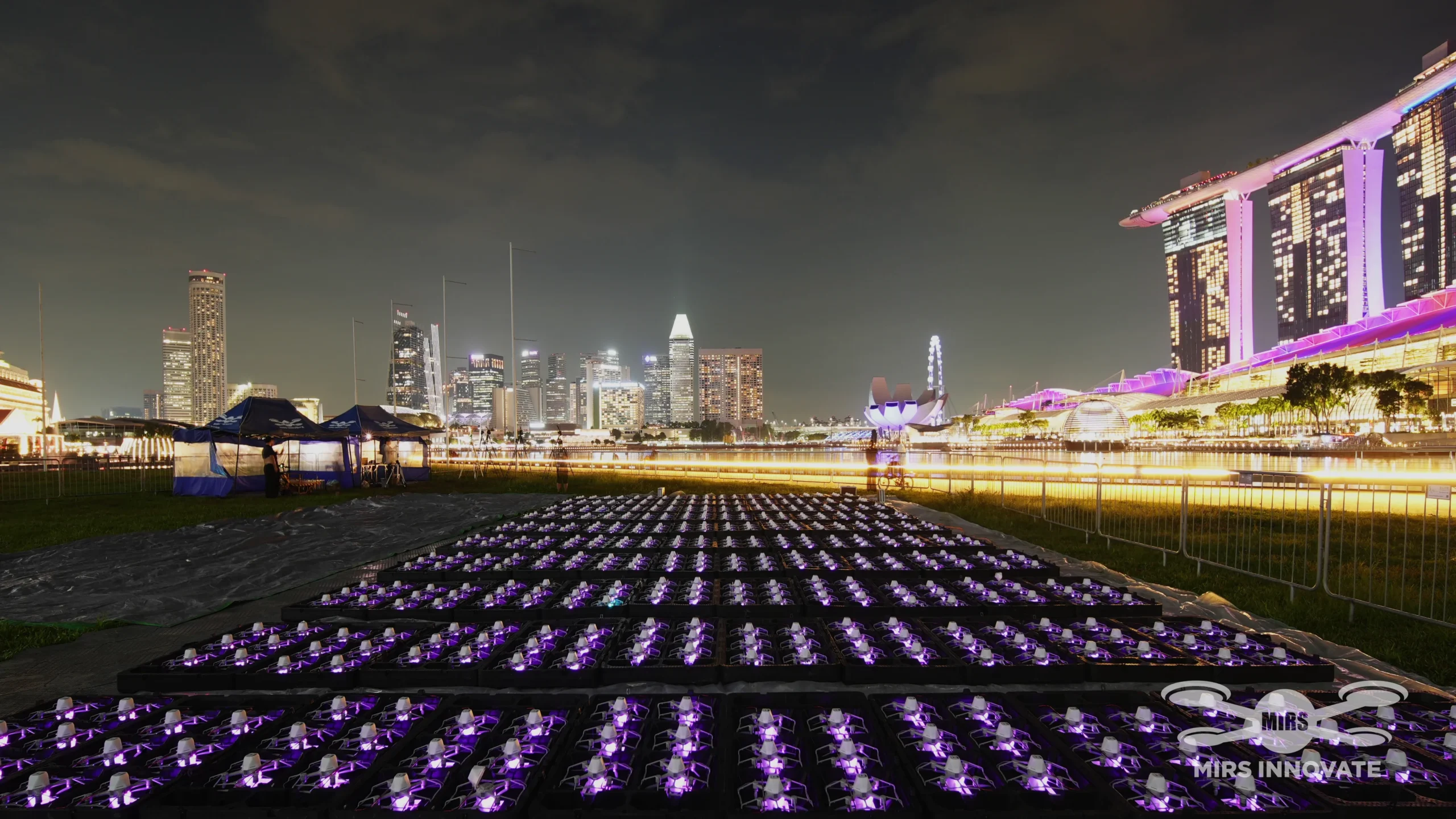
If you are asking how long does it take to plan a drone show, the real answer is not “a few weeks” or “a few months.” It depends on what kind of moment you are trying to create, where it will happen, how many stakeholders are involved, and how complex the airspace and approvals will be. A private celebration with a straightforward launch site moves differently than a national event in a dense urban environment. The timeline is shaped as much by ambition as by logistics.
For buyers planning a high-visibility event, timing matters because a drone show is not just an entertainment booking. It is a custom aerial production that combines creative development, technical planning, aviation compliance, fleet scheduling, show programming, and on-site execution. The earlier the planning starts, the more control you have over design, dates, and production quality.
How long does it take to plan a drone show in practice?
For most professionally produced events, a realistic planning window is 4 to 12 weeks. That is the range where a custom show can be designed properly, permits can be pursued, logistics can be organized, and the production team has enough runway to deliver with confidence.
That said, there is a wide spread inside that window. A smaller show for a wedding, resort activation, or private event may be possible in as little as 2 to 4 weeks if the location is favorable and approvals move quickly. A major public event, brand launch, tourism spectacle, or government celebration often needs 8 to 16 weeks, and in some cases longer.
The simple version is this: if the event is large, public, branded, or happening in restricted airspace, start early. Not because the technology is fragile, but because the production standards should be high.
The biggest factors that affect timeline
The first variable is location. Airspace rules, local aviation authority requirements, municipal permissions, and site restrictions can either keep the process moving or slow it down quickly. A clear launch zone in a supportive jurisdiction is one thing. A waterfront downtown show near airports, stadiums, restricted zones, or dense crowds is another.
The second variable is creative complexity. A drone show built around elegant logo reveals and a few strong transitions can be developed faster than a cinematic multi-scene sequence with text, character animation, 3D effects, synchronized music, and event-specific storytelling. More customization means more design time, more revision rounds, and more technical programming.
The third is scale. A 200-drone performance and a 1,000-drone performance are not the same production problem. Larger fleets increase visual impact, but they also raise the stakes for logistics, transport, site setup, risk planning, and operational precision.
The fourth is stakeholder structure. Events run by one decisive client tend to move faster. Events involving brands, agencies, venue teams, local authorities, sponsors, and public-safety partners usually require more approvals and longer lead times.
A typical drone show planning timeline
Weeks 1-2: Brief, feasibility, and concept direction
The planning process usually starts with the event brief. At this stage, the production team defines the event objective, audience size, venue conditions, preferred date, show duration, creative themes, and likely fleet size. This is also when feasibility gets tested. Can drones fly safely at that site? Are there nearby airspace constraints? Is the timing realistic for the event date?
This early stage matters more than many buyers expect. Strong planning here prevents expensive changes later. It also helps determine whether the show should be positioned as a brand reveal, grand finale, public celebration, product launch moment, or social-media centerpiece.
Weeks 2-4: Creative design and technical planning
Once the direction is approved, show design begins. This includes storyboard development, formation planning, transitions, text treatment, logo rendering, animation sequencing, and music synchronization if required. At the same time, technical planning advances in parallel. The team assesses launch and landing zones, operational safety distances, show visibility, and site-specific constraints.
This is the stage where premium shows separate themselves from generic drone displays. Strong creative is not just about putting shapes in the sky. It is about pacing, readability, audience emotion, and making every second feel intentional.
Weeks 3-8: Permits, approvals, and compliance
This phase often defines the overall timeline. Depending on the country, city, and site, approvals may involve aviation authorities, municipalities, landowners, police, fire departments, coast guards, venue operators, or event regulators. Some locations are efficient. Others require layered coordination.
If you are planning around a national holiday, city festival, or major public gathering, expect more scrutiny and more lead time. High-profile events attract more attention from regulators because the operational environment is more sensitive.
This is why last-minute requests can be difficult. It is not usually the drone choreography that causes delays. It is the real-world approval environment around it.
Weeks 6-10: Logistics, fleet allocation, and show programming
As approvals progress, the operational side locks in. The fleet must be scheduled, packed, transported, and assigned to the event. Batteries, charging systems, backup units, flight-control infrastructure, and crew deployment plans are coordinated. For international projects, customs, carnet documentation, and cross-border transport can add substantial complexity.
Show programming is refined during this stage as well. Formations are tested against technical parameters, timing is tightened, and the sequence is optimized for performance reliability. If the event has a strict countdown, broadcast cue, or synchronized live moment, those timing requirements are built into execution planning.
Final week: On-site setup, testing, and execution
The last stretch is where planning becomes performance. The team arrives on site, prepares the launch area, completes system checks, monitors weather conditions, confirms safety protocols, and aligns with event operations. Depending on the show scale, setup can take a day or several days.
For high-visibility productions, this stage is disciplined and methodical. The public sees spectacle. What they do not see is the control behind it.
Can a drone show be planned faster?
Yes, sometimes. A short lead project is possible when four things align: the event site is uncomplicated, the creative scope is focused, approvals are light, and the production partner has fleet availability. In those cases, an accelerated timeline can work.
But speed has trade-offs. You may have fewer creative revision rounds, fewer date options, tighter logistics, and less flexibility if an approval issue appears late. For marquee events, rushing is rarely the smartest move. The goal is not merely to make the show happen. The goal is to make it unforgettable and operationally sound.
Why larger public shows take longer
When brands, governments, and tourism authorities ask how long does it take to plan a drone show, they are often evaluating it against fireworks or stage production timelines. Drone shows deserve earlier planning because they are more customized and more regulated.
A major public aerial show is part live entertainment, part aviation operation, part brand storytelling. It may need location analysis, crowd-safety coordination, narrative design, sponsor alignment, and media timing. If the show is intended to become the visual signature of the event, every detail matters more.
That extra planning time is not friction. It is what allows the show to deliver precision at scale.
When to start planning your drone show
If your event date is fixed, the best time to begin is as soon as the event vision is real. For a private or lower-complexity event, 1 to 2 months ahead can be workable. For a branded campaign, public festival, holiday celebration, or government production, 2 to 4 months is safer. For destination events or internationally staged spectacles, even more lead time is wise.
This is especially true if your event is tied to a specific calendar date that cannot move. New Year’s Eve, national days, tourism peaks, product launches, and opening ceremonies create hard deadlines. In those cases, early planning protects the date and gives the creative process room to become stronger.
A premium production partner will usually prefer honesty over false urgency. If the date is tight, they should tell you exactly what is possible, what is risky, and where compromises may be needed.
The smart answer for event buyers
So, how long does it take to plan a drone show? For most events, think in terms of 4 to 12 weeks. For simpler shows, it may be faster. For large-scale public productions, 8 to 16 weeks is often the more realistic zone.
The real question is not just how fast a show can be arranged. It is how much time you want to give a landmark moment to be designed, approved, and delivered at the standard your audience will remember. If the sky is going to carry your brand, your message, or your celebration, it deserves more than a rushed timeline.
Planning a drone show?
MIRS Drone Show creates bespoke drone light shows for corporate events, launches, celebrations and festivals, with creative and operational planning tailored to each venue and project.