


9 Corporate Drone Show Examples That Work
See corporate drone show examples that drive launches, celebrations, and press moments with brand-safe spectacle, scale, and precision.
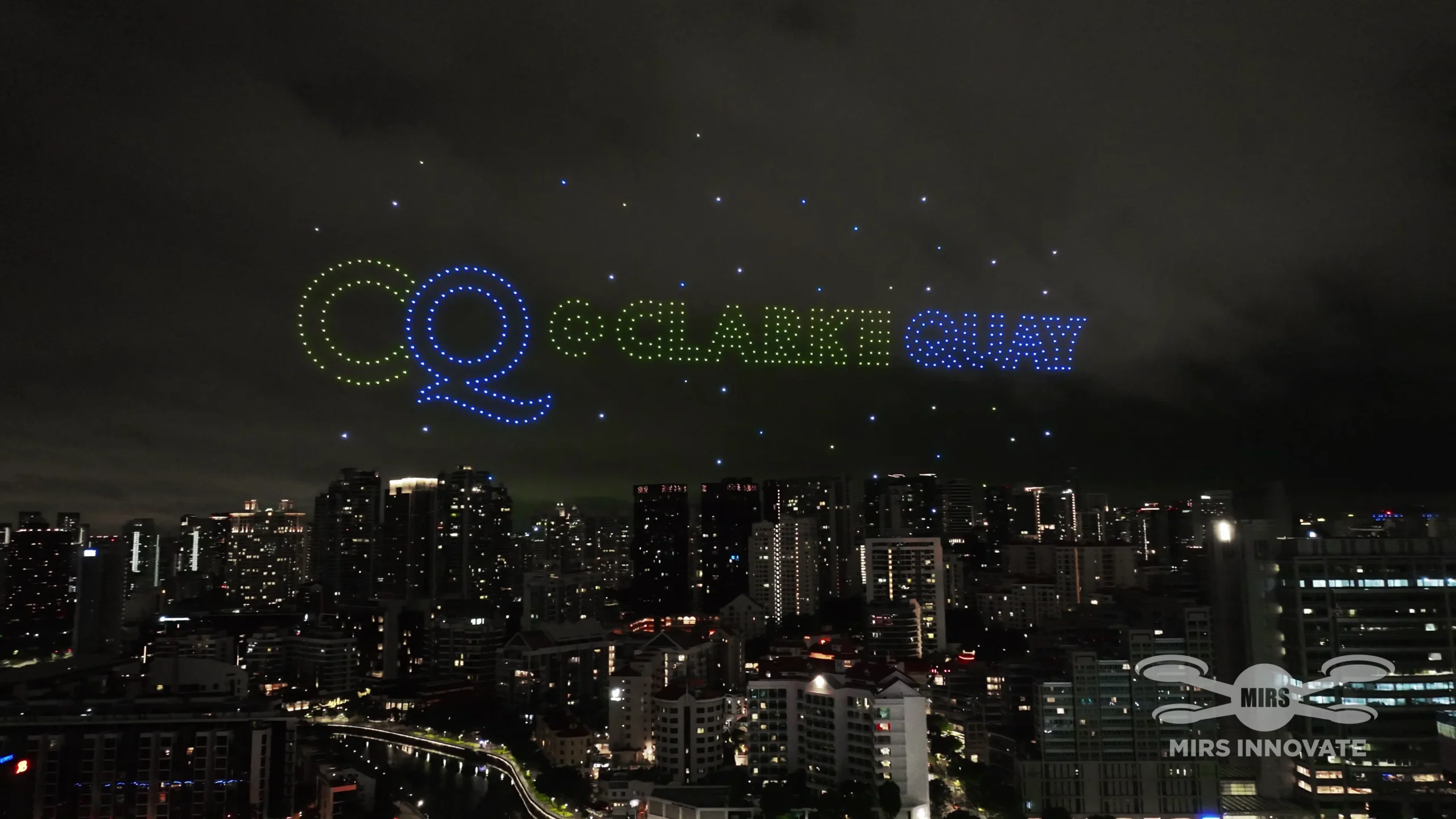
A crowded launch event can look impressive in person and still vanish from memory by morning. The difference is usually not budget alone. It is whether the centerpiece gives people something worth filming, sharing, and talking about after the lights go down. Corporate drone show examples are useful because they show what the format can actually do: reveal a product, mark an anniversary, pull attention to a destination, or give a brand a visual people keep sharing after the event.
For marketing leaders, event agencies, and destination organizers, the appeal is straightforward. A drone show can carry brand identity, timing, narrative, and spectacle in a way fireworks, projection, or stage screens often cannot. It is visible at scale, built for social media, and adaptable to almost any campaign objective. The better question is not whether drone shows look impressive. It is what type of corporate event they serve best, and how the format changes based on the business goal.
Corporate drone show examples by event type
The strongest corporate drone shows are not generic light displays with a logo dropped in at the end. They are designed around a business outcome. Sometimes that means press coverage. Sometimes it means VIP impact. Sometimes it means public attendance, sponsor visibility, or a cleaner alternative to fireworks. The examples below reflect how the format performs when it is built with purpose.
1. Product launch reveals
A product launch is one of the clearest use cases. In this format, the drones become a storytelling sequence rather than a single branded tableau. The show might begin with abstract motion graphics in the product color palette, transition into category imagery, and end with a precise 3D rendering of the product itself, followed by the brand mark and launch message.
This works especially well for automotive, consumer tech, luxury goods, and beverage brands. A new SUV can appear as an outline, then rotate into a dimensional sequence above a live test-drive venue. A smartwatch launch can move from heartbeat animation to app icons to product silhouette. The value here is control. Every frame can be designed to reinforce the launch narrative, and every audience phone becomes a media channel.
The trade-off is that product launches usually require tighter creative review cycles. Legal teams, brand teams, and executive stakeholders tend to want approval over every visual state. That is not a problem, but it does make early planning more important.
2. Corporate anniversaries and milestone celebrations
Some events are less about launching something new and more about proving longevity, confidence, and scale. A 25th, 50th, or 100th anniversary show gives a company the chance to turn its history into a public performance. In practice, that can mean a timeline in the sky, iconic products from different decades, a founder tribute, or a transformation from legacy symbol to current logo.
This format is particularly effective for companies with regional roots or strong employee communities. It can anchor an internal celebration, but it also plays well as a city-facing statement. If the goal is to remind markets, partners, and staff that the company is established and still moving forward, aerial choreography gives that message physical scale.
3. Conference and trade show opening moments
At a major conference, attention is fragmented. Guests are checking schedules, scanning booths, and deciding which brands are worth their time. A drone show can reset the energy of the entire event, especially as an opening-night centerpiece or sponsor-backed evening activation.
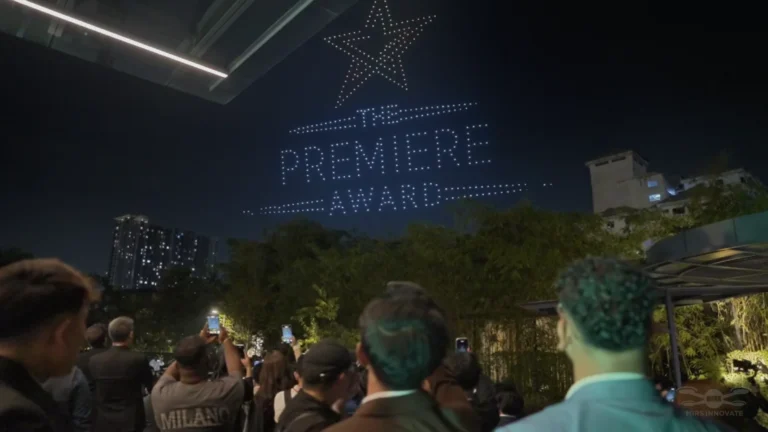
One of the most effective corporate drone show examples in this category is a branded welcome sequence that features the event identity first, then integrates title sponsors, destination visuals, and the host company message. It can transform a standard reception into a headline moment and create instant visual assets for next-day media and attendee recap content.
That said, conference settings can be operationally sensitive. Venue proximity, local airspace conditions, and audience flow all affect what is possible. The best results come when the drone show is treated as part of the event architecture, not as an add-on booked at the last minute.
4. Incentive trips and luxury hospitality events
For high-value guests, the event experience needs to feel exclusive. A drone show fits that environment because it can be customized down to guest names, award categories, regional themes, or invitation-only storytelling. Instead of a broad public spectacle, the show becomes a precision-crafted signature moment over a resort, beach, golf property, or private estate.
Luxury brands and hospitality groups often use this format to elevate gala dinners, incentive travel finales, and elite partner gatherings. The emotional effect is different from a public launch. It is less about mass visibility and more about prestige, memory, and the sense that the event could not have happened anywhere else.
5. Retail openings and destination-driven foot traffic campaigns
When a brand opens a flagship store, mixed-use development, hotel, or entertainment venue, attendance matters. So does local buzz. In these cases, drone shows are often used as the public-facing climax of an opening weekend campaign.
A strong sequence might feature the city skyline, neighborhood references, the new venue identity, and a closing callout that encourages people to visit. For tourism boards and destination marketers, the formula is similar. The show acts as a civic-scale invitation, combining place branding with a highly shareable night-sky performance.
This is where scale matters. A modest drone count can still be elegant, but for a destination opening meant to dominate local conversation, larger formations create stronger visual authority. It depends on the viewing distance, the site, and how ambitious the storytelling needs to be.
6. Brand sponsorship activations
Sponsorship dollars work harder when the audience remembers who made the moment possible. Drone shows give sponsors more than signage. They give them airtime.
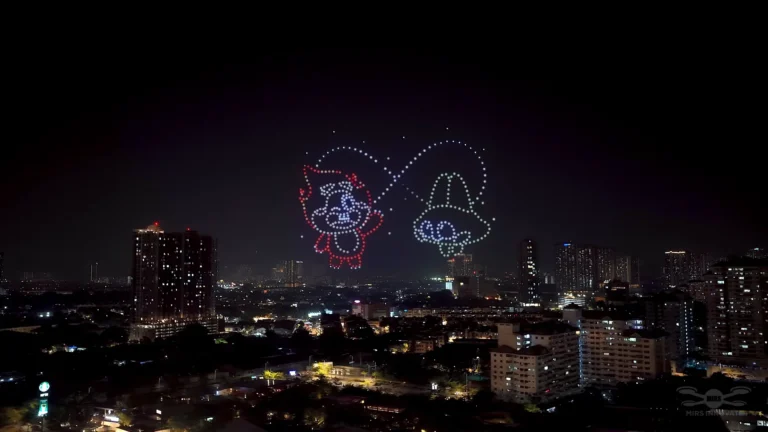
At sports events, festivals, and public celebrations, a sponsor-led show can integrate campaign messaging, mascot animation, product iconography, and event branding in one choreographed sequence. The best version does not feel like a giant advertisement. It feels like a premium entertainment moment that happens to belong unmistakably to the sponsor.
That distinction matters. If the creative is too sales-heavy, audiences disengage. If the brand is too subtle, the investment loses strategic value. The right balance is cinematic first, branded with confidence, and timed to the emotional high point of the event.
7. Internal corporate events and employee recognition
Not every high-impact show is public. Internal events can carry enormous business significance, especially for global companies managing culture, morale, and retention across large teams. Annual meetings, sales kickoffs, leadership summits, and recognition nights benefit from moments that feel bigger than standard stage production.
A drone show can honor top performers, visualize growth targets, or celebrate team achievement with a level of spectacle that tells employees the company is willing to invest in the experience. For executive audiences, this is not just entertainment. It is a signal. It says the organization values ambition, precision, and shared momentum.
What these corporate drone show examples have in common
The most successful shows tend to align around four qualities: clarity, timing, customization, and operational discipline. Clarity means the audience can understand the visual story immediately. Timing means the show lands at the exact point when attention is highest. Customization ensures the brand does not look interchangeable with any other event. Operational discipline is what turns ambition into a clean performance rather than a risky experiment.
This last point is where premium execution matters most. Large-scale drone productions involve flight planning, airspace coordination, safety protocols, creative programming, backup systems, and on-site control. For decision-makers, that is often the deciding factor. Spectacle gets the meeting. Reliability wins the contract.
Choosing the right example for your event
Not every event needs the same type of show. If the goal is earned media, a public launch or city-scale opening makes sense. If the goal is client loyalty or executive impact, a tightly choreographed private experience may deliver more value. If the goal is replacing fireworks with something more controllable and brandable, the creative sequence should emphasize identity and narrative, not just visual noise.
The strongest approach is to begin with the business objective, then build the aerial concept around it. That is how a drone show stops being a novelty and starts acting like a true event asset. It becomes the image everyone posts, the moment the press covers, and the part of the night people describe first.
For MIRS Drone Show, the useful question is simple: what should the audience remember, post, and repeat after the event? The show should be built around that answer.
If you are evaluating corporate drone show examples, look past the fact that the sky lights up. Ask what the show is doing for the brand when it does.
If you are planning a launch, anniversary, conference, or corporate celebration, contact MIRS to discuss the right drone count, site plan, and creative direction for your event.
Frequently asked questions
What is a corporate drone show best used for?
A corporate drone show works best when the event needs a clear visual centerpiece. Common uses include product launches, anniversary celebrations, conference openings, incentive trips, retail openings, sponsorship activations, and employee recognition events.
How do brands use drone shows for product launches?
Brands use drone shows to reveal logos, product silhouettes, campaign messages, countdowns, and launch themes in the sky. The strongest concepts are built around one clear message instead of trying to show every product feature at once.
Are corporate drone shows better than fireworks?
Drone shows and fireworks solve different problems. Fireworks create a short burst of spectacle, while drone shows can form brand shapes, words, characters, and choreographed sequences. For corporate events, that makes drones stronger when brand control, content capture, and message clarity matter.
How early should a company plan a corporate drone show?
Corporate teams should start planning as early as possible, especially if the event involves permits, complex branding, venue restrictions, or international logistics. A longer runway gives the production team more time for site checks, animation design, approvals, and contingency planning.
What should event teams prepare before requesting a drone show proposal?
Prepare the event date, location, audience size, brand assets, show objective, preferred show moment, available launch area, and any venue restrictions. A clear brief helps the drone show team recommend the right fleet size, creative direction, and production scope.
Planning a drone show?
MIRS Drone Show creates bespoke drone light shows for corporate events, launches, celebrations and festivals, with creative and operational planning tailored to each venue and project.