

Can Drone Shows Display Logos? How Aerial Brand Reveals Work
Can drone shows display logos? Yes. See how aerial logo design, fleet scale, viewing distance, approvals, and timing shape a high-impact brand moment.
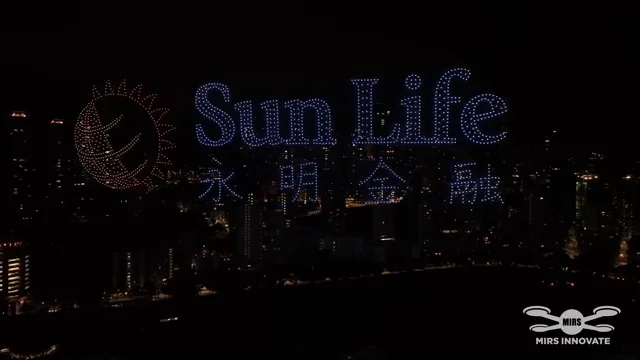
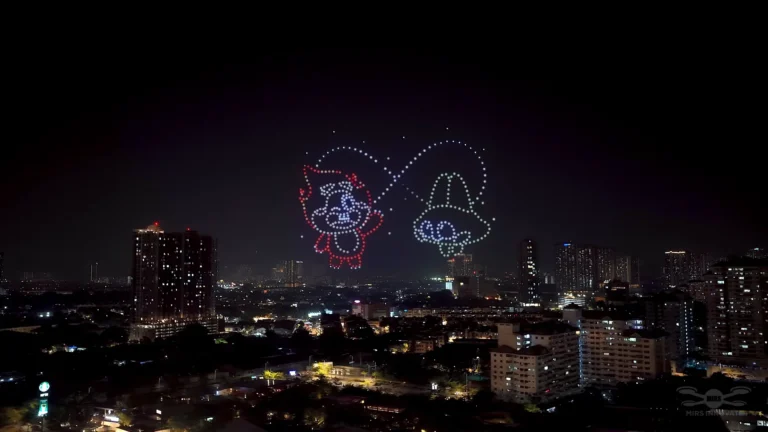
At a busy event, a logo can disappear among screens, lighting, scenery, and the movement of the room. An aerial logo reveal changes that. It gives the audience one clear visual moment to look up at, film, and remember. Drone shows can display logos for brand launches, destination campaigns, conferences, and major public events when the design is planned for the sky.
A drone logo is not simply copied into the sky. It is engineered for distance, darkness, movement, audience position, and the number of drones available. When those elements are designed together, the result can be a crisp corporate mark, a product icon, a campaign message, or a full animated brand sequence that gives an event a defining finale.
Can Drone Shows Display Logos With Real Clarity?
Yes, but clarity depends on design discipline. A drone fleet creates an image through points of light, rather than through solid printed surfaces. That means the strongest aerial logos are often simplified versions of the original mark, with clean outer shapes, strong contrast, and enough spacing between elements to remain readable from the audience viewing area.
A simple symbol may look exceptional with a relatively compact fleet. A detailed emblem, a logo with thin lettering, or a multi-part lockup may require more drones and more sky space to achieve the same visual confidence. The question is not only whether a logo can be displayed. It is how accurately it needs to be reproduced, how far away the audience will stand, and what role it plays in the larger performance.
For many campaigns, the best approach is to build anticipation before the reveal. Drones can create a sequence of branded colors, kinetic shapes, or product-inspired animations before resolving into the logo. This gives the mark context and makes the final formation feel earned rather than static.
Why Logo Simplification Is a Strength
Brand teams sometimes worry that simplifying a logo compromises brand standards. In the sky, the opposite is usually true. A bold, carefully adapted aerial version protects recognition at scale. Fine strokes, tiny taglines, gradients, and dense details may work on a website or package, but they can lose definition against a large night sky.
An experienced drone show creative team translates the brand system into a formation language. It preserves the elements people recognize first: silhouette, color, proportion, iconography, and signature motion. The result should feel unmistakably on-brand while being designed for the physical realities of aerial viewing.
What Determines the Size and Detail of an Aerial Logo?
Fleet size is one of the major variables. More drones allow for greater detail, smoother curves, larger letters, and more elaborate animation. Yet a larger fleet is not automatically the right answer. A clean logo with a strong visual concept can be more memorable than an overcrowded formation trying to reproduce every design element at once.
Viewing distance matters just as much. A logo designed for guests gathered near a waterfront launch may need different proportions than one designed for a stadium audience, a festival field, or a citywide public celebration. The show must be composed for the primary sightline, not for a close-up image viewed later on a phone.
Color also shapes visibility. Bright, high-contrast brand colors can create immediate impact, especially when framed by darker formations or a brief blackout transition. Not every brand color performs equally well at night, however. The creative direction may use complementary tones, animation, or sequencing to keep the identity recognizable without sacrificing visual intensity.
There is also a practical trade-off between logo duration and show pacing. Holding a logo in the sky for several seconds gives guests time to recognize it, photograph it, and share it. Holding it too long can flatten the energy of the performance. A well-produced show balances readable hero moments with continuous movement.
From Brand Asset to Sky-Ready Formation
The production process begins with the right source materials. Vector logo files, brand guidelines, approved colors, campaign artwork, and any required legal language provide the foundation. From there, designers assess which parts of the identity should appear as a direct formation and which should become animated visual cues.
A strong aerial brand sequence often follows a simple narrative. It may begin with a recognizable category symbol, build through motion that reflects the product or destination, then reveal the logo at the peak of the show. A tourism authority might move from landmarks to a national symbol and finally to its destination mark. A product launch might take the audience from abstract energy to product silhouette to logo reveal.
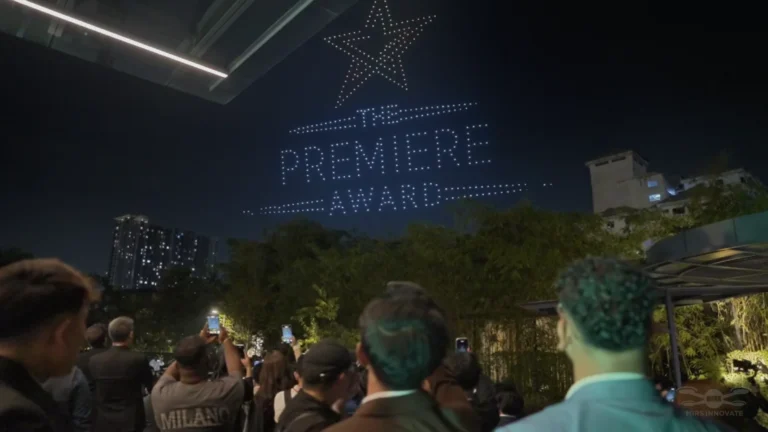
Text can also be displayed, but it must be treated with the same care as a logo. Short words, initials, and concise calls to action are generally more effective than long sentences. The sky is a spectacular medium, not a billboard. Every formation needs enough scale and time to be understood in a single glance.
At MIRS Drone Show, this translation from brand asset to aerial performance is handled as both a creative and technical discipline. The visual concept, flight choreography, timing, and on-site delivery must all support the same outcome: a brand moment that looks as precise in person as it does across social media.
The Operational Work Behind a Flawless Reveal
The audience sees a logo appear effortlessly. Behind it is a production plan that accounts for airspace, local regulations, site conditions, safety zones, launch locations, weather monitoring, and flight sequencing. This operational layer is why a drone show should be treated as a live-event production, not as a visual add-on booked at the last minute.
Permits and airspace approvals vary by location. Urban skylines, airports, waterfronts, stadiums, and public parks can each introduce different constraints. A production partner needs to assess the site early, coordinate with relevant authorities, and determine whether the desired show scale and timing are achievable.
Weather is another factor that calls for planning rather than assumption. Wind, precipitation, and visibility conditions can affect operations. Professional teams establish appropriate safety thresholds, monitor forecasts, and build event plans around responsible go-or-no-go decisions. A premium brand experience depends on disciplined execution as much as it depends on visual ambition.
For high-profile events, rehearsals and simulation matter. The creative team can validate formations digitally before the fleet ever takes off, checking legibility, transitions, spacing, and synchronization to music or live cues. This reduces surprises and gives stakeholders confidence that the logo reveal will land at the intended moment.
Where Aerial Logos Create the Most Value
Drone logo displays are especially effective when the event needs a clear visual centerpiece. At a corporate launch, they can turn the final product reveal into a headline. At a conference or incentive trip, they can create a closing-night moment that guests carry home and post immediately. At a sports, music, or cultural event, they can connect sponsors to the emotional high point without interrupting the audience experience.
Cities and tourism boards can use aerial branding differently. A logo may be only one part of a broader story involving local heritage, landmarks, national colors, or seasonal themes. This approach gives public celebrations a sense of place while still creating a highly visible signature for the host destination.
For luxury weddings and private celebrations, a monogram or custom emblem can feel remarkably personal when it appears as part of an animated story. The difference is scale with intention: the show should elevate the occasion, not overwhelm it.
The marketing value extends beyond the guests on site. A clear logo formation gives photographers, broadcasters, creators, and attendees an image they want to capture. That organic distribution can extend a campaign long after the final drone lands. Still, viral reach should be treated as an outcome, not a substitute for a meaningful live experience. The show needs to be unforgettable from the ground first.
Planning a Logo Drone Show That Performs
The most successful projects start with a brief that goes beyond, “Put our logo in the sky.” Define the event objective, the audience size, the venue, the desired emotional tone, the moment the show should occur, and the content guests should remember afterward. A product launch demands a different creative rhythm than a national celebration or a black-tie gala.
Share brand assets early and be clear about non-negotiables. If a particular icon, color, or message must appear, the production team can design around it from the beginning. Be equally open to expert guidance when an element needs adaptation for legibility. The goal is not to reproduce a style guide pixel for pixel. The goal is to create a formation that makes the brand instantly recognizable at monumental scale.
Finally, give the aerial reveal room to breathe. Reduce competing stage lighting where possible, direct guests toward the intended viewing area, and coordinate the show with music, announcements, or the event program. When the sky becomes the canvas, the audience should know exactly where to look.
A well-designed drone logo gives the audience a clear moment to share and a brand a visual identity that fits the scale of the event.
Frequently Asked Questions About Drone Logo Displays
Can drones create a detailed company logo?
Yes. The level of detail depends on the fleet size, viewing distance, logo structure, and available airspace. Clear symbols and simplified marks usually read best from the audience area.
Can a drone show display text as well as a logo?
Yes, but short words, initials, and concise messages are more readable than long sentences. The creative plan should give each formation enough scale and screen time to be understood.
How early should a brand plan a logo drone show?
Start as early as practical. The production team needs time to assess the site, airspace requirements, safety planning, creative direction, and show timing before the event.
What files are needed for an aerial logo reveal?
Vector logo files, brand guidelines, approved colours, campaign artwork, and the event brief give the creative team a useful starting point. The final aerial design may adapt fine details so the mark remains clear in the sky.
Plan an Aerial Brand Reveal
For a logo reveal that fits the venue, audience, and event run sheet, talk to MIRS Drone Show about your event. Share the location, event date, audience scale, and the brand moment you want to create.
Related Reading
Planning a drone show?
MIRS Drone Show creates bespoke drone light shows for corporate events, launches, celebrations and festivals, with creative and operational planning tailored to each venue and project.