



Drone Failure Response for Major Live Events
A disciplined drone failure response protects guests, preserves airspace compliance, and keeps a high-visibility aerial event under commanding control.
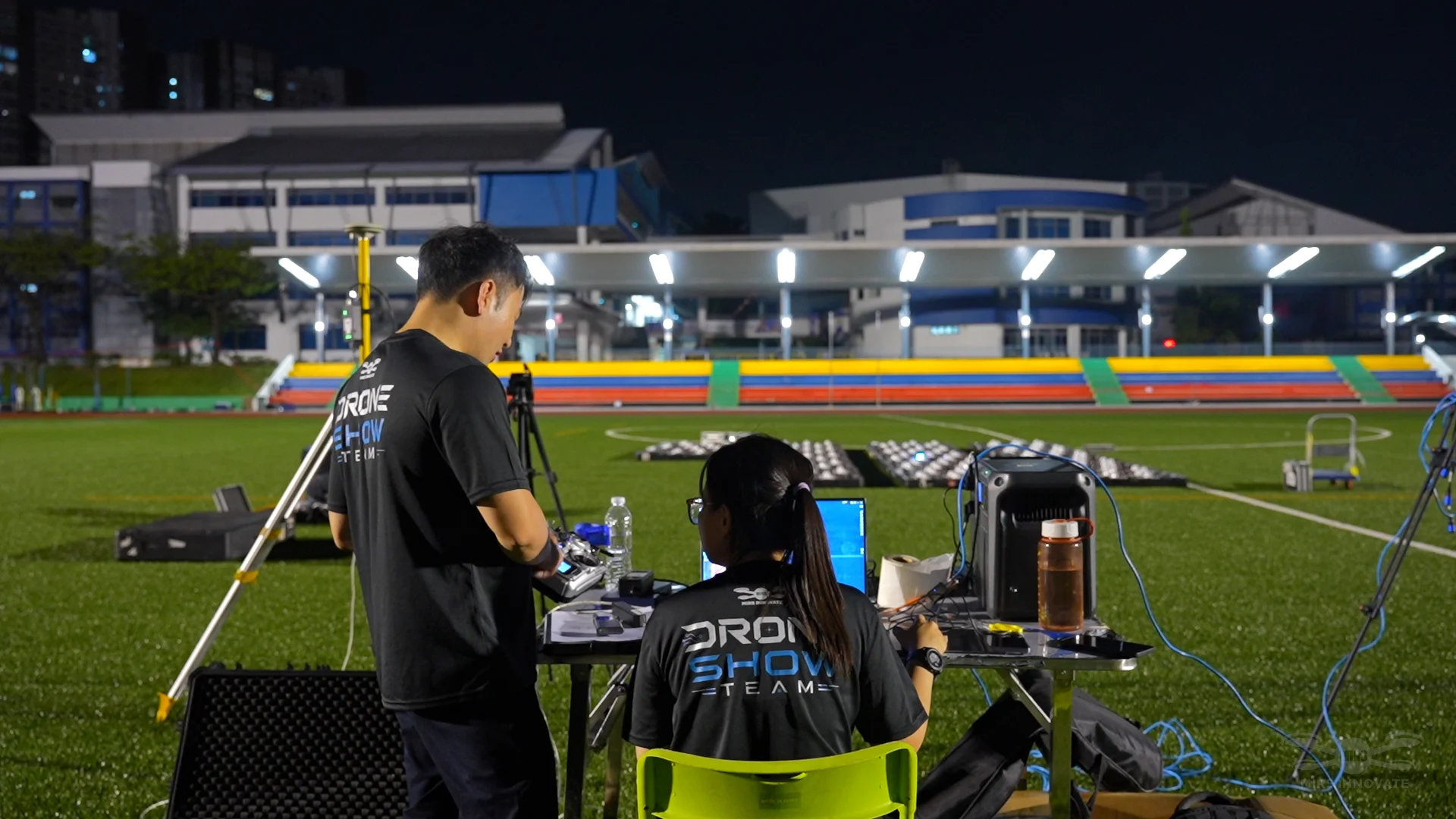
A single aircraft alert during a crowded live event is not a moment for improvisation. A professional drone-show plan defines who assesses the issue, who makes the flight decision, how the operating area is protected and how the event team is informed.
No production can promise that a technical issue will never occur. The standard is whether the team has prepared for it. That preparation protects guests and gives an organiser a clear process when conditions, aircraft status or the flight environment change.
Failure response starts before take-off
A drone light show is both a creative performance and a live flight operation. Before the event, the production plan should consider the launch area, viewing area, access control, weather limits, communications, equipment checks and the people responsible for each decision. The drone show planning checklist explains why these decisions need to be made before the run sheet is final.
That planning helps the team distinguish a limited aircraft alert from a problem that affects the wider flight. It also means an event organiser knows what a pause, controlled landing or cancellation would involve before guests arrive.
Not every aircraft alert has the same impact
An alert may concern one aircraft, a group of aircraft or the whole operating environment. An individual drone can sometimes be removed from the sequence under the provider’s planned procedure while the rest of the show continues. A well-designed formation may still look coherent to the audience.
Other conditions call for a wider response. Weather moving outside approved operating limits, a communications issue affecting several aircraft or a change in the airspace environment can require a pause or controlled landing. The response depends on the facts at the time, not on the pressure to complete a final scene.
Who makes the flight decision
The event plan should name the people who have authority over flight safety, show control, venue operations and client communication. These roles should not be left to a last-minute group discussion. The flight team assesses the operating situation. The event producer manages the wider programme. A nominated client contact receives concise status updates.
Clear authority keeps a technical interruption from turning into a confusing public moment. It also gives the crew the freedom to make a conservative call when conditions require it.
What the on-site response should cover
A response plan normally covers detection, assessment, action and communication. Crew members monitor the planned operation and the protected area. If an issue is identified, the team assesses its scope and follows the pre-agreed procedure, which may include removing an aircraft, pausing the sequence or starting a controlled landing.
- Keep the launch and recovery areas secure.
- Use the agreed escalation path rather than ad-hoc instructions.
- Give the event team only the information it needs to manage the programme.
- Record the situation and decide whether a restart is appropriate.
Operational processes are part of why organisers should ask a provider about drone show safety and technical planning before signing off on a major event.
Plan the audience message in advance
The audience does not need a technical diagnosis while the flight crew is assessing an issue. For a brief pause, the stage programme, music or lighting may be enough to hold attention. For a longer interruption, the host should have a short factual line approved in advance.
For example: “The aerial presentation is temporarily paused while the flight team completes a standard safety check.” The message should not speculate about causes or promise a restart. The drone team, event producer, security lead, venue operations and client representative should know who communicates and who approves the next step.
Weather and airspace can change the decision
Aircraft status is only one part of the picture. Wind, rain, visibility, local conditions and airspace requirements can affect whether a show may start, continue or restart. Review drone show weather requirements early, then confirm the operational decision on site.
Permits and airspace coordination are also part of the wider production process. The drone show permits and regulations guide outlines the planning areas to discuss with a professional provider. Requirements differ by event and location, so no article can replace a site-specific assessment.
Build resilience into the event plan
Resilience is not only a flight issue. It includes a realistic show schedule, a suitable venue layout, access control, a weather contingency, a guest communication plan and a documented handover between teams. Complex shows need an event plan that connects the creative, technical and venue sides of the production.
For a broader view of the production process, see the guide to drone show logistics. The most useful provider conversations are specific: where the aircraft launch, how the audience is positioned, what conditions would pause the show and what the event does next.
When stopping is the right result
Major events create pressure to proceed. Sponsors are present, guests are waiting and the reveal may sit at the centre of the run sheet. That pressure does not change the correct decision when the flight environment is no longer suitable.
A controlled stop protects guests, the venue and the event itself. It shows that the operation follows defined boundaries rather than pushing through for the sake of a few more minutes in the air.
Frequently asked questions
What happens if one drone has an issue during a show?
The response depends on the issue and the operating conditions. A provider may be able to remove one aircraft under its planned safety procedure, while a broader concern may require the sequence to pause or the fleet to land in a controlled way.
Can a drone show restart after a pause?
Only if the flight team confirms that conditions are suitable and the event plan allows it. A restart should never be assumed or promised before the issue has been assessed.
Who should communicate with guests during an interruption?
The event producer or nominated host should use a short pre-approved message. The flight crew should stay focused on the operation while the event team manages audience communication.
What should an organiser ask a drone-show provider before booking?
Ask about the site review, weather limits, operating area, contingency planning, roles on site and who has final authority to pause or stop the flight. The answers should be specific to the event rather than a general assurance.
Discuss the operational plan before the event is locked
For a major live event, the drone-show conversation should start while the venue, run sheet and audience layout can still be shaped. Contact MIRS Drone Show with the event date, venue, format and the moment you want the aerial presentation to support.
Related reading
Planning a drone show?
MIRS Drone Show creates bespoke drone light shows for corporate events, launches, celebrations and festivals, with creative and operational planning tailored to each venue and project.