




What Affects Drone Show Pricing?
Learn what affects drone show pricing, from fleet size and design complexity to permits, location, and production scope for live events.
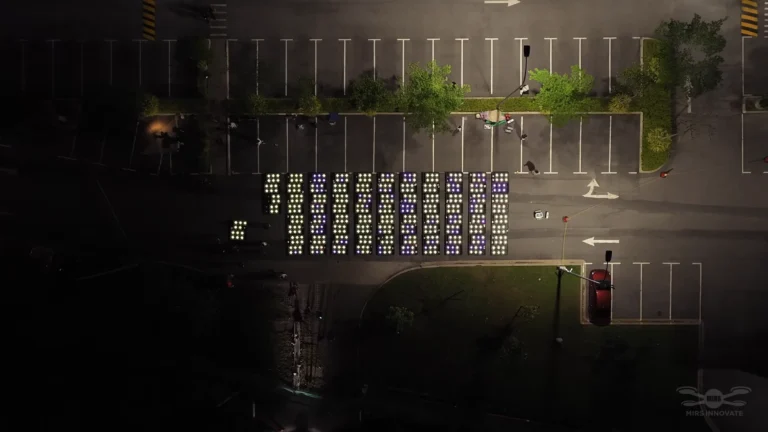
A 200-drone show and a 1,000-drone show may both run 10 minutes, but they aren’t priced the same. One might be a tight brand reveal for a private launch. The other could be a city-scale spectacle with custom animation, layered logistics, and zero margin for error. The gap between them explains why the honest answer to what affects drone show pricing always comes back to production value, risk profile, and event ambition.
Drone shows aren’t off-the-shelf entertainment. They’re live aerial productions built around creative design, flight engineering, safety systems, location approvals, and show-day execution. The drone count is a starting point, not a summary.
Fleet size is the most obvious cost driver, but not the only one
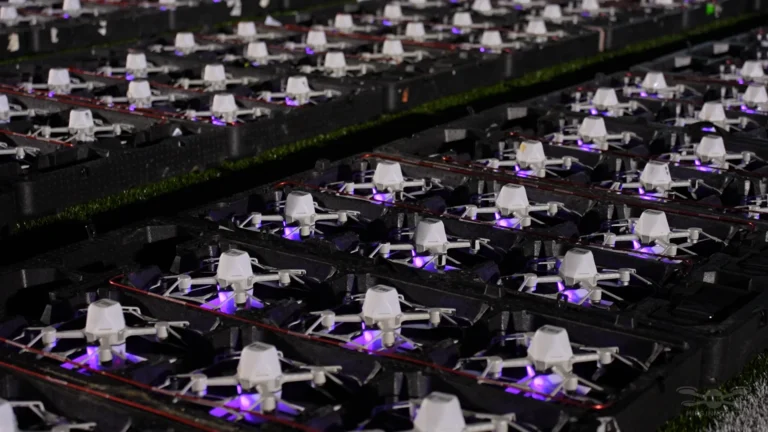
Fleet size determines visual scale. A larger fleet means bigger formations, sharper typography, more legible logos, and more cinematic motion. It also means more hardware, more transport, more setup time, more battery management, more redundancy planning, and more crew on site.
Two shows with identical drone counts can still land at very different price points. A straightforward sequence with basic shapes in an accessible venue costs less than a highly customized performance in a tightly regulated location. Buyers often anchor on drone count first. The production environment is what determines whether a quote stays simple or grows substantially.
If your event needs visual impact at distance, drone count matters. A smaller fleet covers weddings, private celebrations, hospitality events, and compact brand activations. A larger fleet is what gives major public events their panoramic presence and stopping power.
Creative scope drives budget as much as fleet size
Simple geometric sequences, icons, and short text elements are faster to design and program. A custom storyboard with branded transitions, 3D effects, character animation, or product reveals takes considerably more creative and technical development.
If the show needs to feel specifically yours, brand assets often need to be adapted for aerial readability. What works on a screen doesn’t always translate to 500 illuminated drones at altitude. Motion sequences have to work within drone spacing, flight timing, and night-sky viewing conditions. A premium drone show involves as much engineering as creative direction.
Not every show starts from scratch. Some productions use a partially standardized framework with customized highlights, which helps manage budget and timeline. Fully original shows require more concept development, simulation, revision rounds, and technical programming. Neither approach is inherently better. It depends on whether the event needs a polished visual centerpiece or a signature moment with no precedent.
Custom animation versus standard sequences
If the objective is a clean visual centerpiece, a leaner creative package may be enough. If the objective is a landmark civic spectacle or a one-of-a-kind brand reveal, original content usually delivers stronger return, and the production cost reflects that additional development.
Location and logistics compound costs quickly
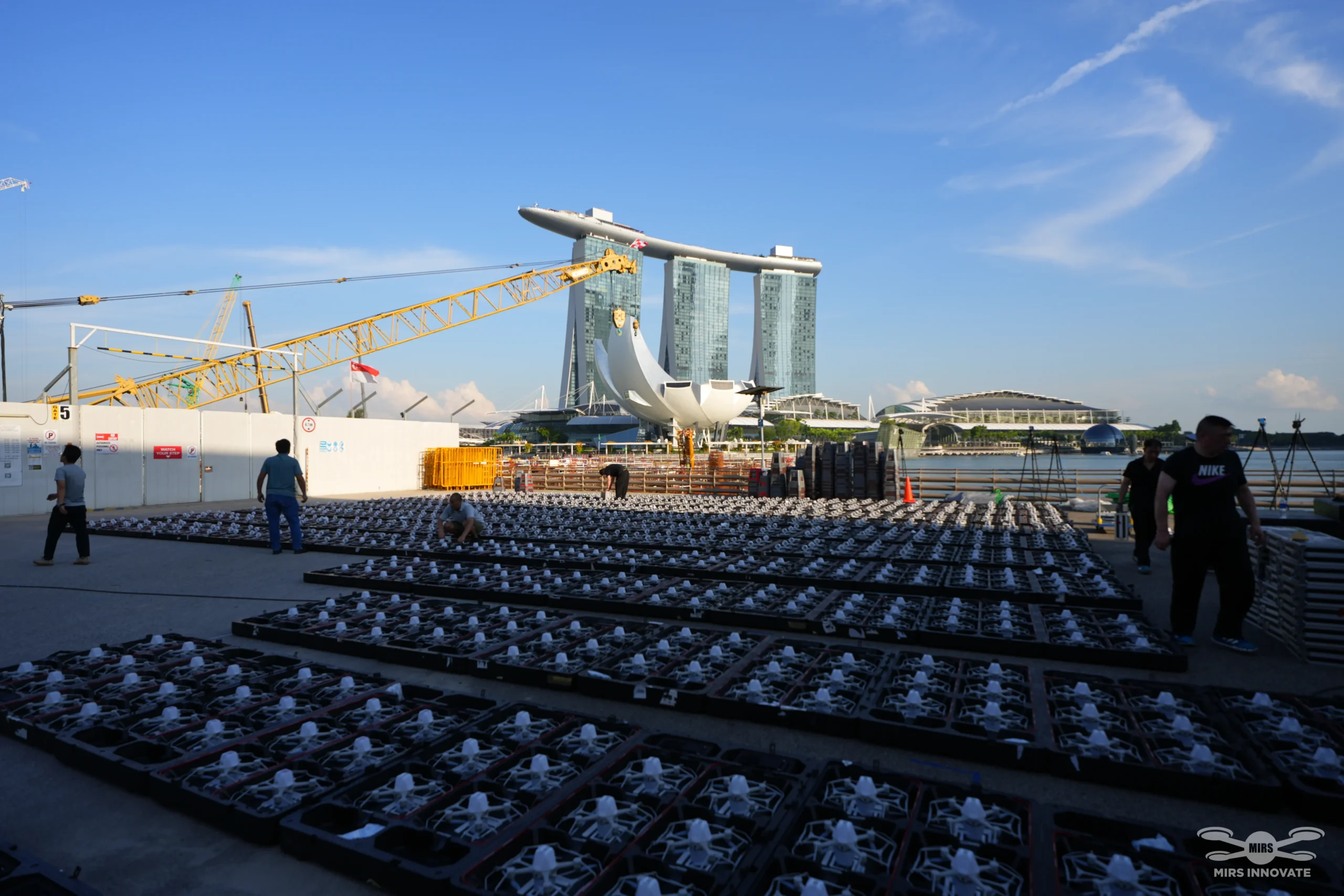
Travel distance, freight requirements, customs procedures, local regulations, crew accommodation, access windows, and site conditions all feed into the price. A show near a major operations base is one thing. A show on a coastline, island destination, desert site, or dense urban venue is another. International events add cargo planning, customs coordination, local aviation compliance, and longer lead times.
Global execution capability goes further than moving equipment to the venue. It means transporting an entire aerial production system across borders while keeping safety standards, schedule, and show quality intact. The operational discipline required for international delivery is not the same as what a local field show demands.
Venue constraints add complexity fast
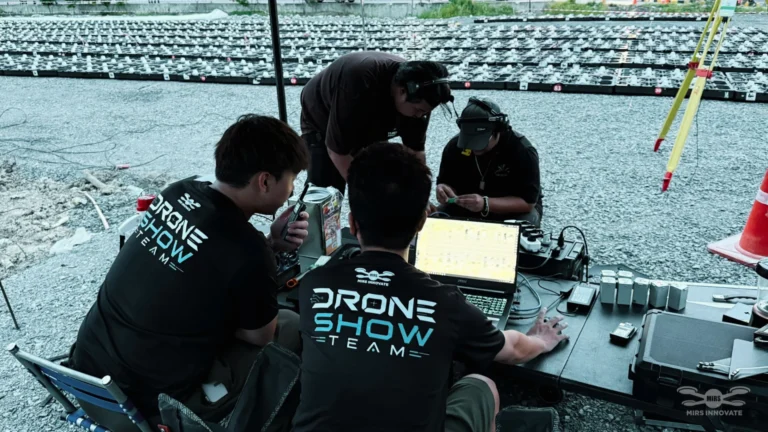
The launch area needs safe takeoff and landing zones, perimeter control, technical setup space, and audience separation. Constrained sites may require alternative launch positioning, revised choreography, or additional safety planning, all of which add time and cost.
Weather adds another layer. Wind, humidity, temperature, and seasonal conditions affect planning windows and contingency design. The audience sees a few spectacular minutes. The production price reflects everything required to make those minutes reliable.
Permits and airspace are a real cost line
A drone show is an aviation operation. Depending on the jurisdiction, it may require flight authorizations, municipal approvals, land-use permissions, local authority coordination, and detailed safety documentation. Shows near airports, city centers, government zones, waterfronts, or high-density public areas involve more review and more restrictions, which means more planning hours, more coordination, and more stakeholders.
This is why turnkey delivery has genuine value for clients. A production partner that handles airspace, approvals, safety frameworks, and operational risk means the event team doesn’t have to become an aviation department to produce a sky show.
Duration and number of performances affect the total
A tightly edited 8 to 12 minute show is usually the strongest format for audience engagement. Multiple acts, extended runtime, or repeat performances across several nights raise requirements considerably: more battery cycling, more technical resets, more rehearsals, more crew hours, and more equipment wear.
A one-night signature performance is priced differently than a multi-day festival run. Multi-night scheduling can produce some efficiencies, but only when logistics, staffing, and venue conditions actually support it. This is one of those areas where price depends on event architecture more than on a simple per-show rate.
Music sync and integration raise the production ceiling
Synchronizing a drone performance with music, live staging, countdowns, or broadcast cues demands tighter programming and show control. If the event involves television capture, VIP sightlines, or a precisely timed reveal, the tolerance for error narrows and the planning load increases.
Productions that treat the drone show as a core event element rather than an add-on require more development but tend to deliver more return. When the aerial performance is the centerpiece, the budget should support that level of precision.
Booking timeline directly affects price
A healthy lead time gives the production team room to design properly, secure approvals, plan logistics, and build contingencies. Rush timelines may require expedited freight, compressed design rounds, priority scheduling, and faster approval management. When an event date is fixed and close, the production partner has fewer options, and budget tends to reflect that.
For planners managing major launches or public celebrations, early booking does more than protect availability. It gives the project room to improve.
Pricing follows production reality
Fleet size, creative complexity, regulatory conditions, logistics, and execution standards all shape the final number because they all shape the final result. MIRS Drone Show prices around production reality rather than generic packages, because no two events share the same set of variables.
A drone show is often the moment an audience remembers first, films fastest, and connects to a brand long after the event ends. The budget that serves that outcome is the one built around what the show actually requires to deliver it.
Planning a drone show?
MIRS Drone Show creates bespoke drone light shows for corporate events, launches, celebrations and festivals, with creative and operational planning tailored to each venue and project.